
Middle East conflict threatens key tourism markets for Thailand
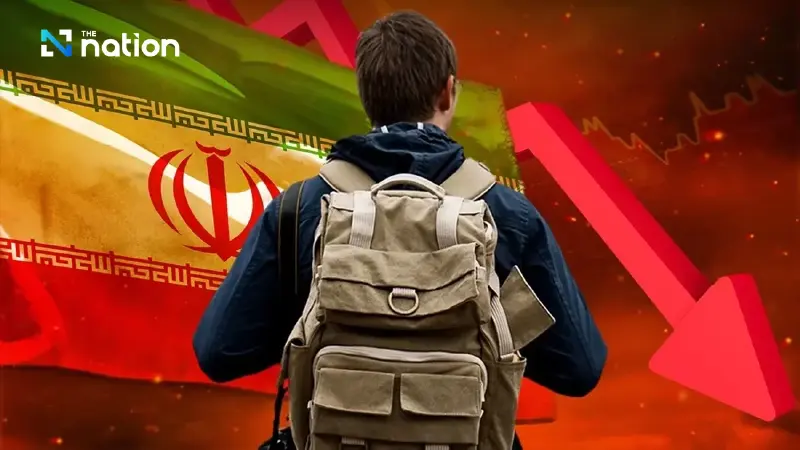


The escalating conflict in the Middle East is expected to affect key tourism markets for Thailand, particularly the Middle East, United States, and Europe – all seen as “hope markets” for the country’s tourism sector this year.
Thienprasit Chaiyapatranun, president of the Thai Hotels Association (THA), warned that tourist arrivals from these regions could drop by around 10% compared to earlier projections.
In the worst-case scenario, he said arrivals may fall by as much as 20% if the Middle East market is heavily impacted, as the June–August period marks the high season for visitors from the region, who typically travel to Thailand during the rainy season.
He noted that American travellers may be deterred from overseas travel due to the impact of tariffs imposed by US President Donald Trump, which are driving up living costs and dampening consumer purchasing power.
As for the European market, although it is not directly involved in the current conflict, it is currently the low season, and travel from the region usually slows during this time, he added.
“There are already early signs of a slowdown in bookings from the Middle East, the US, and Europe,” Thienprasit said. “The association has sent out a survey to hotel members to assess the impact, and we expect to have the results later this week.”

It remains to be seen how long the conflict will persist. Normally, once tensions ease, tourism takes about three months to recover. But with the US now launching attacks on Iran, it’s unclear how protracted or widespread this war will become, he said.
Nevertheless, Thienprasit believes that travel behaviour among Middle Eastern and American tourists could shift, with more opting to visit Thailand and stay longer – effectively combining leisure with a form of “temporary refuge”, similar to the influx of Russian tourists fleeing the conflict with Ukraine.
He urged the government to urgently boost Thailand’s image as a safe destination to strengthen tourist confidence.
“With the Iran–Israel conflict escalating and Iran responding by threatening to close the Strait of Hormuz, oil prices have surged. This will lead to higher electricity bills for hotels and more expensive airfares for tourists. Yet, hotels cannot significantly raise room rates in response and must instead tighten cost controls to cope,” Thienprasit explained.
“I’ve spoken to several hoteliers and executives at hotel chains who admitted that this situation is taking a toll. All we can do is hope the conflict ends soon so that by October – the start of the high season – we can fully welcome long-haul travellers from the US, Europe, and the Middle East once again.”
GCC travellers hesitate amid escalating Iran–Israel conflict
The Iran–Israel conflict is beginning to dent the confidence of tourists from the Gulf Cooperation Council (GCC) countries, according to the Tourism Authority of Thailand (TAT).
While no mass cancellations of trips to Thailand have been reported, concerns over regional instability are prompting hesitation among some travellers, particularly families and general tourists.
Chiravadee Khunsub, TAT’s deputy governor for International Marketing Europe America Middle East and Africa, said that tourists from the GCC—comprising Bahrain, Kuwait, Oman, Qatar, Saudi Arabia, and the United Arab Emirates—are starting to reconsider or postpone plans to travel outside their region.
This follows temporary flight suspensions or rerouting by several airlines to avoid Iranian, Jordanian, Lebanese, Iraqi, Syrian and Israeli airspace.
“GCC travellers, particularly families and women, are becoming more cautious,” Chiravadee noted.
“High-end segments such as wellness, honeymoon, and Gen X travellers still express confidence in Thailand, but booking behaviour has shifted. More are now choosing flexible bookings with options to postpone or cancel without penalty.”

She added that TAT has instructed its overseas offices responsible for long-haul markets to closely monitor travel sentiment, especially if the Israel–Iran conflict escalates or is prolonged.
Should GCC nations appear on travel advisories, urging travellers to avoid the region, it could directly affect Thailand’s long-haul markets due to the heavy reliance on connecting flights through major Gulf carriers such as Emirates, Qatar Airways and Etihad.
The rising cost of oil due to the conflict is also pushing up airfares, which could dampen demand. “This may delay winter season bookings from long-haul markets, as travellers adopt a wait-and-see approach,” she said.
In response, TAT has directed its long-haul market teams to roll out promotional campaigns aimed at stimulating bookings and travel. These include:
- “Book Now, Travel Now” to encourage immediate trips
- “Book Now, Travel Later” for more flexible travel plans
- Brand campaigns such as “Thailand: Safe Haven for Summer” and “Peaceful Paradise in Asia” to reinforce Thailand’s appeal as a calm and safe destination
TAT is also promoting quieter destinations like Krabi, Chiang Rai and Ko Samui Island to travellers seeking to avoid the unrest.
In addition, campaigns will focus on direct flights, seat capacity and passenger load factors. TAT has asked all international offices to coordinate closely with airlines offering direct services to Thailand and has signalled the need for additional budget to support joint campaigns aimed at driving bookings.
Despite the turbulence, TAT continues to work closely with key Middle Eastern carriers—Emirates, Qatar Airways, Etihad, Oman Air—as well as other major regional airlines, to ensure sustained collaboration in promoting Thailand as a preferred long-haul destination.
Thailand targets 1.06 million Middle Eastern visitors
TAT has set an ambitious target of attracting 1.06 million tourists from the Middle East in 2025, representing an 11% increase from the 956,000 visitors recorded in 2024, according to TAT governor Thapanee Kiatphaibool.
Tourists from the region are a high-value market, contributing an estimated 86 billion baht in revenue to Thailand in 2024. On average, Middle Eastern visitors stay between 10 and 14 days per trip and spend approximately 104,138 baht per person per visit.
The three most popular activities among these travellers are shopping, beach holidays, and wellness and medical tourism. Bangkok, Phuket, and Chon Buri (particularly Pattaya) remain the top destinations for Middle Eastern visitors.
