
Thailand faces agricultural trade challenges as US demands 0% tariffs on pork, chicken, and beef imports
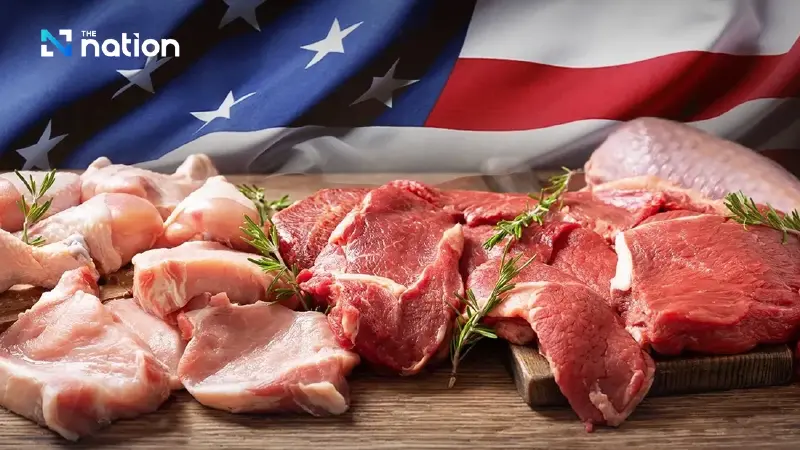


The Thai government faces challenges in the ongoing trade talks with the US, as demands for zero tariffs on pork, chicken, and beef threaten local farmers and agricultural standards.
The ongoing trade negotiations between Thailand and the United States regarding reciprocal tariffs have yet to reach a conclusion. The US has announced a 36% tariff on Thai imports, effective from August 1, 2025, placing significant pressure on the Thai government, which must now respond swiftly.
Deputy Prime Minister and Finance Minister Pichai Chunhavajira revealed that Thailand plans to open markets to the US by reducing tariffs on 90% of products. The government has held numerous meetings with the “Team Thailand” to prepare proposals for the US, as the August 1 deadline approaches.
According to sources within the government, the US is seeking to open up Thailand’s markets to various agricultural products, especially pork, chicken, and beef, as a way to address the trade imbalance, which has consistently favoured Thailand.
However, there is strong resistance from Thailand’s agricultural sector. The US’s request to lower tariffs on pork imports, including the sale of offal, has sparked concerns. With US pork being produced at a much lower cost, Thailand fears that allowing these cheaper imports will undermine its domestic industry, forcing many local pig farmers out of business. The estimated market value loss could reach 112.33 billion baht if US pork enters the market freely.
As US pork often contains beta-agonists (growth-enhancing chemicals), which are banned in Thailand, there are health concerns as well, as these substances could pose serious risks to public health.

In the case of chicken, Thailand has expressed concerns about opening the market to US poultry products, as Thailand is already a large producer and exporter of chicken. Reducing tariffs to 0% could flood the local market with US chicken, undermining Thailand's export industry.
For beef, Thailand currently imports under a Free Trade Agreement (FTA) with Australia and New Zealand. If US beef meets the required standards and certifications, Thailand would be willing to open the market for imports, as long as it adheres to the necessary regulatory frameworks.
Sources suggest that the negotiations with the US will likely be prolonged, as several conditions are non-negotiable for Thailand. Opening the market completely to the US with a 0% tariff, similar to Vietnam’s agreement, is seen as unfeasible due to the extensive legal changes required. The government insists that any agreement must align with the interests of Thailand’s agricultural sector and be carefully negotiated to avoid damaging local industries.
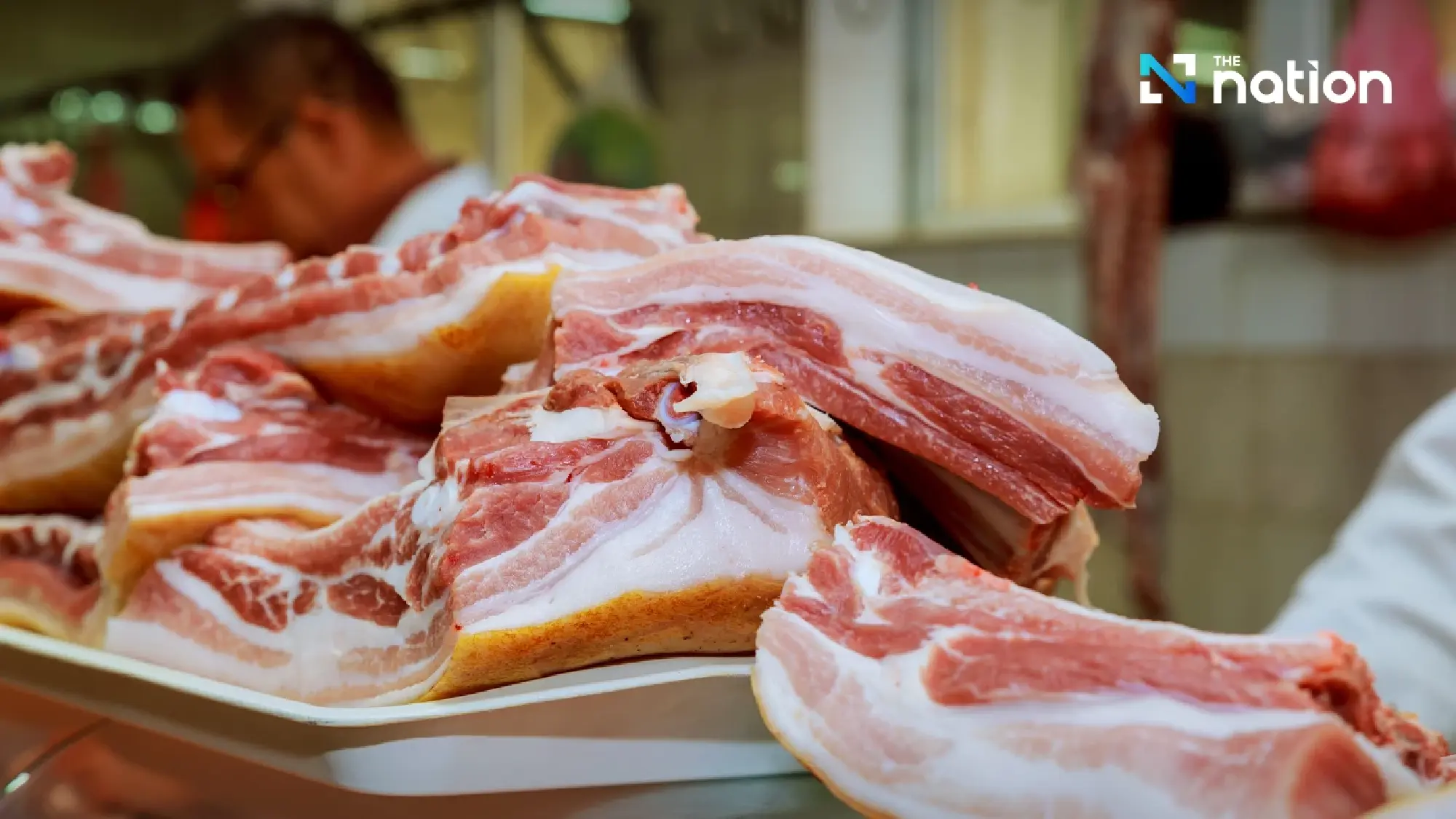

US pork production costs lower than Thailand's, industry leader warns of impact
Sittiphan Thanakiatpinyo, President of the Swine Raiser Association of Thailand, stated that opening the market to cheaper US pork, which has significantly lower production costs, would devastate Thailand’s domestic pig farming industry. It could lead to the loss of livelihoods for over 100,000 farmers overnight.
The impact wouldn't only affect pig farmers but would have a ripple effect throughout Thailand's entire agricultural production chain. This includes corn and soybean farmers, animal feed producers, processing plants, and millions of workers involved in the industry, all of whom could see their jobs vanish.
“Opening the market to US pork means the government is pushing Thai farmers out of the system. While the government may gain more export rights for industrial products, it comes at the cost of destroying the domestic pig farming industry that supports the livelihoods of people across the country. If the US economy survives but the livelihoods of ordinary Thai citizens collapse, who will take responsibility?” said Sittiphan.
He further argued that agricultural products, especially pork, should not be used as bargaining tools in international trade negotiations, as they are low-margin, high-cost products that are vital to the country's food security. Thailand cannot compete fairly with countries like the US, which receive heavy government subsidies for their agricultural sectors.
Additionally, opening the market to US pork poses significant risks of introducing animal diseases and new pathogens into Thailand, such as swine flu, which has never been reported in the country.
Therefore, allowing imports without strict safeguards would inevitably introduce dangerous pathogens into Thailand’s livestock system, which could severely impact the country’s long-term meat production. Thailand has established animal disease prevention measures according to international standards, and these measures have been recognised globally, but they could be compromised by such imports.

Warning to the government: Stop opening livestock markets
Sittiphan added that the import of meat from countries that still allow the use of banned substances and antibiotics—many of which are strictly prohibited in Thailand for livestock farming—must be stopped. This includes beta-agonists, such as Ractopamine, a synthetic substance used in the livestock industry to increase muscle mass and reduce fat in animals.
Furthermore, certain feed additives are used to promote fast growth in pigs, increasing the rate of food conversion into muscle. Even when used in safe amounts for health, excessive consumption can cause side effects, such as rapid heart rate, high blood pressure, headaches, and trembling hands, he said.
The Swine Raiser Association of Thailand urges the government to abandon plans to open the market to US pork and other vulnerable agricultural products. It calls for a reconsideration of the negotiating stance with the US, suggesting that Thailand should focus on other industrial products that can genuinely compete with US goods in resolving this issue. This approach will help preserve economic stability, ensure food security, and promote safe food for the Thai people.
“Do not let Thai pigs be driven out of the global market, and do not trade the future of Thai pig farmers for a few items on the export list. In the long term, this will undermine Thailand’s food security,” said Sittiphan.
US beef contains growth hormones, Thai farmers warn
Dr Wiwat Pongwiwatchai, a member of the Beef Cattle Association of Thailand, stated that the cattle farming sector in Thailand has never caused problems with beef exports to the United States. However, the sector strongly opposes the opening of the market to US beef imports due to the use of beta-agonists, or red meat growth hormones, which violate Thai laws and pose a potential risk to food safety in Thailand.
Furthermore, Thai cattle farmers have consistently supported and subsidised other Thai agricultural products. The government’s plan to open the market to US beef and offal, in exchange for negotiating tax measures to reduce the trade deficit, is seen as unfair to the 1.4 million households involved in cattle farming, with a total economic value of over 280 billion baht.
"Currently, cattle farmers are already facing low beef prices due to competition from free trade agreements (FTAs) with Australia and New Zealand. The association, therefore, calls for the cancellation of US beef and offal imports, as this would worsen the situation for farmers producing premium-grade beef," Wiwat said.
Support for importing animal feed ingredients
Somphop Eausongtham, Secretary-General of the Thai Feed Mill Association, previously stated that Thailand’s animal feed industry produces 21 million tonnes annually but has only grown by around 1.1% per year over the past seven years due to limited raw materials.
Thailand can only produce 2% of the world’s total animal feed output, which stands at 1.2 billion tonnes. Therefore, the government's plan to import soybeans, animal feed corn, and offal for animal feed production will benefit the industry and enhance export potential, which is expected to grow significantly.
