
Thailand agrees to US terms, adopts 50% RVC to curb Chinese goods
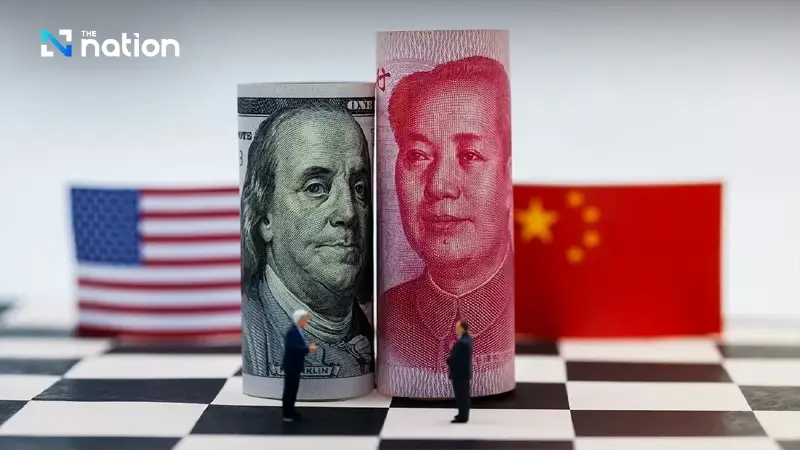


Thailand has accepted US conditions and pledged stricter measures to combat origin fraud, proposing to raise the Regional Value Content (RVC) threshold from the typical 40% to around 50% to ensure products genuinely originate in Thailand. The Customs Department will tighten inspections, particularly for high-risk goods flagged by the US, such as solar panels.
The Cabinet convened a special meeting on August 1 to acknowledge the outcome of trade negotiations between Thailand and the United States, following the conclusion of a reciprocal tariff deal in which the US agreed to impose a reduced rate of 19% on Thai imports.
The agreement, secured by Thailand's negotiation team, now awaits submission to Parliament for approval, along with subsequent amendments to relevant domestic laws—particularly those involving tariff rates for US goods, which currently enjoy broad access to the Thai market.
A source from the Ministry of Commerce said that Thailand is now waiting for either the Office of the United States Trade Representative (USTR) or President Donald Trump to issue a joint statement with Thailand, affirming both countries’ commitment to expanding trade and removing barriers—similar to statements issued for other countries.
Even after the joint statement is issued, the process is expected to take several more months to complete. The United States plans to conduct further talks with 20 countries, including Thailand, over a 3–12 month period. During this time, exports to the US will continue.
With the newly agreed 19% tariff rate—down from a potential 36%—Thailand is expected to save up to 300 billion baht in export-related costs.
Deputy Commerce Minister Chantawit Tantasith noted that the USTR is expected to formally announce the agreement soon. Once published, the agreement will be submitted to Parliament for consideration before any signing can take place.
Once parliamentary approval is secured, Thailand must implement relevant domestic legal processes. This includes opening channels for public and stakeholder participation to help shape the direction of future international trade policy.
Technical negotiations will also be held to clarify specific trade rules. Where legal amendments are required, Cabinet endorsement is necessary, and in some cases, parliamentary approval will also be required.
Key issues that remain under negotiation include the rules of origin and the calculation of regional value content (RVC), which represents the proportion of raw materials sourced within the region and used in product manufacturing. These are critical to ensuring that Thai businesses can benefit from the agreement without suffering significant disruptions.
“The Commerce Ministry is moving quickly to align domestic regulations with US measures and to support Thai entrepreneurs in adapting to the new environment,” Chantawit said. “We are also seeking out new export markets to create more opportunities, while continuing to focus on core markets like the United States.”
Dr Prommin Lertsuridej, Secretary-General to the Prime Minister, described the deal as a breakthrough that lifted Thailand out of what he called the “Trump tariff crisis”—a challenge not unique to Thailand, but one faced by many countries. He said Thailand had reached a vital and beneficial conclusion for the business sector.
“The government’s job is not yet done, even if we’ve passed through the critical phase. We now have a clear resolution—one that opens up broader market access for Thailand and ensures our tariff rates are on par with those of our competitors. We may even gain a slight advantage over some,” Dr Prommin said.
Thailand to set import quotas
A government source revealed that once Parliament approves the details of the recently concluded US-Thai tariff deal, the Thai government will move ahead with measures concerning customs duties and the establishment of product-specific import quotas—particularly for US goods. Special attention will be given to agricultural imports, such as corn and pork, which could hurt local farmers.
Authorities will need to clearly define these quotas to avoid disruptions to Thailand’s domestic agricultural sector. The process is expected to take several more months to finalise.
Finance Ministry steps up checks on transshipped goods
Deputy Finance Minister Julapun Amornvivat said he had instructed the Customs Department to intensify inspections of transshipped goods originating from third countries. The goal is to prevent origin fraud and support the US-Thai agreement on reducing non-tariff barriers (NTBs), following the recent consensus on a 19% tariff rate for Thai goods entering the US market.
“The issue of transhipment is already a serious offence, and this time, enforcement must be even stricter,” Julapun stressed.
The tariff agreement will be presented again to Parliament for formal endorsement following Cabinet approval of the joint US-Thai statement on August 1. Julapun expressed confidence that the parliamentary process will proceed without complications.
When asked whether the agreement would impact government revenue, Julapun said it was important not to focus solely on potential losses. “This isn’t just about tariff disadvantages. The agreement will help boost trade volumes, particularly with the US,” he explained.
Thailand to apply 50% RVC threshold to tighten control on imports
Permanent Secretary for Finance Lawaron Sangsanit said that Thailand will soon enter further discussions with the United States to determine the RVC requirement under the bilateral trade agreement. It is anticipated that the RVC threshold will be set at approximately 50%, with inputs from Thailand’s allied countries included in the calculation—excluding China, as it has yet to reach a tariff agreement with the US.
Theeraj Athanavanich, Director-General of the Customs Department, explained that in trade negotiations, a minimum local content requirement of 40% is typically applied. This figure includes raw materials and components sourced from ASEAN member states, which are considered part of the local content. However, the criteria remain flexible and are subject to negotiations between trade partners to determine eligibility for trade benefits.
Theeraj added that Thailand’s agreement to reduce import tariffs on many US products to 0% will proceed similarly to a Free Trade Agreement (FTA). The complete list of eligible products will be submitted to the Cabinet for approval. Once endorsed, the Customs Department will issue a ministerial regulation to implement the 0% tariff in line with the finalised agreement.
The draft trade agreement resulting from US-Thai tariff talks will also be submitted to Parliament for approval. Key elements include the exemption of duties and the establishment of frameworks and timelines for implementation by relevant agencies.
In response to concerns over transhipment fraud, the Customs Department will reinforce its monitoring and enforcement mechanisms. Theeraj acknowledged that past oversight has been insufficient, as the focus had been on facilitating investment and trade flows.
US issues product watchlist over origin fraud concerns
As part of the ongoing trade talks, the United States has submitted a watchlist of goods it considers at risk of “origin fraud” to Thailand’s Department of Foreign Trade, said Theeraj.
The US has asked Thailand to play an active role in monitoring these items, ensuring that all goods exported to the US under Thai origin claims are genuinely produced or assembled in Thailand, and meet the agreed local content requirements. One of the key products under scrutiny is solar panels, which Washington suspects may involve components imported from China, given minor processing in Thailand, and then re-exported as Thai products.
Theeraj noted that verifying the origin of goods is a priority for the US, and that Thailand must establish a clear implementation timeline. While the trade agreement has yet to be signed, it is expected that the final document will outline detailed responsibilities and timelines for both sides.
He emphasised that this agreement is a unique case exclusive to the US and should not be treated as a model for trade cooperation with other countries. In future FTAs, Thailand should follow international standards as established by the World Trade Organisation (WTO), he said.
50% RVC proposal highlights Thailand’s commitment to tackling transhipment
Visit Limlurcha, Vice Chairman of the Thai Chamber of Commerce, said Thailand’s proposed RVC threshold of 50%—higher than the 40% typically applied under FTAs—demonstrates the country’s sincere effort to combat origin fraud. This proportion includes raw materials sourced both domestically and from regional partners with similar tariff privileges.
Thailand and the US must still agree on the final RVC threshold and establish specific monitoring mechanisms. Visit explained that the most common approach would involve traceability systems using purchase orders and shipping documents. In the future, the process may need to be supported by digital systems or artificial intelligence (AI) to handle the anticipated volume of documentation.
At present, the US has not confirmed whether it will accept the 50% RVC proposal, and there is speculation that Washington may seek a rate as high as 60%. The higher threshold is widely understood to reflect US concerns over the risk of Chinese goods being rerouted or lightly processed in Thailand to circumvent tariffs.
Agricultural products are unlikely to be affected, as most inputs are sourced domestically. However, certain industrial products still rely on imported raw materials, while high-tech goods—such as computers and components—are particularly dependent on foreign supply chains.
“Whether a 50% RVC is feasible depends on the specific industry,” Visit said. “The Commerce Ministry must gather input from all stakeholders—such as farmers’ groups and trade associations—to inform its position in future negotiations.”
