
Business Leaders Urge Swift Formation of Thai Government
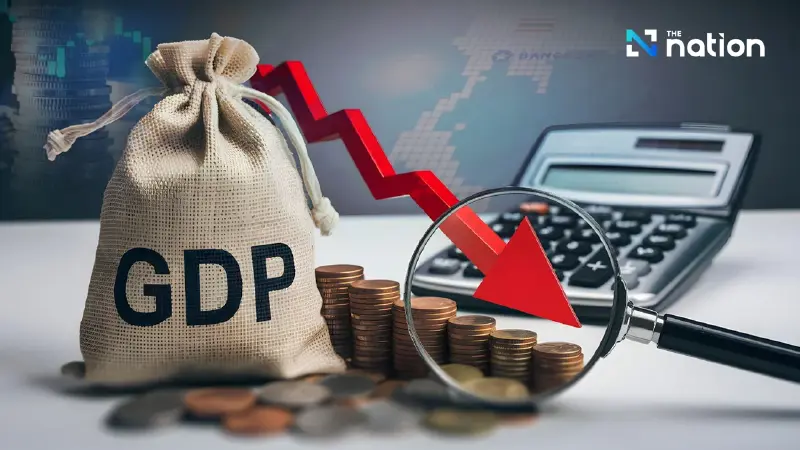


Following the disqualification of the Prime Minister, a political vacuum threatens to worsen an already sluggish Thai economy, business leaders warn
- Business leaders fear a prolonged political vacuum will stifle Thailand's already weak economy, damage investor confidence, and undermine economic momentum.
- The delay is stalling crucial economic activities, including private investment, international trade agreements, and vital domestic policies that require a fully-empowered government.
- Economic experts warn that the political instability could cause 2025 GDP growth to fall to a five-year low, with projections worsening the longer it takes to form a government.
Thailand’s business community is calling for political parties to quickly form a new government, fearing that a prolonged political vacuum will stifle the country's already weak economy.
The urgent plea came after the Constitutional Court ruled on Friday, with a majority of 6-3, to disqualify Prime Minister Paetongtarn Shinawatra. The ruling stated that her premiership ended on 1 July 2025—the date she was suspended from duty—due to a serious breach of ethics.
The decision has been closely watched by both domestic and international businesses, with many concerned about the impact on confidence and economic problem-solving. This uncertainty has prompted a "wait and see" approach from some sectors.
In the immediate aftermath of the ruling, a race to form a new government began, with the Pheu Thai and Bhumjaithai parties competing for leadership.
Poj Aramwattananont, chairman of the Thai Chamber of Commerce, warned that continued political instability would further shake confidence among investors, potentially slowing tourism and creating a domino effect across the economy.
“Political uncertainty is a key factor undermining economic momentum, which is extremely worrying as we are already facing a severe economic crisis,” he said.
He stressed the need for a new prime minister to be appointed quickly to lead the country, advocating for a stable government with a capable and respected cabinet.

Similarly, Thanakorn Kasetsuwan, president of the Thai National Shippers' Council, expressed concern that economic activities and international agreements would stall while the country awaits a new administration.
He noted that while a deal on US tariffs might continue, it would require a new cabinet to finalise.
Kriengkrai Thiennukul, chairman of the Federation of Thai Industries, echoed these sentiments, highlighting that delays would impact crucial policies such as trade negotiations with the US, border issues, flood management, and other economic projects that require a fully-empowered government.
Despite these domestic concerns, some international investors remain confident.
Ichiro Abe, president of the Japan External Trade Organization (JETRO) in Bangkok, said that Japanese investors—historically the largest source of foreign direct investment (FDI) in Thailand—are adaptable and that the country’s political situation has not significantly affected their long-term investment decisions.

However, Aat Pisanwanich, an international economics expert, warned that the political instability could see Thailand's economic growth for 2025 fall to a five-year low of between 1.2-1.8%. He identified four key risks:
Reduced consumption: Ongoing political instability further erodes consumer confidence.
Delayed private investment: A caretaker government cannot initiate new economic projects, causing investors to hold off.
Uncertain tourism: The goal of attracting 35 million tourists in 2025 seems challenging without a permanent government.
Impact of 'Trump tariffs': New US import tariffs in Q4 2025 are a major risk to Thai exports, which need a proactive government to address.

Dr Pisanwanich presented three economic scenarios:
- A new government is formed within a month, leading to 1.8% GDP growth.
- A three-to-four-month delay, resulting in 1.5% growth due to budget and investor uncertainty.
- A delay of more than five months, limiting growth to 1.2% due to a policy vacuum.
He concluded that Thailand is currently in a political and policy vacuum, and that quickly forming a new government with full authority is critical to implement urgent measures like economic stimulus, aid for farmers and businesses, and a potential interest rate cut.
