
Finance Minister Insists Political Turmoil Won't Harm Economy
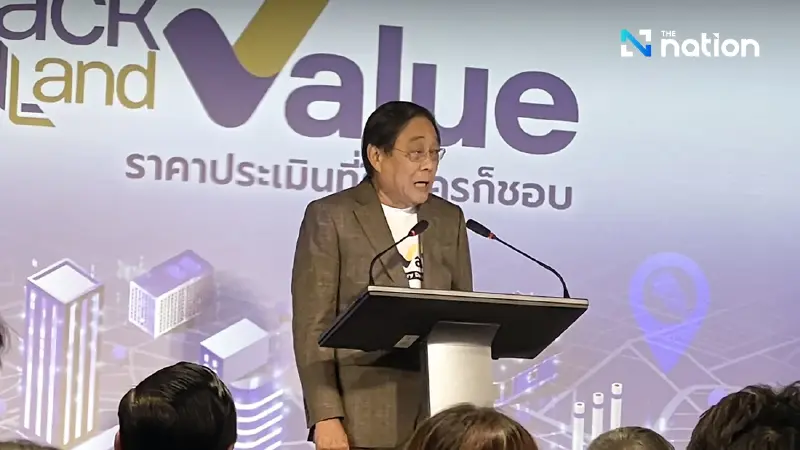


Pichai Chunhavajira says foreign investors understand Thailand's political nature, as he pushes ahead with key economic policies despite the government's uncertain future
- Finance Minister Pichai Chunhavajira asserts that foreign investors are not deterred by the political situation, viewing it as familiar and not a reason to alter long-term investment plans.
- He is continuing his full duties to push forward with economic policies, maintaining confidence in a 2.5% growth target despite the instability.
- A new draft law offering 99-year land use rights is being advanced to stimulate investment and drive economic growth, signaling a proactive focus on the economy.
Thailand's Deputy Prime Minister and Finance Minister Pichai Chunhavajira has moved to reassure investors that the country's current political upheaval will not undermine economic confidence or deter foreign investment.
He believes the situation is a familiar one and that international investors understand the nature of Thai politics.
Speaking to the media on Wednesday, Pichai said that foreign investors recognise that the current political situation is not new for Thailand and that an eventual resolution will be found.
He also noted that the ongoing political instability has not yet led to a downgrade in the country's sovereign credit rating, as he expects rating agencies to maintain a measured view.
"Investors take years, not just a month, to decide to invest. Once they have chosen to come to Thailand, they will not change their minds unless there are significant changes," Pichai said. "I have not received any negative signals from investors at this time."
Addressing the question of his role during this period of political uncertainty, Pichai clarified that he is not using the term "caretaker" and is continuing to perform his duties as Finance Minister as usual.
He intends to press on with policies beneficial to the nation, confirming he would continue to serve as a caretaker minister, even if parliament is dissolved.
He added that he would continue to handle ongoing tax negotiations with the United States, as long as they do not create obligations beyond his authority.
"The various negotiations are not immediately binding on the government," he pointed out, "but are aimed at finding a clearer resolution, and many issues still need to be presented to the Cabinet and Parliament."
When asked about economic forecasts, particularly the private sector’s prediction of only 1% growth in the second half of the year, Pichai maintained his confidence in the original 2.5% target.
He stressed that achieving this goal would depend on the successful implementation of policies without major obstacles.
The Minister also revealed that a draft law granting 99-year land use rights, or the "land-trust law", has been completed and is ready for Cabinet consideration.
He expressed confidence that this law would unlock the potential of land, stimulate investment, and drive economic growth.
The law's core principle is to separate ownership from the right to use land, allowing owners to retain their deeds while transferring long-term usage rights to investors.
"Leaving land idle is a burden, but if it can be put to use, it becomes a national asset," Pichai said, explaining that many businesses require lease terms longer than the current 30-year limit.
The new 99-year term would provide the security needed for large-scale investment.
Under the new law, a private landowner and a buyer of the right would first transfer the land to the state.
The state would then issue a "green title deed" to the buyer, granting them 99 years of use. At the end of the term, the land would revert to the state, allowing the government to increase its land holdings and implement more effective zoning plans in the future.
Pichai concluded by stating that regardless of which government takes power next, he believes this beneficial law will continue to be a priority.
