
Small and Beautiful: Hong Kong’s new vision for Belt and Road Initiative in partnership with Thailand
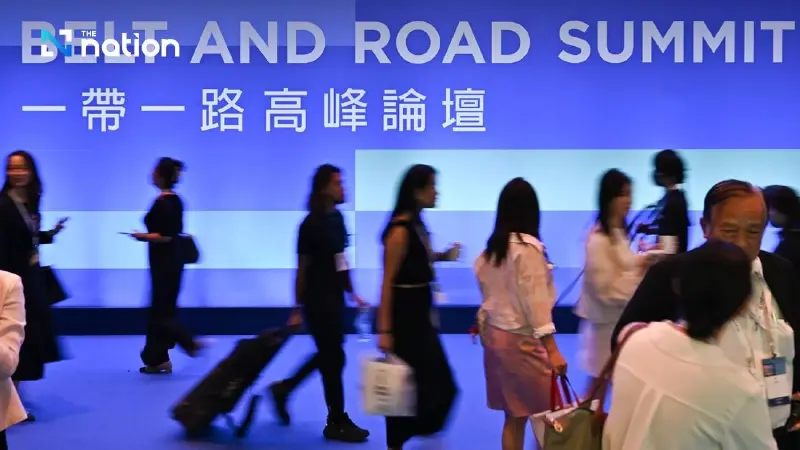


As the Belt and Road Initiative (BRI) enters its second decade, it continues to pave the way towards shared development and prosperity, promoting and putting into action ideas that are relevant to the present era.
At the forefront of this is Hong Kong, consolidating itself as a regional catalyst for green finance, innovation, and people-to-people connectivity.
In an exclusive interview with The Nation, Nicholas Ho, Hong Kong Special Administrative Region Government’s Commissioner for Belt and Road, discussed how these align closely with Thailand’s development vision and how both economies stand to benefit from deepened cooperation.
Pursue of sustainable and inclusive projects
“The Belt and Road Initiative is founded on the principles of extensive consultation, joint contributions and shared benefits,” Mr Ho explained. “It was often associated with large-scale, physical infrastructure projects, including ports, railways, highways that spanned continents. The focus is actually moving beyond these conceptions. We are championing projects that are sharply focused, mutually beneficial and designed to be financially viable, environmentally sustainable and socially inclusive.”
For Hong Kong, this has been transformative. The city is moving beyond its traditional role in the financial market to become a nexus for green finance, sustainable technology and professional services.
As Mr Ho puts it, “We are positioning ourselves not just as a financial centre, but as an ecosystem enabler for sustainable development.”
A shared agenda: Thailand’s BCG and Hong Kong’s green development
This BRI vision dovetails with Thailand’s Bio-Circular-Green (BCG) economic model. Both frameworks place sustainability at the heart of national development strategies, and Mr Ho sees remarkable collaboration opportunities between the two.
“Future prosperity depends on environmental stewardship,” he said, noting that Hong Kong provides a platform that combines green finance and green technology, creating huge business opportunities and making contribution to green transformation and development.
Hong Kong has led Asia in green and sustainable bond issuance for seven consecutive years, commanding 45% of the regional market. In 2024 alone, Hong Kong arranged over US$43 billion in green and sustainable bonds.
Hong Kong is playing a vital role in addressing the estimated US$66 trillion required for Asia’s green transformation over the next three decades.
What makes this particularly relevant for Thai companies is Hong Kong’s Taxonomy on Sustainable Finance, which is designed to be interoperable with both Mainland Chinese and European standards.
“It allows Thai firms to tap into international green capital markets more seamlessly by using Hong Kong as a platform,” he said.

Unlocking practical cooperation
This shared emphasis on sustainability has already yielded tangible outcomes. Thai companies can, for instance, leverage Hong Kong’s Core Climate platform, which is operated by the Hong Kong Exchanges and Clearing Limited, to trade emissions reductions achieved under Thailand’s BCG model on a global scale.
On the investment front, the Hong Kong Investment Corporation, tasked with deploying public funds for strategic initiatives, has a partner company, Spark EV Co., which aims to invest in over 1,000 electric vehicle charging stations across Thailand in five years.
“This is not just about building infrastructure, it is about participating in and enriching Thailand’s green ecosystem for mobility transformation,” Mr Ho added.
Driving technology transfer and innovation
Green technology cooperation is gaining momentum. Hong Kong companies are increasingly active in Thailand’s renewable energy sector, with long-standing examples like CLP Power Hong Kong Ltd’s solar farm in Lopburi, operational since 2012, demonstrating sustainable commitment.
Beyond capital, Mr Ho highlighted that Hong Kong brings technical expertise, project management acumen, and international governance standards to the table.
Innovation and technology (I&T) development has been a policy priority in Hong Kong, where the I&T start-up ecosystem is thriving.
“For example, a Hong Kong start-up specialised in cooling coatings that can be applied to buildings to reduce air-conditioning energy consumption is now working to distribute its products in Southeast Asia,” he said. “Hong Kong is also promoting the use of the Building Environmental Assessment Method (BEAM) to contribute its green building expertise to the global real estate and construction sectors. BEAM Plus (Global Version) is a Hong Kong-developed and internationally recognised green building rating tool, extending its reach to Southeast Asia and beyond.”
Talent as the bridge to future growth
As the BRI moves forward, so too does its human dimension. Mr Ho emphasised that “talent is the foundation of everything.”
Since 2022, Hong Kong’s various talent admission programmes have brought more than 203,000 individuals from around the world to the city.
Flagship efforts like the Belt and Road Scholarship launched in 2016 have been instrumental in building long-term connections. With an annual quota of 150 places, the programme is open to students from countries along the Belt and Road.
Among them was Chananchida Choochua, a Thai student who discovered the scholarship at an education fair in Bangkok.
She enrolled at the Chinese University of Hong Kong in 2018, graduated in 2022, and now works in business development at Kerry eCommerce, facilitating trade between Thailand and Hong Kong.
Her story is emblematic of what the BRI aims to foster: enduring, people-driven partnerships that go beyond infrastructure and finance.
Over 4,000 university students from those countries chose to study in Hong Kong in 2024-25 academic year while about 1,400 Hong Kong youth have participated in internship or exchange programmes in Belt and Road countries.
Hong Kong’s unique advantage
Mr Ho noted that Hong Kong’s strength lies in its ability to operate across diverse systems. With a legal framework based on English common law and deep integration with the Mainland of China, the city offers global investors both familiarity with international standards and access to an enormous market.
For Thai businesses, this means access not only to Hong Kong’s markets but to the entire Guangdong-Hong Kong-Macao Greater Bay Area, a dynamic city cluster comprising 11 cities with a combined GDP over US$2 trillion in 2024, similar to the GDP of Italy or Canada, two G7 economies.
The way forward: from connectivity to collaboration
Looking forward, Mr Ho sees the new opportunities brought by BRI will focus on sustainability, digitalisation and people-to-people connectivity.
The days of solely building roads and railways are being augmented by technology partnerships, sustainable development, and collaborative innovation.
Hong Kong will host the 10th Belt and Road Summit on 10-11 September, with collaboration for changes at the heart of the agenda.
Mr Ho welcomes government leaders and businesses in Thailand to participate, underscoring that the event is not merely about trade but about building a vision of a shared future for the region.
A signature project session at the summit will feature Thailand’s Eastern Economic Corridor Capital City project, offering Hong Kong and Thai participants the opportunities to foster partnerships under BRI.
The 10th Belt and Road Summit will be held in Hong Kong on 10-11 September. For more information, please visit www.beltandroadsummit.com.
“The new focus is about thinking smart, sustainable and strategic, which is the future of regional cooperation, and Hong Kong is uniquely positioned to lead it,” Mr Ho concluded.
