
New Cabinet Faces 'Make or Break' Moment for Thai Economy
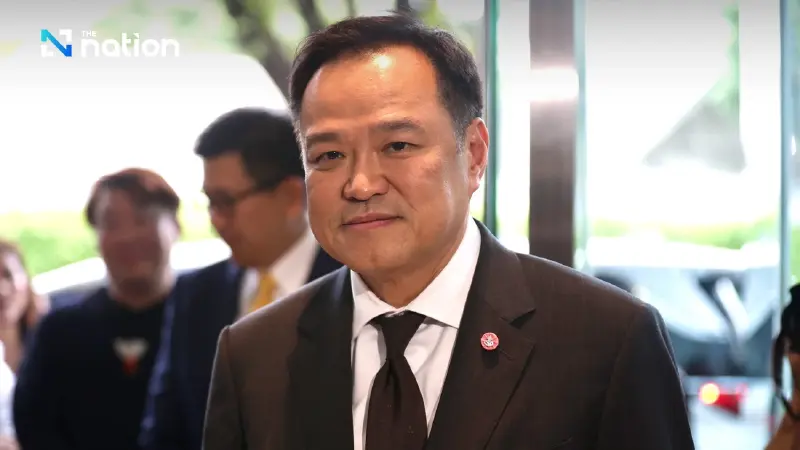


TDRI President Dr Somkiat Tangkitvanich urges the new government to tackle deep-seated structural issues and warns of a potential credit rating downgrade
Thailand's new cabinet must go beyond short-term economic fixes and focus on long-term structural reforms to truly revitalise the economy, according to Dr Somkiat Tangkitvanich, president of the Thailand Development Research Institute (TDRI).
He warns that while quick stimulus measures might win public support, tackling deeper issues is crucial for the country's future and will earn the government lasting credit.
One immediate and cost-effective task, he argues, is regulatory reform. Citing TDRI research, Dr Somkiat highlighted that liberalising key sectors, such as the electricity market, could create a huge economic multiplier effect.
Dr Somkiat proposed the creation of three new sub-committees, structured like a long-term version of the Joint Public and Private Sector Consultative Committee (JPPCC), to enhance Thailand's competitiveness:
Human Resources: A joint public-private effort to upskill the workforce and meet the private sector's demand for high-skilled labour. He noted that a lack of skilled workers is a major barrier to foreign investment.
Innovation: A new focus on innovation to help Thailand compete against lower-cost goods, such as those from China.
Regulation: A dedicated committee to streamline and remove bureaucratic red tape that hinders business.

He also stressed the need for fiscal discipline.
With Thailand's public debt on a steady rise, Dr Somkiat cautioned that a credit rating downgrade is a real risk. He urged the government to review and cut spending on programmes that offer a poor return on investment and to have a clear revenue generation plan.
He expressed hope that the new Finance Minister, Dr Ekniti Nitithanprapas, with his background in the Revenue and Excise departments, will have a clear strategy to reassure both investors and credit rating agencies.
Political Reforms and New Challenges
Dr Somkiat praised the new cabinet's inclusion of professional outsiders, calling it a good balance between experienced technocrats and elected politicians.
He believes this model should be adopted in the future to address increasingly complex national problems.
However, he noted that the current political system, with its coalition-based negotiations, makes it difficult to appoint top talent.
He suggested amending the constitution to create a stronger Prime Minister and reduce the number of political parties, which he says would lead to more effective governance.

He outlined specific challenges for key ministers:
The Commerce Minister must prioritise negotiating major free trade agreements (FTAs), especially with the EU, to restructure the economy and mitigate risks from rising trade protectionism.
The Deputy Prime Minister for Legal Affairs, Professor Dr Bowornsak Uwanno, should push for business-friendly legislation and "guillotine" outdated laws.
The Energy Minister should pursue a free electricity market to attract foreign investment in renewable energy and allow citizens to sell surplus power.
The Industry Minister must crack down on foreign-owned factories that produce substandard goods and pollute the environment.
The Foreign Affairs Minister must de-escalate tensions with neighbouring countries to restore supply chains and reinforce Thailand's "Thailand Plus One" manufacturing strategy.
Dr Somkiat concluded with a strong final warning: "No matter how good their performance is, a scandal will make it difficult to earn the public's trust." He urged the government to avoid any hint of corruption, nepotism, or a disregard for the law.
