
Cheap Chinese Imports Threaten Thai Economy, Warns Bank
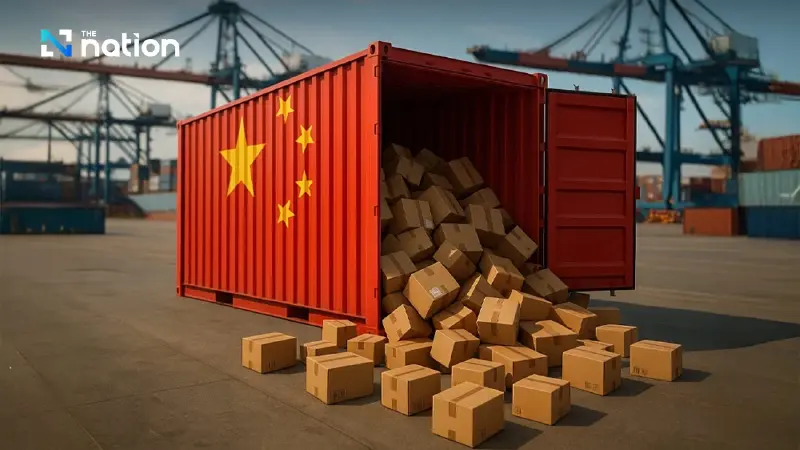


A new report finds that while Thailand is not facing deflation, an influx of low-cost goods from China could undermine local businesses
Thailand is not yet in a state of deflation, but an influx of cheap Chinese goods poses a significant threat to local businesses, according to a new report from Krungthai Bank.
The warning comes as Thailand records its fifth consecutive month of negative inflation.
The Trade Policy and Strategy Office (TPSO) of the Ministry of Commerce reported that headline inflation in August fell by 0.79% and is expected to continue its decline in September. For the first eight months of the year, headline inflation rose by a mere 0.08%.
Poon Panichpibool, a capital markets strategist at Krungthai Bank, explained that the negative inflation is primarily due to supply-side factors such as a good harvest of fresh fruits and vegetables and low rice prices.
He also noted that government measures to ease the cost of living, such as electricity subsidies, were a significant factor.
"The country has not entered a state of deflation because there is no widespread price drop across the board," he said.
However, Poon warned that a flood of cheap Chinese goods is putting severe pressure on Thai businesses, which face intense competition both in the domestic market and in export markets.
He urged the government and the Bank of Thailand to work together to find a solution.
Poon believes that while low inflation is not a concern for the Bank of Thailand, the country's slowing economy and high household and SME debt are more likely to prompt a policy rate cut.

He also pointed out that Thailand's core inflation, which remains stable at 0.8%, is being affected by a combination of weak demand and the influx of Chinese imports.
Poon concluded by stating that the government's long-term strategy should focus on boosting income for households and SMEs.
"It's a long-term game that requires careful planning to improve the economy and bring inflation back up," he said.
