
Thailand to Impose 45% Tax on Vintage Cars, Aiming for THB2bn Boost
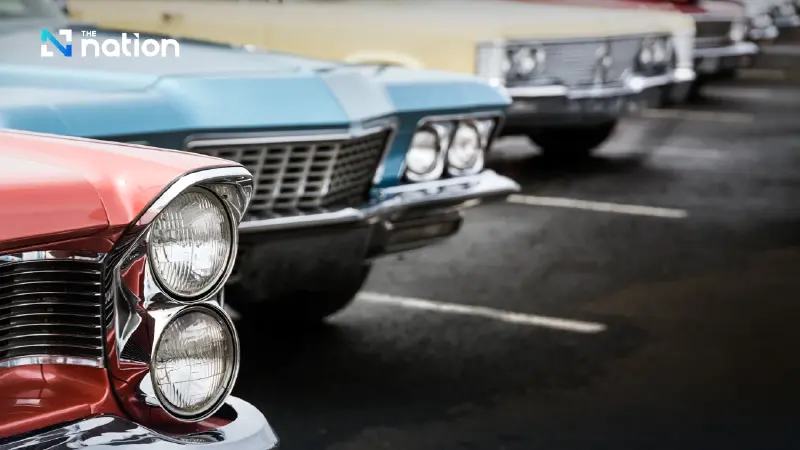


New measure on imported vehicles will restrict their use to weekends and public holidays, officials confirm
- Thailand will introduce a 45% tax on imported vintage cars starting in fiscal year 2026, with the goal of generating an additional 1-2 billion baht annually.
- The tax applies exclusively to imported cars that are at least 30 years old and does not affect vintage cars or motorbikes already in Thailand.
- In addition to the tax, the use of these imported vintage vehicles will be restricted to weekends and public holidays.
The Thai Excise Department will begin imposing a 45% tax on imported vintage cars in fiscal year 2026, a move expected to generate an additional 1-2 billion baht annually for the government.
The new regulations will also restrict the use of these vehicles to Saturdays, Sundays, and public holidays, though exemptions for special events may be granted with police permission.
According to Kulaya Tantitemit, Director-General of the Excise Department, the tax is intended to position Thailand as a hub for vintage car exhibitions and to bolster the domestic car restoration industry.
"This tax will apply exclusively to vintage cars imported from abroad," Kulaya stated. "Initial conditions require a vehicle to be at least 30 years old, but we may announce specific models and use international reference prices in the future."
The Director-General confirmed that the tax will not apply to vintage motorbikes or cars already in Thailand.
The announcement comes as the Excise Department expects to exceed its revenue target for the current fiscal year.
For the first 11 months of fiscal year 2025, the department collected 489 billion baht, a 1.6% increase from the previous year.
It forecasts a total of 535 billion baht by the end of the fiscal year, and has set a target of 609 billion baht for 2026.

This growth has been driven by a one-baht-per-litre increase in excise tax on petrol and diesel and a tax reduction for entertainment venues, which has boosted tourism revenue.
However, Kulaya noted that overall vehicle tax revenue has declined due to government support for electric vehicles (EVs) and a general slowdown in consumer demand.
Since March 2022, 233,000 EVs have been registered, with the government having paid out 11.2 billion baht in subsidies.
In addition to the vintage car tax, the department is studying several other tax reforms, including a new tax on batteries, a sweetness tax on beverages, and a careful review of the current two-tier tax structure for cigarettes.

Regarding cigarettes, Kulaya emphasised that the department would focus on cracking down on illegal smuggling rather than using a tax-based mechanism to compete with illicit goods.
"Smuggled cigarettes don't pay tax anyway, so using a tax mechanism to manage the issue doesn't guarantee more revenue," she said.
