
Thai PM Calls on Banks to Inject Liquidity as Government Seeks 'Quick Big Win' Economic Recovery
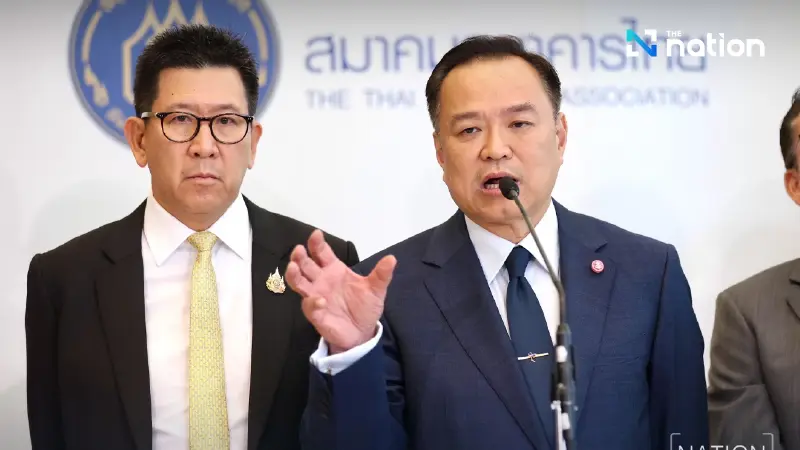


Banking sector urged to ease credit access for SMEs whilst addressing household debt crisis and strengthening baht concerns
- Thailand's Prime Minister has urged the nation's banking sector to inject more liquidity into the economy to stimulate growth.
- The requested financial support specifically targets struggling small and medium enterprises (SMEs) and aims to address high levels of SME and household debt.
- This initiative is a key part of the government's "Quick Big Win" economic strategy, designed to deliver immediate results while building long-term sustainability.
- The government is seeking cooperation from banks to help achieve its broader vision of making Thailand a central economic hub for the ASEAN region.
Thailand's Prime Minister Anutin Charnvirakul has called upon the nation's banking sector to dramatically increase liquidity injection into the economy, particularly targeting small and medium enterprises (SMEs) struggling with mounting debt burdens and limited credit access.
Speaking after Monday's high-level meeting with the Thai Bankers' Association, the Prime Minister outlined the government's urgent need for financial sector cooperation to address what he described as Thailand's most pressing economic challenges: SME debt, household debt, and restricted credit accessibility.
"I'm asking for cooperation from banks to try to inject more money into the system," Anutin stated. "The reason is simple—if old money gets stuck and new money doesn't come in, the old money will disappear as well. However, banks must assess risks, but borrowers or customers must also have potential to continue their businesses."
The discussions, held under the theme "Overcoming Crisis: Transforming Thailand's Economic Future with New Dynamics," brought together key economic ministers including Deputy Prime Minister and Finance Minister Ekniti Nitithanprapas, Commerce Minister Suphajee Suthumpun, Energy Minister Auttapol Rerkpiboon, and Deputy Finance Minister Woraphat Thanyawong, alongside Thai Bankers' Association Chairman Payong Srivanich and Thai Capital Market Business Council Chairman Kobsak Pootrakool.

The strengthening baht emerged as a significant concern, with officials describing its current trajectory as inconsistent with Thailand's economic fundamentals.

Deputy Prime Minister Ekniti acknowledged that preliminary working groups have been established to address the baht's appreciation and capital inflow issues, including the problematic "grey money" flows that require enhanced data connectivity to identify sources and implement targeted solutions.
Leveraging his background as a former credit analyst at the Industrial Finance Corporation of Thailand (IFCT), Prime Minister Anutin emphasised his administration's unique understanding of banking operations.
"I don't even know yet who's on the government side or the banker side," he remarked, noting that several cabinet members possess extensive finance and large-scale industry experience. "But I'm also a banker myself—I started at IFCT as a credit analysis officer."
The government's economic recovery strategy centres on what Finance Minister Ekniti termed "Quick Big Win" initiatives designed to deliver immediate results whilst establishing long-term sustainability.
The approach addresses Thailand's structural economic problems, including persistent household debt accumulation, through comprehensive SME liquidity enhancement programmes.
"Currently, economic problems are quite substantial, with continuous structural issues," Ekniti explained. "Therefore, the question is: how do we revive Thailand's economy quickly but sustainably, emphasising short-term results with long-term impact?"

The administration's broader vision encompasses positioning Thailand as ASEAN's central economic hub through enhanced competitiveness across multiple sectors.
Priority areas include tourism and services expansion, medical wellness development, agricultural sector strengthening—covering producers, processors, and farmers affected by low commodity prices—and automotive industry advancement through high-tech manufacturing support.
Prime Minister Anutin stressed that Thailand possesses sufficient capacity to accommodate expansion in these high-technology industries, describing financial institutions as "the heart of the economic system" and emphasising collaborative dialogue without creating government-banking sector divisions.
The systematic approach involves engaging stakeholders across agriculture, tourism, industry, and services sectors to gather actionable intelligence for rapid problem-solving and assistance delivery.
The government has committed to providing full support for implementation efforts emerging from these consultations.
The meeting represents a cornerstone of the new administration's economic strategy, prioritising public-private collaboration to navigate current economic uncertainties whilst positioning Thailand for sustainable growth within the broader ASEAN framework.
Banking sector recommendations are expected to inform future policy directions as the government seeks to transform Thailand into a regional economic powerhouse.
