
Thai Federation of Industry Warns on Export Concentration, Calls for Biotech Focus
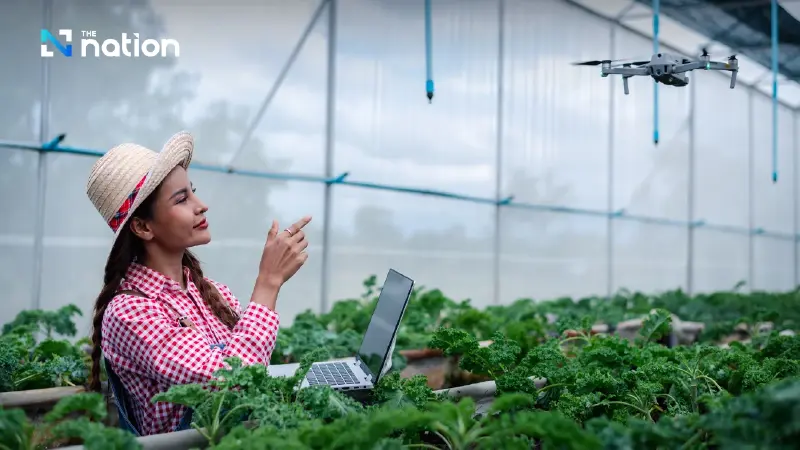


The FTI warns against over-reliance on US, China, and EU markets, stressing that leveraging biodiversity and investing in AI will be key to sustainable economic growth
- The Federation of Thai Industries (FTI) warns that Thailand is overly reliant on just four export markets (Europe, China, the US, and ASEAN), which account for over 60% of its exports, creating vulnerability to global trade pressures.
- To counter this concentration, the FTI urges a strategic shift to attract quality foreign investment in high-value, innovative sectors, with a primary focus on biotechnology, Artificial Intelligence (AI), and sustainability.
- The emphasis on biotechnology aims to leverage the country's biodiversity and large agricultural workforce to create high-value products, boosting a sector that currently contributes only 8% to the GDP.
Thailand must urgently diversify its export markets and shift focus towards high-value sectors such as biotechnology and Artificial Intelligence (AI) to mitigate risks from rising global trade pressures, including potential protectionist measures like US tariffs.
The warning came from Wiwat Hemmondharop, Vice Chairman of the Federation of Thai Industries (FTI), speaking at the Sustainability Expo 2025. He noted that the country’s current political stability is already bolstering foreign investor confidence.
Wiwat referenced forecasts from the Joint Standing Committee on Commerce, Industry and Banking (JSCCIB), which anticipate a slowdown in GDP growth for the second half of the year due to cooling domestic purchasing power and high public debt.
He stressed that a domestic purchasing power boost is vital to increase economic circulation.
A major concern is the concentration of Thai exports, with over 60% currently reliant on just four markets: Europe, China, the US, and ASEAN.
"It is necessary to find new markets for product diversification," Wiwat stated, aligning with the "Market University" concept promoted by Commerce Minister Suphajee Suthumpun.
This strategy focuses on retaining existing products while expanding the customer base to lessen reliance on traditional markets.

The urgency for diversification is compounded by the threat of Trump tariffs, which have prompted faster Free Trade Agreement (FTA) negotiations with partners like Europe and Japan to reduce exposure to the volatile US market.
Wiwat emphasised that future competitiveness relies on excelling across the 4 P’s (Product, Price, Place, Promotion), specifically by increasing production efficiency, lowering costs, and cutting energy consumption.
The FTI highlighted that while foreign direct investment (FDI) is rising in the digital sector—such as data centres—Thailand’s next differentiator must be innovation.
The country’s transition into an ageing society is creating labour shortages and higher production costs, prompting some manufacturers to relocate to nations like Vietnam and Indonesia.
To counter this, the FTI strongly advocated for the government to prioritise three key areas to attract quality FDI: Biotechnology, Artificial Intelligence (AI), and Sustainability.

Wiwat stressed that with over 50% of the population involved in agriculture but the sector only accounting for 8% of GDP, creating value is crucial.
“If Thailand aims for sustainable growth, it must create high-value products, especially by leveraging biodiversity,” he said. “Bio is the core of the highest value,” citing pharmaceuticals, cosmetics, and health foods as top-tier, value-added products.
The best FDI should therefore be invited into innovative, less labour-dependent sectors that create added value for Thai farmers, ensuring both growth and sustainability.
To support this shift, the FTI, in collaboration with public and private partners, has launched platforms like Innovation One (INNOVATION ONE) and the SAI (Smart Agriculture Industry) project with Mahidol University, aimed at integrating Smart Farming and digital technologies across the agricultural supply chain.
