
BTS Group Identifies Three Key Pillars for Sustainable Transport in Thailand
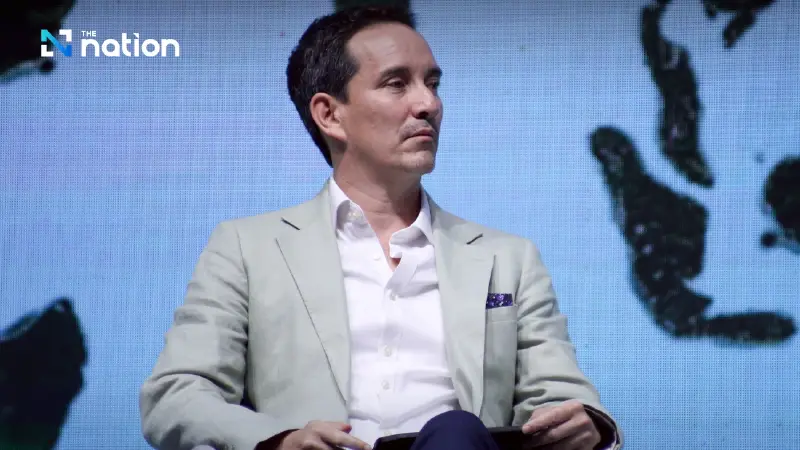


A BTS Group executive detailed the crucial role of rail, supported by investment in renewable energy and affordable fares, in meeting climate goals ahead of schedule
- BTS Group identified three key pillars for sustainable transport: Environmental Responsibility, Social Accessibility, and Economic Viability.
- Environmental Responsibility focuses on reducing greenhouse gas emissions and using sustainable energy, such as installing solar roofs on stations.
- Social Accessibility aims to make public transport easy to use and affordable, with the company supporting policies like a 20-Baht flat fare.
- Economic Viability ensures that all investments and operational spending deliver value for money to guarantee long-term sustainability.
- The goal of these pillars is to make electric rail the backbone of Thailand's transport system to help the nation achieve its Net Zero emissions target.
The operator of Bangkok’s Skytrain, BTS Group Holdings, has identified three critical factors necessary to make electric rail the backbone of the nation’s transport system and help Thailand achieve its Net Zero emissions target possibly earlier than the 2050 goal.
Daniel Ross, Group Chief Investment Officer and Head of Sustainability Development at BTS Group Holdings Public Company Limited, outlined the company's perspective on sustainability during a recent industry seminar.
The three factors crucial for a transition to sustainable transport are:
Environmental Responsibility: Prioritising the reduction of greenhouse gas emissions and the use of sustainable energy sources.
Social Accessibility: Ensuring public transport systems are easily accessible and priced affordably.
Economic Viability: Guaranteeing that all investments and operational expenditure deliver value for money.
Ross noted that these elements are essential to realise a Multimodal Transport system, effectively connecting rail, road, air, and water.
Furthermore, future infrastructure must be Climate Resilient, able to withstand conditions like flooding and extreme heat, while offering solutions for passenger comfort.
The electric rail mass transit system is environmentally superior, surpassed only by walking and cycling, and offers the highest safety standards.
Ross highlighted the stark imbalance in current usage:
- The transport sector accounts for approximately 30% of Thailand's greenhouse gas emissions.
- 80% of daily travel is by car, generating 95% of the transport sector’s carbon emissions.
- Rail accounts for 15% of all travel but contributes only 3% of the sector's carbon footprint.
To transform Bangkok into a ‘green city’, Ross argued that the electric rail system must become the foundation of the Multimodal network.
He believes that with full government and public support for rail as the primary transport mode, the national Net Zero target could be reached ahead of 2050, citing countries like Japan where rail dominates daily commuting.
BTS Group has been investing in low-carbon mass transit for over 30 years, committing 400-500 million baht annually to continuous operational efficiency improvements, and raising over 63 billion baht through Sustainability Ring Bonds.

Currently, at least 10% of the energy powering the Green Line Skytrain network is sourced from Renewable Energy Certificates (RECs). Looking ahead, BTS plans to install Solar Roofs across 45 stations and maintenance centres.
This project is expected to generate 34 megawatts of electricity, supplying approximately 20% of the entire network's power demand.
Addressing the affordability factor, Ross gave his full backing to policies like the 20-Baht flat fare or any form of reduced fares.
He concluded: "No matter how good the electric train is, or how much carbon it helps reduce, people still consider the fare price. Therefore, this policy will cause people to shift from using cars on the road to using the electric rail. I believe any government should support this policy.”
