
Thailand Must Triple Growth Rate to Achieve High-Income Ambition
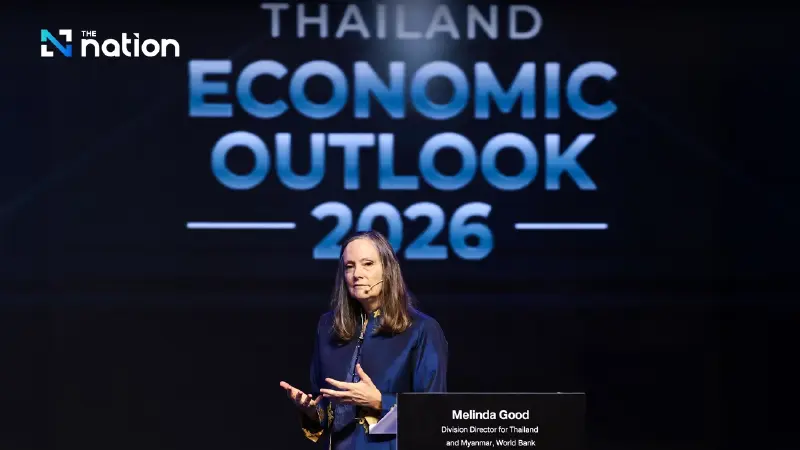


Thailand must hit 5% annual growth to reach its 2037 wealth goal, says World Bank Director, highlighting $1.8bn market in five future-focused industries
- To achieve its goal of becoming a high-income nation by 2037, Thailand must accelerate its annual economic growth rate from its current 2% to a target of 5%.
- The World Bank recommends a strategic pivot focused on three key shifts: developing Green Competitiveness, Digital Competitiveness, and Services Competitiveness.
- This growth can be driven by five key industries where Thailand has a competitive edge, including smart agribusiness, digital services, and sustainable tourism.
- Critical actions include upskilling the digital workforce to attract foreign capital and reforming restrictive trade rules in the high-value services sector.
Thailand must urgently accelerate its economic growth to 5% annually and implement a strategic pivot toward three key mechanisms if it is to achieve its goal of becoming a high-income nation by 2037.
This warning came from Melinda Good, World Bank Country Director for Thailand and Myanmar, who spoke at the “Thailand Economic Outlook 2026: Out of the Trap” event hosted by Krungthep Turakij on 9th October 2025.
Good noted that while Thailand aspires to reach wealthy nation status within the next 10 to 15 years, its current growth rate hovers at just 2%. This leaves a significant 3% gap that must be closed.
“If this gap continues to widen, the longer Thailand grows at its current rate, the further it will move away from its target,” she cautioned.
However, Good stressed that the country is not without hope, highlighting its strategic location in Asia, its stable institutions, and the numerous policy "options" available to guide its global re-entry.

Five Future Industries
The World Bank identified five key industries where Thailand possesses the competitive edge to turn global disruptions into powerful drivers of growth:
- Kitchen of the World & Smart Agribusiness
- Digital Services
- Sustainable & Wellness Tourism
- Remanufacturing
- Creative Economy
These five sectors lead directly to the "Three Key Shifts" the World Bank recommends for building sustainable competitiveness:
1. Green Competitiveness
Thailand can transform climate risk into an economic advantage by establishing itself as a hub for EVs, batteries, and renewable energy. A key goal here is becoming a leader in the export of low-carbon food.

2. Digital Competitiveness
The shift to digital holds an enormous market value, exceeding $1.8 billion, in areas such as FinTech, Cloud computing, and E-commerce. While Thailand has a solid base, Good emphasised the critical need to invest in upskilling the digital capabilities of its citizens to attract foreign capital and power these industries.
3. Services Competitiveness
The service sector, which generates most of the country’s jobs and productivity—including wellness tourism and other high-value services—is currently losing ground. Thailand is identified as having some of the most restrictive rules on trade in services. Improving these regulations and pursuing stronger trade agreements in the services sector are therefore crucial to elevating the country as a regional hub for future services.
Good concluded that by focusing intently on Go Green, Go Digital, and Go for High-Value Services, Thailand could leverage its geographic and institutional advantages to achieve rapid and equitable economic growth. Next year, when Thailand hosts the World Bank and IMF Annual Meetings, will provide a vital opportunity to showcase this renewed vision to the world.
