
China Imports Fuel Thai Inflation Drop, Risking SME Stability
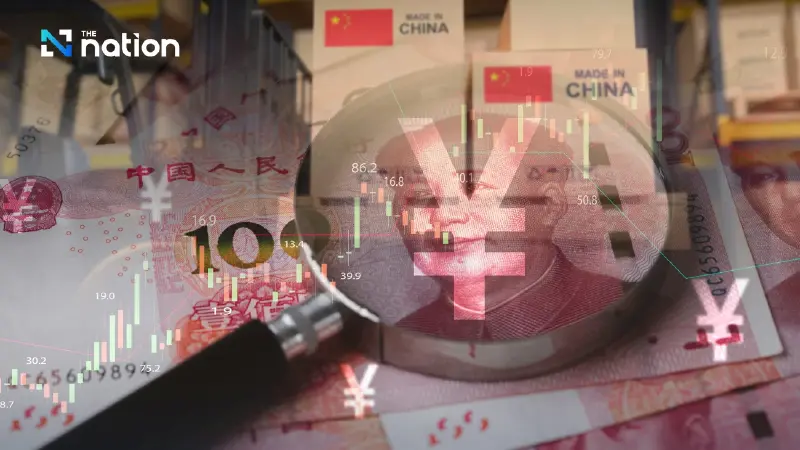


Bank of Thailand says low consumer price index is due to supply shock and cheap foreign goods, not weak demand; SME debt crisis heightens concern
- Thailand's central bank attributes the nation's low inflation rate to a supply-side shock, primarily fueled by a large influx of cheap imported goods from China.
- The Bank of Thailand clarifies that this inflation drop is not caused by weak domestic demand, as key economic indicators remain stable.
- Concurrent with the low inflation, there is growing concern over the financial stability of Small and Medium-sized Enterprises (SMEs), which are experiencing a rising number of non-performing loans.
Bank of Thailand says low consumer price index is due to supply shock and cheap foreign goods, not weak demand; SME debt crisis heightens concern.
The Bank of Thailand (BOT) has attributed the nation's prevailing low inflation rate not to slack domestic demand but to temporary supply-side pressures and a flood of cheap imports from China.
While the risk of deflation remains low, the central bank has voiced deep concern over a persistent rise in non-performing loans (NPLs) among small and medium-sized enterprises (SMEs).
Speaking at the Monetary Policy Forum on Wednesday, BOT officials clarified that factors pulling the headline inflation down primarily stem from external influences and temporary oversupply, such as falling global energy prices and an abundance of fresh food.
Surach Tanboon, senior director of the Monetary Policy Department, stressed that the inflation dip is not a reflection of a poor domestic economy.
"Low inflation does not reflect or is driven by deteriorating domestic demand," he stated, pointing out that domestic demand indicators remain stable.
The Structural Shock of Chinese Goods
The central bank highlighted that Thailand’s particularly low inflation—compared to regional peers—is driven by several structural factors, most notably the significant import of inexpensive goods from China.
Thailand is heavily importing cheaper Chinese goods, including smartphones, automobiles, electrical appliances, and non-durable goods like clothing.
This influx of affordable products creates a powerful 'positive supply shock', effectively keeping consumer prices down.
Other structural factors include:
Basket Composition: Food (40%) and Energy (12%) constitute a high proportion of the Thai Consumer Price Index.
Domestic Food Production: Thailand's self-sufficiency in food production keeps local food prices low.
Deflation Risks Monitored Closely
Despite the low inflation figures, the BOT maintains that the risk of true deflation—defined as a widespread and continuous price decline—remains low, though it requires close monitoring.
Piti Disyatat, deputy governor for 'Monetary Stability', warned that the most serious concern would arise if low inflation were combined with a widespread decline in asset prices (asset price deflation), a scenario that led to stagnation in 1990s Japan.
However, current indicators of "sticky price" goods (those with infrequent price changes) and medium-term inflation expectations remain stable and within the BOT’s 1–3 per cent target range.
"If negative or low inflation is due to supply-side factors, such as improved production efficiency... this is a Positive Supply Shock. Inflation will be low, but it reflects improved production efficiency... not a poor economy," Piti explained.
The SME Debt Crisis
While the BOT has seen some stabilisation in second-hand car prices and only limited price drops in high-rise condominiums, the increasing vulnerability of SMEs is a major headache for the central bank.
Pranee Suthasri, senior director of the Macroeconomic Department, confirmed that the NPL ratio in the SME sector is trending upwards.
She stressed that while the Monetary Policy Committee (MPC) is maintaining an accommodative stance to support economic expansion, interest rates are not the primary issue for struggling SMEs.
"To solve the SME issue, besides using interest rate tools... enhancing the potential and competitiveness of SMEs must be carried out concurrently," Pranee concluded, noting that high household debt remains a domestic headwind constraining consumption growth.
The government's "Khon La Khrueng" (co-payment) scheme is expected to provide a minor stimulus, contributing an estimated 0.2–0.3 per cent boost to GDP in the final quarter of the year.
