
Gold price falls below US$4,000 as US-China trade optimism weakens safe-haven demand
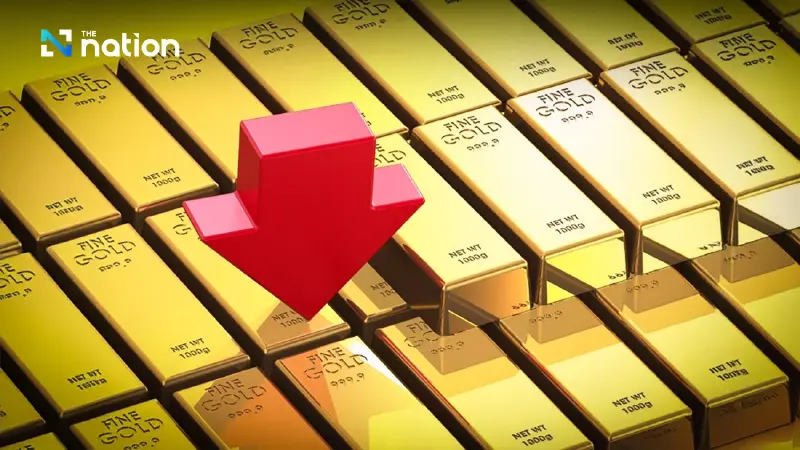


Gold prices slipped below US$4,000 per ounce as easing US-China trade tensions reduced safe-haven demand ahead of the US Fed’s expected rate cut.
Gold prices fell below US$4,000 per ounce on Monday (October 27), as signs of progress in US-China trade negotiations reduced investor demand for safe-haven assets. Traders are now closely watching for the US Federal Reserve’s interest rate decision due later this week.
According to Reuters, spot gold plunged 2.7% to US$4,002.29 per ounce at 1:45pm Eastern Time (17:45 GMT), after briefly dropping to US$3,970.81 earlier in the session — its lowest level since 10 October.
“The prospect of a US-China trade deal suggests diminishing demand for safe-haven assets such as gold,” said David Meger, Director of Metals Trading at High Ridge Futures.
Gold had surged to an all-time high of US$4,381.21 per ounce on 20 October, but fell 3.2% last week as tensions between the world’s two largest economies began to ease. Negotiators from both sides reportedly finalised a framework agreement on Sunday to suspend planned US tariff hikes and delay China’s export controls on rare earth minerals.

US President Donald Trump and Chinese President Xi Jinping are expected to meet on Thursday to discuss further trade terms.
Jeffrey Christian, managing partner at CPM Group, said gold’s latest fall was partly due to technical selling but largely driven by improving trade sentiment.
“Gold is likely to decline further as trade tensions ease. Those tensions had lifted prices from US$3,800 to US$4,400 in the first three weeks of October,” he said.
Markets are also pricing in a 97% chance of a 0.25% interest rate cut at the Fed’s policy meeting on Wednesday. Lower interest rates generally benefit gold, which yields no interest, by making it more attractive relative to fixed-income assets.
While many analysts still expect gold to climb towards US$5,000 per ounce, some remain sceptical about the sustainability of the recent surge. Analysts at Capital Economics revised their end-2026 forecast down to US$3,500 per ounce, noting that the 25% rally since August is difficult to justify compared with previous price cycles.
Other precious metals also retreated on Monday: silver fell 4.8% to US$46.28 per ounce, platinum slipped 1.1% to US$1,587.92, and palladium dropped 2.6% to US$1,391.34.
Morning update (October 28)
Bloomberg reported that spot gold prices rose 0.5% to US$4,000.81 per ounce at 7:54am Singapore time, while the Bloomberg Dollar Index slipped 0.1%. Silver prices edged higher after falling 3.7% on Monday, platinum remained steady, and palladium gained slightly.
Gold prices rebounded on Tuesday, recovering from Monday’s drop below US$4,000 per ounce, as progress in US-China trade talks reduced demand for safe-haven assets.
Bullion edged higher following Monday’s 3.2% decline, after negotiators from Washington and Beijing said they had reached agreements on several key issues, including tariffs and export controls.
Bond prices declined as traders continued to bet that the US Federal Reserve would move to ease monetary policy this week. Rising bond yields have weighed on the appeal of non-interest-bearing assets such as gold.
Goldman Sachs revises 2026 gold outlook after recent price volatility
The sharp fluctuations in gold prices this week have prompted Goldman Sachs analysts to review their price targets once again. The investment bank said it was not alarmed by the latest sell-off, reaffirming its long-term bullish outlook on gold.
According to Goldman Sachs, the recent price correction following months of strong buying is “a healthy adjustment” for the gold market and does not alter the bank’s positive long-term view.
As one of Wall Street’s most prominent investment institutions, with over 156 years of experience navigating multiple gold market cycles, Goldman Sachs described the correction as a “sign of market health”, citing three key factors underpinning its optimism:
- Global central banks are expected to purchase an average of 760 tonnes of gold annually in 2025 and 2026, compared with the pre-2022 average of 400–500 tonnes.
- Inflow of investment into gold-backed ETFs of around 360 tonnes.
- The US Federal Reserve’s monetary easing cycle, with three additional interest rate cuts anticipated in early 2026.
In recent months, inflows into gold ETFs have played a major role in supporting gold prices. Goldman Sachs data show that ETFs have accumulated 268 tonnes of gold over the past eight weeks, equivalent to around US$33 billion.
The bank noted that expectations of lower interest rates, falling bond yields, continued economic uncertainty, and a weaker US dollar all point to sustained upward momentum. Although gold may retest the US$4,000 support level, Goldman Sachs expects prices to recover steadily through late 2025 and into 2026.
Based on these assumptions, Goldman Sachs forecasts that gold will reach US$4,440 per ounce in the first quarter of 2026, rising further to US$5,055 per ounce by the final quarter of the year.
