
Thai Cabinet Approves ‘FastPass’ to Unlock $13.7 Billion in Stalled Investment


New BOI mechanism will expedite 80 major projects, targeting data centres and clean energy; $143m allocated for national upskilling
- The Thai Cabinet has approved the "Thailand FastPass" initiative to accelerate 80 stalled large-scale projects valued at $13.7 billion (480 billion baht).
- This new mechanism is designed to cut regulatory red tape and reduce approval and licensing times by 20-50% for investments in key sectors like data centres and clean energy.
- The initiative will specifically address systemic bottlenecks related to the electricity grid, industrial land acquisition, and the processing of visas and work permits for skilled foreign personnel.
New BOI mechanism will expedite 80 major projects, targeting data centres and clean energy; $143m allocated for national upskilling.
Thailand’s Economic Cabinet has given the green light to a three-pronged investment package, including the crucial ‘Thailand FastPass’ initiative, designed to unblock obstacles and accelerate 480 billion baht (approximately $13.7 billion USD) worth of stalled large-scale projects by the end of 2025.
The measures, approved by the Economic Policy Committee on 24 November 2025, are intended to inject capital into the system swiftly, aligning with the government's "Quick Big Win" economic policy.
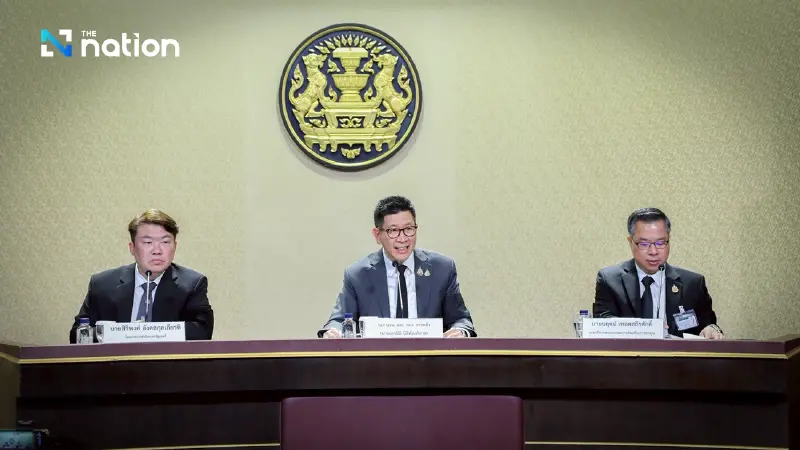
Ekniti Nitithanprapas, Deputy Prime Minister and Minister of Finance, announced that the Board of Investment (BOI) has been tasked with driving the three measures, which also include a massive national upskilling programme and support for domestic businesses.

The Thailand FastPass: Cutting Red Tape
The centrepiece of the package is the Thailand FastPass, a new mechanism designed to resolve systemic hurdles for large investments in critical sectors like data centres, industrial estates, clean energy, and electronics.
The mechanism aims to accelerate approval and licensing times by 20% to 50%, with initial implementation planned for December 2025. This strategy will transition from short-term problem-solving to permanently reforming restrictive regulations.
"The government places great importance on establishing the Thailand FastPass system... [It] will lead to a permanent resolution of obstructive regulations," said Ekniti.
The BOI will coordinate with key utilities, including the Energy Regulatory Commission (ERC) and various electricity authorities, to streamline processes and ensure the rapid provision of clean energy.

Unlocking B480 Billion in Stalled Projects
Narit Therdsteerasukdi, secretary general of the BOI, confirmed that 80 large-scale projects, valued at 480 billion baht ($13.7 billion USD), have been selected for immediate attention.
These projects, many approved between 2023 and 2025, are primarily stalled due to limitations in the electricity transmission network, industrial land acquisition problems, issues with visas and work permits, and delays in obtaining business licenses.
The BOI’s dedicated case-by-case resolution efforts have already enabled 40 projects (worth 148.5 billion baht, or $4.2 billion USD) to secure clear plans to proceed, leaving 40 more projects to be fast-tracked under the new mandate.
Focus on Power, Land, and People
The Cabinet approved specific measures targeting these bottlenecks:
To address the Electricity Transmission System and Clean Energy, the ERC must rush to issue regulations for collateral requirements to facilitate grid expansion and green energy deployment.
Specifically, they must finalise rules for the Utility Green Tariff Type 2 (UGT2) and the pilot Direct Renewable Energy Power Purchase Agreement (Direct PPA) scheme by December 2025, while the electricity authorities expedite power supply confirmation for data centres.
Regarding Investment Area issues, the Department of Public Works is tasked with coordinating with the Industrial Estate Authority to review and revise master plans to increase industrial estate space by March 2026.
Furthermore, authorities will devise a guideline by January 2026 to conditionally permit earthworks for construction while the necessary Environmental Impact Assessment (EIA) reports are still pending approval.
For Visas and Work Permits, the Immigration Bureau and Department of Employment must increase staffing to reduce processing times for high-skilled foreign personnel.
The Department of Employment must also stabilise and link the e-Work Permit system with the Consular Affairs Department’s e-Visa system by February 2026, while temporarily exempting the use of the unstable e-Work Permit system at the One-Stop Service Centre by December 2025.

Upskilling and SME Support
The remaining two packages focus on laying foundations for future growth, backed by 5 billion baht (approximately $143 million USD) from the Competitiveness Enhancement Fund:
High-Skilled Personnel Development: A programme to upskill and reskill 100,000 Thai workers and students, focusing on new-era industry demands.
SME Competitiveness Support: Grants covering 30% to 50% of investment (up to 100 million baht per company) will be offered to Thai-owned businesses for R&D, technology upgrades, and transitioning to green industries.
Narit concluded that the BOI's measures are not just short-term accelerators but steps toward "resolving systemic obstacles and creating a modern investment ecosystem... laying a stable foundation for the Thai economy to grow."
