
Bangkok Prepares Emergency Aid Package as Border Tensions Cripple Businesses
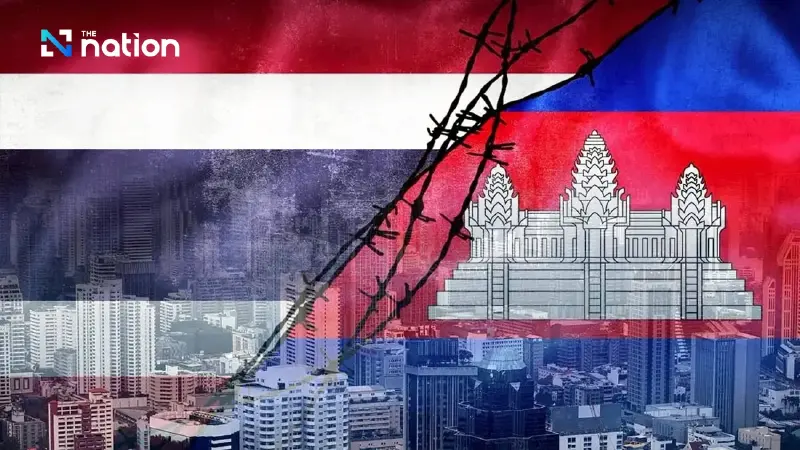


Economic Cabinet revises support measures for Thai firms facing cancelled contracts, supply chain collapse, and anti-Thai boycotts from Cambodia
- The Thai government is developing an intensified financial and logistical aid package for businesses severely affected by border tensions with Cambodia.
- The economic damage includes supply chain collapses from border closures, Cambodian-led boycotts of Thai goods, and cancelled business contracts.
- The private sector is requesting financial relief in the form of soft loans, tax cuts, help with high freight costs, and a delay in the minimum wage increase for border provinces.
- Beyond financial aid, businesses are also calling for diplomatic action to restore trade relations and the temporary reopening of land checkpoints
Economic Cabinet revises support measures for Thai firms facing cancelled contracts, supply chain collapse, and anti-Thai boycotts from Cambodia.
The Thai government is fast-tracking the development of a comprehensive financial and logistical aid package to support businesses severely affected by the prolonged tensions on the Thai-Cambodian border.
Following a meeting of the Economic Cabinet on 8 December, sources from Government House confirmed that an initial set of support measures proposed by the Ministry of Foreign Affairs (MFA) was sent back for urgent revision.
The Cabinet requested that the aid be intensified and updated to match the escalating severity of the crisis.
The MFA's initial report, compiled after consulting with representatives from the Thai-Cambodia Business Council, provincial Chambers of Commerce, and business leaders across key sectors (including finance, agriculture, construction, and logistics), detailed the extensive damage to the private sector.
Widespread Business Impacts
The report confirmed several adverse effects across various industries:
Supply Chain Collapse: Border closures are forcing companies to switch from land routes to sea freight, hiking costs and transport times. Logistics firms are reporting reduced revenues, while construction companies are facing shortages of materials, compelling them to import raw materials from Vietnam instead.
Trade Boycotts: Measures imposed by the Cambodian government—including a ban on certain Thai fruits, vegetables, and oil—coupled with an active campaign against Thai goods, have led to a sharp reduction in revenue, cancelled purchase orders, and terminated business contracts, particularly within the retail and services sectors.
Long-Term Market Share Loss: The crisis is forcing Thai investors to postpone new projects or relocate investments to other nations. Some businesses have even resorted to changing brand names and logos to avoid attack. This shift is creating space for competitor nations, risking a permanent alteration of Cambodian consumer behaviour and the long-term loss of market share for Thai products.
Private Sector Demands Five-Point Plan
The private sector submitted five urgent recommendations aimed at resolution and mitigation:
Financial Lifelines: Requesting support through soft loans, increased short-term credit, reductions in local taxes, and social security contribution cuts. Crucially, they are calling for the government to allocate budget to help cover spiking freight costs and to postpone the scheduled minimum wage increase (to 400 baht per day) in the seven border provinces to help sustain employment.
Marketing & Image Restoration: Urging the government to use diplomatic mechanisms and positive communication campaigns to counteract negative social sentiment in Cambodia and restore the popularity of Thai products.
Logistics Facilitation: Proposing that specific land checkpoints be temporarily opened for the special-case import of essential goods, supported by streamlined inspection and customs procedures.
Tourism Confidence: Requesting that the Ministry of Tourism and the Tourism Authority of Thailand (TAT) actively publicise safety information to foreign tourists, reassuring them about areas unaffected by the conflict.
Conflict Resolution: Calling for the Ministry of Commerce to immediately utilise the Joint Trade Committee (JTC) or other mechanisms to rebuild economic confidence and seek a rapid normalisation of diplomatic and people-to-people relations with Cambodia.
Relevant agencies have been instructed to integrate these private sector recommendations into the revised aid package and report progress back to the Economic Cabinet before the measures are submitted for final government approval.
