
Thai Snap Election Threatens Economic Stimulus as FTI Fears 'Gear Neutral' Bureaucracy
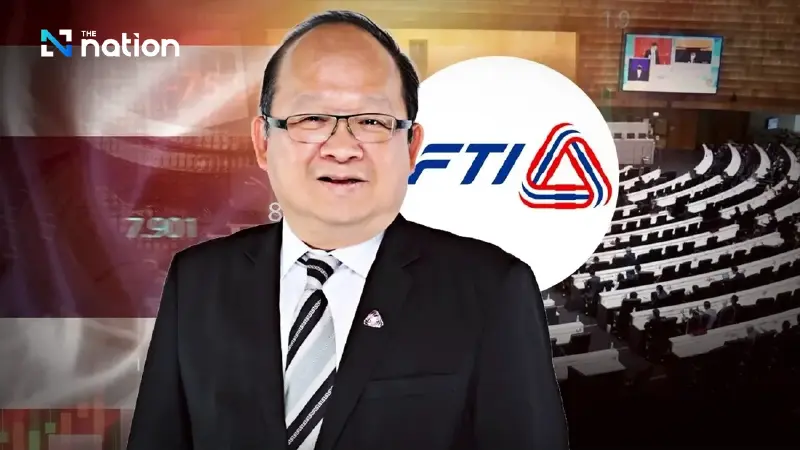


Caretaker government status puts key 'Quick Big Win' economic package and national crises in jeopardy, FTI warns
- The Federation of Thai Industries (FTI) is concerned that the snap election and the resulting 60-day caretaker government will derail critical economic stimulus measures.
- A key economic package, the "Quick Big Win," is specifically at risk of being stalled, which is considered vital for supporting the country's GDP in the final quarter.
- The FTI fears the political transition will cause government officials to "shift into neutral," adopting a wait-and-see approach that slows policy execution and reduces work standards.
- The caretaker government's limited authority also threatens the management of other major crises, including flood recovery and border clashes that are impacting trade and tourism.
Caretaker government status puts key 'Quick Big Win' economic package and national crises in jeopardy, FTI warns.
The Federation of Thai Industries (FTI) has sounded the alarm, expressing concerns that the recent dissolution of Parliament and the subsequent transition to a caretaker government could derail critical economic recovery efforts.
The FTI warned that the estimated 60-day caretaker period risked stalling major economic stimulus measures, notably the "Quick Big Win" package, which is deemed vital for supporting the country's Gross Domestic Product (GDP) in the final quarter of the year.
The dissolution, announced by Prime Minister Anutin Charnvirakul on 11 December 2025, occurs amid a backdrop of pressing national issues that require immediate attention from a fully empowered administration.
Surprise Timing, Deeper Fissures
FTI Chairman Kriengkrai Theinnukul stated that while the snap election was "neither shocking nor surprising"—given the Prime Minister's prior signals—the timing fell within the earliest predicted window.
He noted that the structurally fragile minority government had managed to remain in power for only just over two months, dissolving parliament about a month ahead of schedule.
However, Kriengkrai admitted to being slightly taken aback that the Prachachon Party was the one to initiate the dissolution, rather than the anticipated Pheu Thai Party.
This move, he suggested, stemmed from the Prachachon Party's dissatisfaction, viewing it as a breach of the Memorandum of Agreement (MOA).
The disagreement may have arisen from communication that suggested the powers of the Senate (SorWor) should be retained for the time being, which the Prachachon Party interpreted as tearing up the agreement.
Economic Slowdown Fears
Kriengkrai conceded his personal concern that the shift to caretaker status could lessen the intensity of ongoing policy implementation, particularly crucial economic policies aimed at stimulating and propping up the GDP in Q4 2025.
He stressed the urgent need for the "Quick Big Win" measures—devised by the Economic Cabinet under Deputy Prime Minister and Minister of Finance Ekniti Nitithanprapas—to prevent the Thai economy from getting "stuck in the mud."
This urgency is underscored by the National Economic and Social Development Council's (NESDC) announcement that Q3 GDP was a mere 1.2%, 0.5% below projections.
Major Crises Unattended
The chairman underscored that several large-scale issues remain "unresolved" and require immediate, decisive action from a full government, instead of languishing under an interim administration:
Southern Flood Recovery: The extensive recovery efforts across nine southern provinces following severe flooding risk being delayed or disrupted by the caretaker status.
Border Clashes: The escalating and widening second-round clashes on the Thai-Cambodian border are severely impacting trade, tourism, and agriculture in numerous northeastern provinces, forcing hundreds of thousands to evacuate and shutting down some industrial estates.
International Diplomacy: Critical "homework," such as high-level negotiations with the United States, remains pending. Kriengkrai questioned whether the caretaker status would impose limitations or obstacles on decision-making should powerful figures like "Donald Trump" seek contact during this period.
Bureaucratic Warning: 'Gear Neutral'
Kriengkrai warned that, based on historical precedent, the transition risks prompting career officials to "shift into neutral" or ease off their work pace.
This happens as bureaucrats often adopt a wait-and-see approach regarding the incoming administration, leading to a drop in work standards and reduced authority for policy execution.
The FTI urged all permanent secretaries to ensure the intense continuation of pending tasks.
The Chairman concluded: "We must monitor whether the various policies and measures that have been announced and approved can be fully implemented... With the country currently faltering on multiple issues, it remains to be seen how or if this will further slow Thailand's GDP growth."
