
Thailand Braces for Landmark US Supreme Court Trade Ruling as 19% Tariff Hangs in Balance
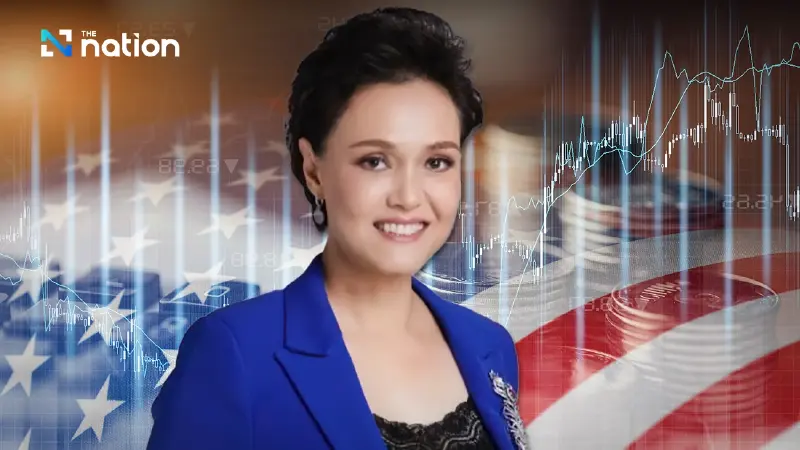


Commerce Minister Suphajee Suthumpun prepares a "refund or retaliate" strategy as 12% of Thai export certificates fail to meet tightening US standards
- Thailand is awaiting a US Supreme Court ruling on January 14th that will determine the legality of a 19% tariff on its exports.
- If the court rules the tariff illegal, Thailand will claim a refund for duties paid; if the tariff is upheld, it will remain in place and negotiations will continue.
- Even if the tariff is abolished, Thailand fears the US may impose new tariffs under a different provision related to national security.
- The trade relationship is also strained by stricter US "Rules of Origin" enforcement, which has already caused 12% of recent Thai export certificates to be rejected.
Commerce Minister Suphajee Suthumpun prepares a "refund or retaliate" strategy as 12% of Thai export certificates fail to meet tightening US standards.
Thailand’s Ministry of Commerce has mobilised a dual-track strategy to safeguard national interests ahead of a pivotal US Supreme Court ruling on the legality of "Trump-era" tariffs.
The verdict, now rescheduled for 14 January, could either spark a massive tax reclamation process for Thai exporters or usher in a new era of aggressive US protectionism.
The timing of the legal climax is particularly sensitive for Thailand; following the dissolution of Parliament by Prime Minister Anutin Charnvirakul on 12 December, the nation is currently operating under a caretaker administration.
Consequently, while technical trade talks continue, any formal bilateral agreements will remain frozen until a new government is formed.
The Verdict: Two Paths for Thai Trade
Commerce Minister Suphajee Suthumpun has assessed two primary outcomes based on the 14 January judgement:
The Status Quo: Should the court uphold the tariffs, the current 19% surcharge on Thai imports will remain. In this scenario, Thailand will continue technical negotiations with the US Trade Representative (USTR).
Minister Suphajee noted that Washington’s previous concerns regarding military tensions on the Thai-Cambodian border have been successfully ringfenced from trade discussions.
The Refund Route: If the court rules the tariffs illegal—citing executive overreach—the 19% tax would be abolished.
Thailand is prepared to launch an immediate claim for the return of all additional duties paid by Thai firms since August 2025.
However, the minister warned that a legal victory might be short-lived.
There are mounting fears that the US administration may pivot to Section 232 of the Trade Expansion Act, a national security provision that could impose even more swingeing tariffs on specific strategic sectors.
Cracking Down on ‘Origin Laundering’
As global trade scrutiny intensifies, Thai authorities are battling to maintain the integrity of "Made in Thailand" labels.
The US has recently tightened its Rules of Origin and Regional Value Content (RVC) requirements to prevent non-eligible goods—often from third countries—being "laundered" through Thai factories.
Arada Fuangthong, director-general of the Department of Foreign Trade, revealed that recent audits of 49 "high-watch" product categories have already led to friction.
Out of 725 certificates of origin requested for the US market, 12% were rejected for failing to meet stringent criteria, particularly goods originating from Free Zones.
To address these shortcomings, the Department is rolling out ROVERs Plus, a sophisticated paperless verification system.
This will be paired with a real-time tracking system linked to the Customs and Industrial Works departments, designed to detect and block "identity switching" before goods leave Thai shores.
A Regional Race
While technical staff from the USTR and Thailand’s Department of Trade Negotiations continue to discuss market access and sanitary measures, Thailand finds itself in a regional race.
Neighbours such as Malaysia and Cambodia have already finalised their tariff negotiations, whereas Thailand, Vietnam, and Indonesia remain in the midst of complex dialogues.
"The US is moving towards a unified global standard for regional value content," stated Chotima Iemsawasdikul, director-general of the Department of Trade Negotiations. "We must ensure that the eventual rules do not leave Thai businesses at a structural disadvantage."
