
Thai Shippers Set Cautious 4% Export Target Amid Looming US ‘Judgement Day’
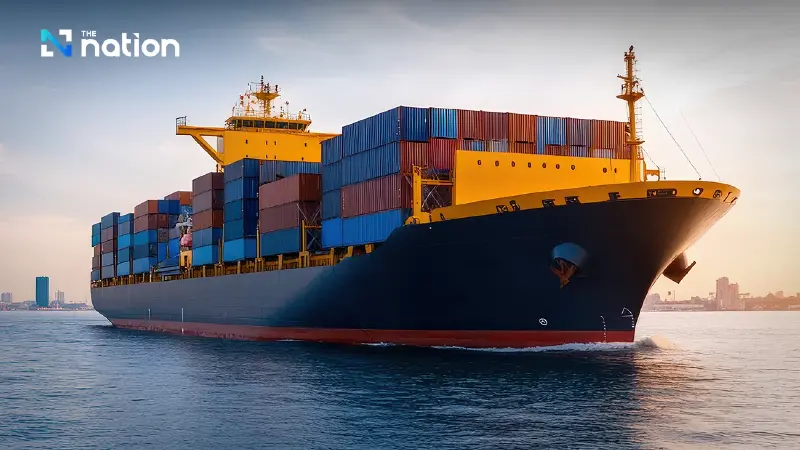


TNSC warns of a ‘perfect storm’ of currency appreciation, port congestion, and a critical US Supreme Court verdict on Trump-era trade surcharges
- The Thai National Shippers' Council (TNSC) has set a cautious export growth target of 2% to 4%, citing a precarious trade environment.
- The primary reason for this caution is a looming US Supreme Court ruling on the legality of Trump-era trade surcharges, which is seen as a critical "Judgement Day" for exporters.
- The TNSC warns that regardless of the court's decision, the US may still implement other protectionist trade barriers, creating ongoing uncertainty.
- Other factors contributing to the guarded forecast include a strengthening Thai Baht, rising domestic operational costs, and significant port congestion.
TNSC warns of a ‘perfect storm’ of currency appreciation, port congestion, and a critical US Supreme Court verdict on Trump-era trade surcharges.
The Thai National Shippers' Council (TNSC) has issued a guarded export growth forecast of 2% to 4% for 2026, warning that the nation’s trade recovery remains "precarious" due to a series of overlapping global shocks.
While demand in specific industrial niches remains buoyant, exporters are facing an uphill battle against a surging baht and the imminent threat of US protectionism.
Thanakorn Kasetsuwan, chairman of the TNSC, identified the primary external threat as the "US Reciprocal Tariff" policy, which has injected a high degree of volatility into global markets.
The council is currently on high alert ahead of 14 January, when the US Supreme Court is expected to deliver a landmark ruling on the legality of these universal trade surcharges.
"Regardless of the court's decision, the US executive branch retains significant power to pivot toward alternative trade barriers," Thanakorn noted. "We must be prepared for Washington to maintain its grip on imports through other legislative means."

Back home, the council expressed grave concern over rising operational costs, citing planned hikes to the minimum wage and volatile energy prices.
Furthermore, the "China Influx"—a surge of surplus Chinese goods entering Thailand for domestic sale or illicit transshipment—is threatening to hollow out local manufacturing and saturate the domestic market.
The TNSC also raised the alarm regarding the quality of Foreign Direct Investment (FDI).
Thanakorn emphasised that for FDI to be meaningful, it must integrate with local supply chains rather than operating as "assembly islands" that offer little value-add to the Thai economy.
Infrastructure bottlenecks at Laem Chabang Port and cargo congestion at Suvarnabhumi Airport have further exacerbated the cost of doing business.

The council is calling for urgent state intervention on three fronts:
Currency Stability: The government must stabilise the Baht to ensure it remains competitive against regional rivals like the Vietnamese Dong or Malaysian Ringgit.
Rules of Origin: Negotiators must expedite talks with the US regarding Regional Value Content (RVC) to provide Thai factories with a clear roadmap for compliance and supply chain adjustments.
The Green Pivot: As the EU’s Carbon Border Adjustment Mechanism (CBAM) and global ESG standards tighten, the TNSC warned that failure to modernise logistics will see Thai exporters locked out of premium Western markets.
"Thailand must secure its place in the new global supply chain," Thanakorn concluded. "This requires a delicate balance of maintaining ties with major powers while aggressively pursuing new Free Trade Agreements (FTAs) to diversify our market reach."
