
Suphajee calls for Thailand to be a partner to all in a more divided world


The world is facing extreme polariหation, forcing nations to take sides in trade, technology, and security. Thailand must adapt by positioning itself as an "ally to all" and focusing on issue-based negotiations for mutual benefit.
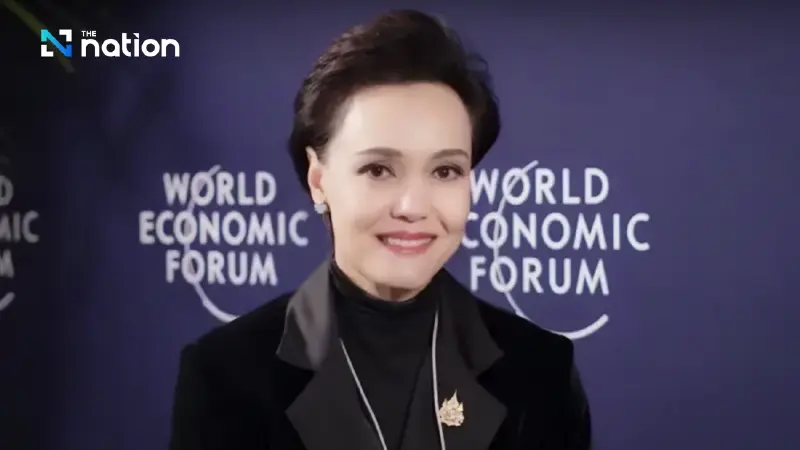
Suphajee Suthumpun, the Minister of Commerce, shared her insights from the 56th World Economic Forum (WEF) Annual Meeting, held from January 19–23 in Davos, Switzerland. She remarked that the world had undergone a profound shift in geopolitical, economic, and global trade dynamics.
Suphajee explained that the world is no longer in the multipolar system that many scholars and economists had predicted. Instead, it is moving into a phase that is even more intense.
"Before coming to Davos, I used to say the world was heading towards a multipolar era. But after what I have seen and heard this year, I must admit it has gone beyond that. We are now facing what we call extreme polarisation," Suphajee stated.
Today’s world is not just a competition between major powers; nations are being forced to "pick sides" in various domains, including trade, technology, security, and supply chains. At the same time, countries must urgently find a way to "survive" in this new, volatile environment.
While some countries leverage their power, technology, and resources to dictate the course of global economics and trade, many others are seeking new markets, trade formats, and alliances to reduce vulnerabilities amid an uncertain world order.

The Ministry of Commerce believes that Thailand must take a proactive role by positioning itself as an "ally to all" and focusing on creating shared benefits rather than aligning with specific sides. Negotiations should be issue-specific, choosing collaborations that are mutually beneficial.
"The key is in the details. We do not have to discuss everything with every country, but we need to choose areas where mutual benefits exist and create value for both sides. This is the game changer for today’s economy," Suphajee added.
She further emphasised that future trade negotiations must balance both "selling" and "buying," not just focus on exports. Imports will play a crucial role as a tool for trade negotiations.
Moreover, all trade mechanisms must be applied effectively, such as tariffs, non-tariff measures, protective measures, product and service upgrades, and support for investment, SMEs, and skill development.
To maintain the balance of domestic supply chains and safeguard sensitive industries, trust and confidence will be the key foundations for international trade. These elements are vital economic assets that Thailand must preserve, especially in a world where international relations are fragile and constantly shifting.
Looking to the future of global trade post-Davos, there are three key factors:
- Technology and Artificial Intelligence (AI): These will become tools to enhance a country's competitive edge.
- Green economy and environmental standards: While some see it as a burden, for Thailand, this presents an opportunity to gain an edge in global trade.
- Security: This will play an increasingly significant role in global trade and economics. Thailand aims to elevate its agriculture and food industries as "security products" for the region.
Additionally, Thailand has a geographical advantage that could position it as a regional hub for trade, investment, and logistics.

Suphajee stressed that Thailand needs to clearly define its own "unique selling point" while also being an integral part of regional partnerships, particularly ASEAN. One such collaboration is the ASEAN Digital Economy Framework Agreement (DEFA), which Thailand has led negotiations for, aiming to create the first regional digital economy cooperation framework in the world.
The DEFA framework will be a crucial mechanism to elevate trade, investment, and economic connections in the digital era, enabling SMEs to access the 600 million people in the ASEAN market more efficiently. The goal is to increase regional trade from approximately US$1 trillion to $2 trillion by 2030.
Regarding policy structure, there is a need for continuous and modern governance to build trust with entrepreneurs and trading partners. Suphajee also pointed out that many of Thailand's Free Trade Agreements (FTAs), signed 20–30 years ago, may no longer align with the current global economic landscape.
Thus, the Ministry of Commerce plans to upgrade existing FTAs with key countries, expand into new markets, and negotiate new FTAs to reduce the risk of over-dependence on any one market.
"The world has changed, and so has trade. Thailand must adapt its strategy to keep up with the new global rules, ensuring that our businesses and country can stand firm in the long run," Suphajee concluded.
