
JSCCIB warns next government: Thailand risks structural slump without reforms
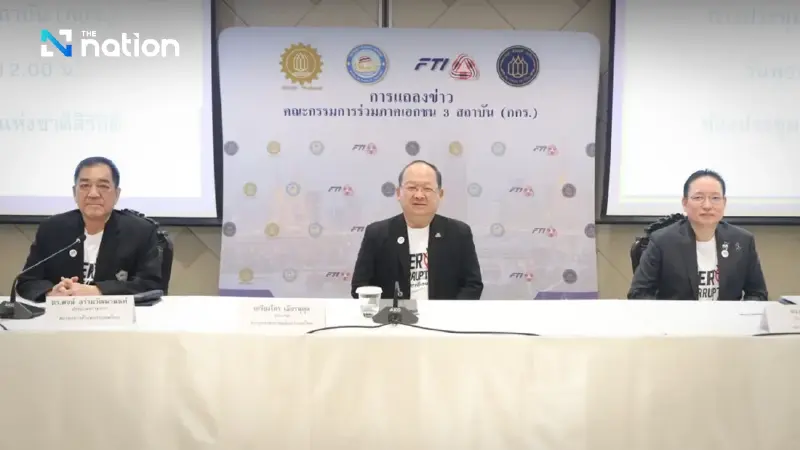


JSCCIB warns Thailand faces a confidence crisis and high household debt, urging stable politics and “Reinvent Thailand” reforms as it cuts 2026 growth to 1.6–2.0%.
Thailand’s private sector has issued a stark warning to the incoming government, saying the country is under mounting pressure from high household debt, political uncertainty, global geopolitical tensions and the risk of tougher US trade barriers — with fears Thailand could slip from the “Sick Man of Asia” into a structural downturn without serious, sustained policy reform.
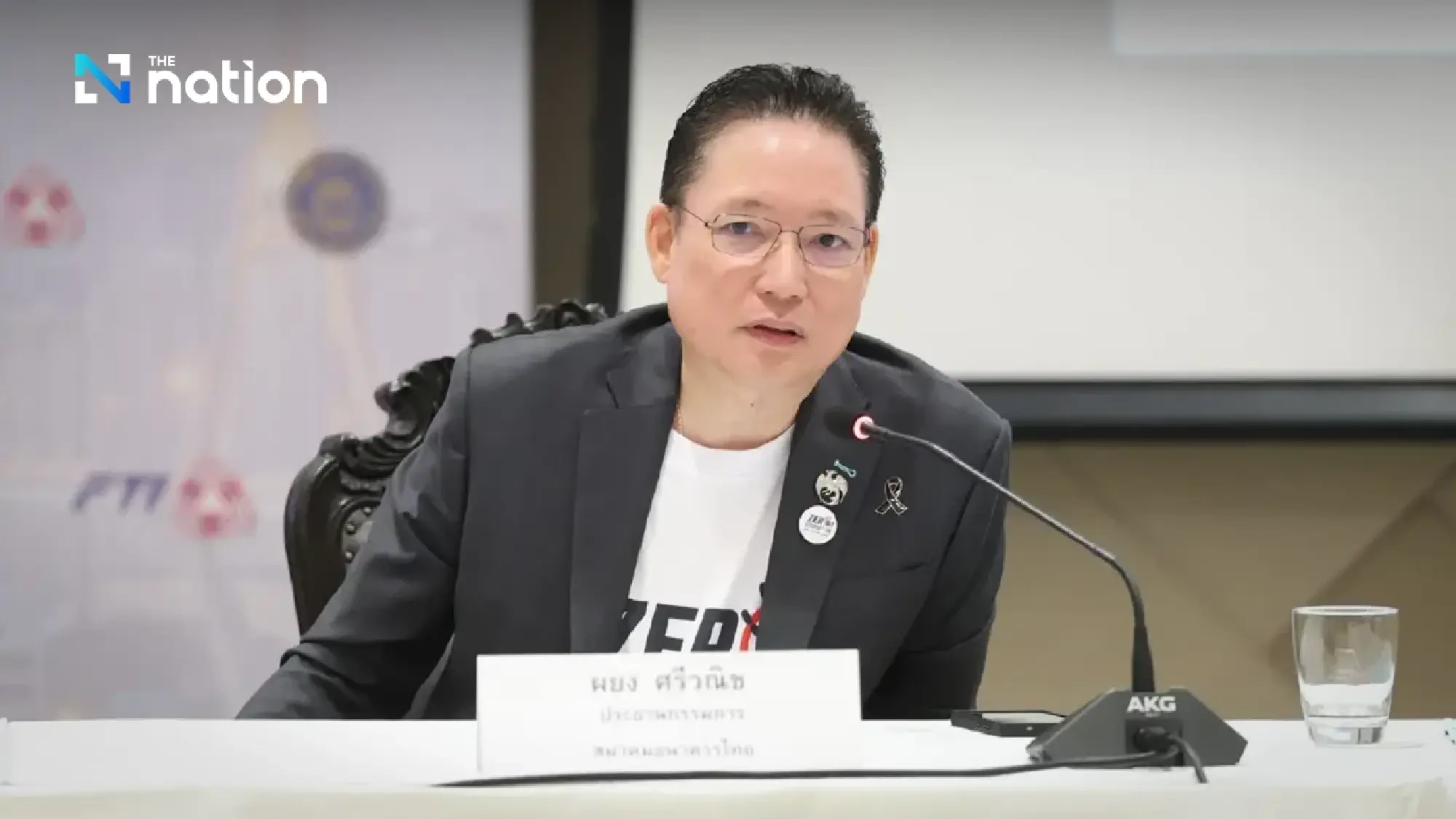
Kriengkrai Thiennukul, chairman of the Federation of Thai Industries (FTI), spoke on behalf of the Joint Standing Committee on Commerce, Industry and Banking (JSCCIB), alongside Poj Aramwattananont, chairman of the Thai Chamber of Commerce, and Payong Srivanich, chairman of the Thai Bankers’ Association.

“Confidence crisis” as rivals accelerate
The JSCCIB said Thailand is facing a confidence crisis driven by both domestic and external factors, while ASEAN competitors — particularly Vietnam — continue to accelerate investment and exports.
Household debt flagged as the most severe structural threat
The committee described household debt as Thailand’s most serious structural problem, currently near 90% of GDP, and over 104% when informal debt is included. It said the burden is steadily weakening domestic purchasing power and weighing on long-term growth.

Kriengkrai argued the root issue is not only “overspending”, but economic inequality and a distorted income structure, with many households earning incomes that do not keep pace with living costs. He added that SMEs are being hit by intense competition from cheap imported goods flooding the market.
He said solutions must go beyond short-term measures such as debt moratoriums or cash handouts, calling instead for policies that create new income, especially by upgrading agriculture — which employs about one-third of the workforce but contributes only 6–7% of GDP.
External risks: geopolitics, market volatility and US tariff exposure
The private sector warned external risks are intensifying, citing volatility in markets, currencies and gold prices amid geopolitical tensions and US tariff measures.
It said at least nine groups of Thai exports are at risk of additional US import tariffs this year, worth more than US$45 billion, or 63% of Thailand’s exports to the United States. The semiconductor sector, which it said has expanded 53%, was highlighted as a key area where disruption could ripple across manufacturing and investment.

2026 growth forecast cut; investment disbursement seen lagging
Given the combined risks, JSCCIB revised its 2026 growth forecast down to 1.6–2.0%. It also warned of further downside from delays in preparing the 2027 budget.
Figures from the Comptroller General’s Department, as of the end of January 2026, show public investment disbursement at 21.57%, below the 26% target — a sign of slower momentum in government investment projects.
Call for political stability and a credible economic team
Kriengkrai said political stability will be essential to recovery, voicing concern that post-election government formation based on “party quotas” could produce economic ministers who do not match the task, undermining policy continuity and investor confidence.
He also cautioned against campaign pledges focused on short-term populism and high spending without a sustainable national income strategy, particularly with limited fiscal space. Public debt at the end of 2025 was cited at THB12.45 trillion, or 66% of GDP, nearing the legal ceiling of 70%.
JSCCIB urges “Reinvent Thailand” strategy
The committee urged the next government to pursue a “Reinvent Thailand” strategy, focusing on raising productivity, upgrading competitiveness — especially for SMEs — cutting obstructive regulations, promoting Made in Thailand products, and accelerating investment in technology, innovation and infrastructure to build a more stable, balanced and sustainable economy.
Kriengkrai said Thailand needs a “specialist doctor” willing to make tough decisions, adding that with a stable government, an expert economic team and workable policies, the country can still recover and regain strength in the region.
