
World Bank warns of global labour crunch: 1.2bn entrants chasing just 400m jobs
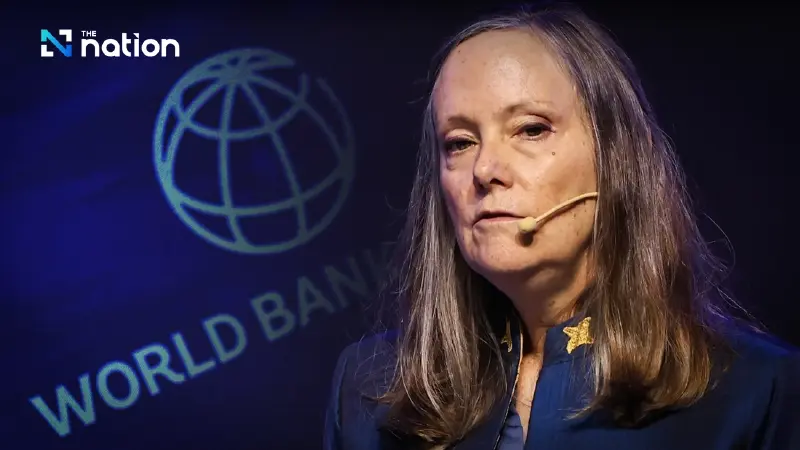


World Bank country director Melinda Good says the world faces record uncertainty as AI reshapes value chains. She warns 1.2bn people will enter the labour market over the next decade, but only 400m jobs are expected—while Thailand’s ageing society and skills gap risk holding back growth and FDI.
Melinda Good, the World Bank’s Country Director for Thailand and Myanmar, outlined the challenges facing the global and Thai economies from a labour-market and investment perspective at the “Futuready Dinner Thought” event. She said the world is entering an era of the highest uncertainty on record—akin to a “tax” that drags on private-sector investment decisions—amid the rapid advance of AI and robotics, which are significantly reshaping the global value chain.
She said that over the next decade, 1.2 billion people worldwide are expected to enter the labour market, but forecasts suggest there will be only 400 million jobs available. The resulting gap of more than 800 million jobs represents a major crisis for young people globally, who will face intense competition and a shortage of opportunities.
“Thailand’s situation is more complex than many countries, because Thailand is confronting an ageing population at the same time as the challenge of job creation,” she said.
Good noted that while Thailand has a strength in being among ASEAN’s leading countries for the number of AI users (second only to Singapore), the key problem is that these technologies have not yet been widely diffused across the business sector. She added that feedback from CEOs across multiple industries—including smart agriculture, digital, tourism and manufacturing—shows the biggest constraint on growth and on inflows of foreign direct investment (FDI) is the skills gap in the workforce.
She also said Thailand still has a worrying level of inequality, partly driven by unequal basic skills. To attract future industries and clean energy, she stressed that Thailand needs to improve its education system and strengthen upskilling programmes at universities and colleges so they are aligned with real labour-market demand.
Finally, she estimated that Thailand will need investment of as much as 7% of GDP per year over the next 15 years to adapt to and mitigate climate impacts—an amount the public budget alone cannot bear.
The solution, she said, is to build a green financing ecosystem, such as sustainability-linked bonds and carbon markets, to draw in capital from the private sector and SMEs into a low-carbon economy—creating a new engine for future job growth.
