
Commerce Minister Rallies 58 Envoys to Pivot Thai Exports Away from Volatile Main Markets
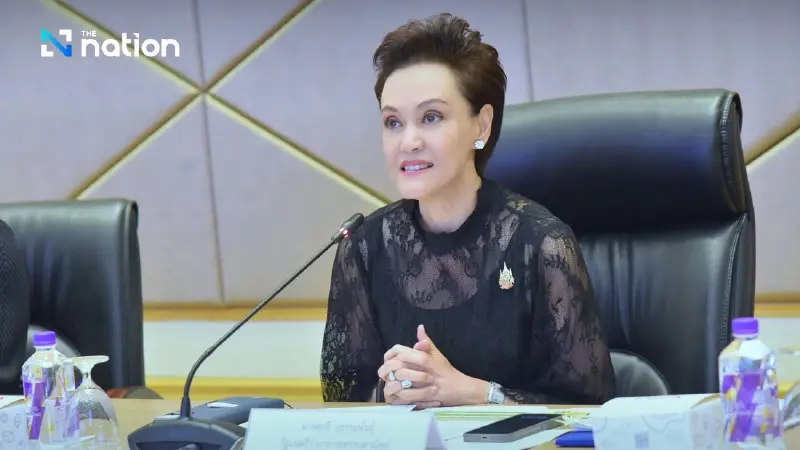


Minister Suphajee Suthumpun orders a strategic shift to India, China, and the Middle East to safeguard Thailand's 11.1 trillion baht export engine
- Thailand's Commerce Minister has directed 58 commercial envoys to pivot the nation's export strategy away from an over-reliance on a few traditional, volatile markets.
- The strategic shift aims to safeguard Thailand's 11.1 trillion baht export sector by targeting new growth hubs, with a specific focus on India, China, and the Middle East.
- This diversification is a response to structural risks, including high market concentration, and is designed to make the Thai economy more resilient to global volatility and geopolitical tensions.
Minister Suphajee Suthumpun orders a strategic shift to India, China, and the Middle East to safeguard Thailand's 11.1 trillion baht export engine.
Thailand is overhauling its global trade strategy as the Ministry of Commerce moves to insulate the economy from geopolitical tensions and over-reliance on traditional Western markets.
Minister of Commerce Suphajee Suthumpun presided over a high-level summit today with 58 commercial diplomats from 43 economies.
The objective was clear: redefine Thailand’s export roadmap for 2026 amidst a "VUCA" world—characterised by Volatility, Uncertainty, Complexity, and Ambiguity.
The Three Major Hurdles
Despite Thai exports reaching a valuation of 11.1 trillion baht last year, Minister Suphajee highlighted three structural risks that must be addressed:
Market Concentration: Over 30% of exports are currently reliant on a few major markets.
Exporter Disparity: Of 30,000 exporters, a mere 7,000 large firms account for 84% of total value, leaving SMEs with just 16% of the pie.
Import Reliance: High dependence on foreign raw materials has prompted a push for increased "Local Content" and "Made in Thailand" initiatives.
New Strategy: From Vulnerability to Agility
The Minister introduced a reformed "VUCA" model for the Ministry, focusing on Vision, Understanding, Clarity, and Agility.
This is paired with the TAM Model (Think Big, Act Small, Move Right), which encourages strategic large-scale thinking executed through precise, incremental steps.
"Exporting remains the hope of the Thai economy," Suphajee stated. "We must adapt to a rapidly changing world by diversifying our markets and adding value to our products to ensure our entrepreneurs can compete globally."

Targeting New Growth Hubs
The diplomats were instructed to aggressively pursue market diversification, with specific focus on:
India & South Asia: Targeting the rising middle class in secondary cities with eco-friendly construction materials, food, and industrial supplies.
China: Utilizing KOLs (Key Opinion Leaders) and e-commerce to push agricultural goods and lifestyle products into inland and Western China.
Middle East: Securing alternative logistics routes to maintain supply chain continuity despite regional tensions.
Strategic Partnerships: Leveraging the upcoming 140th anniversary of diplomatic ties with Japan (2027) and the 170th anniversary with France to promote Thai "soft power," including digital content, games, and wellness services.
As the Thai fruit season approaches, commercial envoys have been tasked with ensuring a smooth international rollout for agricultural produce.
The Ministry is also placing a heavy bet on the service sector—specifically software, health and wellness, and the restaurant trade—as a secondary engine for global revenue.
