
SRT reviews loss strategy as oil prices soar and costs outpace income
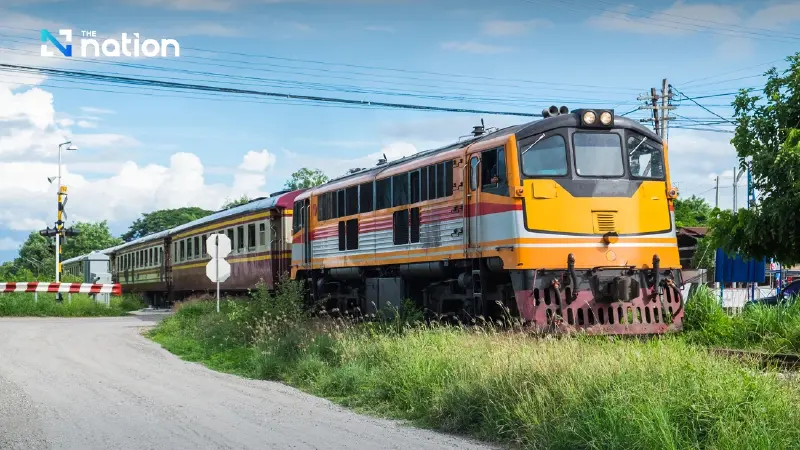


Surging oil prices are directly driving up the State Railway of Thailand’s operating costs, forcing a review of its projected 18-billion-baht annual loss as fuel expenses outpace fare income.
Anan Phonimdang, deputy governor of the State Railway of Thailand (SRT) and acting SRT governor, said the rise in fuel prices has had a direct impact on the railway operator.
Global oil prices have significantly affected the railway’s cost structure, as fuel remains one of the main expenses in train operations. At the same time, income from passenger fares and freight charges has remained unchanged, creating an imbalance between the organisation’s revenue and expenditure.
Anan said an analysis of costs and income showed that the SRT currently faces three main categories of expense: personnel costs, infrastructure costs and fuel costs. Over the past period, the share of fuel costs has continued to rise, causing the overall expense burden to increase rapidly.
At present, the SRT is carrying an annual loss of about 18 billion baht, based on the organisation’s financial projections made before the energy price crisis emerged.
“That figure may need to be revised, as energy costs continue to rise,” Anan said. He added that the SRT currently uses an average of 8-9 million litres of B7 diesel each month for train operations nationwide, equivalent to around 270 million baht per month.

The SRT currently procures fuel through a direct monthly supply contract with PTT Plc. Payments are made each month based on actual usage. Fuel purchase prices are mainly referenced to market prices. Although the SRT receives a certain special discount from pump prices, it is still affected by increases in global oil prices.
However, in terms of fuel stock management, the SRT still has sufficient reserves for operations and is not facing any shortage of fuel for train services. As for train operation management, the SRT has applied the principle of adjusting service plans in line with passenger demand.
It has drawn on an approach previously used during the Covid-19 pandemic. If passenger numbers rise, more trains or additional carriages will be provided to meet demand. However, if passenger numbers fall, the SRT will consider reducing the number of carriages or suspending some services in order to control operating costs.
During major holiday periods such as Songkran, when large numbers of people travel back to their hometowns or go on holiday, railway passenger volumes rise sharply. Anan said advance bookings on many routes are now almost fully sold out, as is normal during the tourism season.
In practice, however, operating trains with every seat filled does not increase profits, because higher fuel costs mean operating expenses exceed fare revenue, resulting in what he described as a situation where the more trains run, the greater the losses.

Anan added that the Department of Rail Transport is currently preparing to announce a maximum fare and freight rate framework, or fare ceiling, for the rail system. This would allow the SRT to adjust passenger fares and freight charges so they better reflect actual costs.
However, the process will still take time for consideration and formal announcement, meaning it may not be able to solve the immediate impact of soaring oil prices.
Anan said the SRT must urgently find ways to boost income and improve financial liquidity in order to cope with higher costs that were not included in the original budget plan.
One key approach is to maximise the use of the organisation’s assets, such as developing commercial areas at railway stations and other high-potential sites, so that additional income can help offset operating expenses and the organisation’s debt burden.
He said one of the major factors pushing up oil prices at present is conflict and war in several regions of the world, which are external factors beyond the railway operator’s control and have made energy prices highly volatile.
The SRT therefore needs to closely monitor the situation while considering financial measures and new business models. This includes seeking additional support from the government so that it can continue providing public transport services to the public in a stable and sustainable manner over the long term.
