
Thailand says oil reserves cover 108 days amid energy volatility
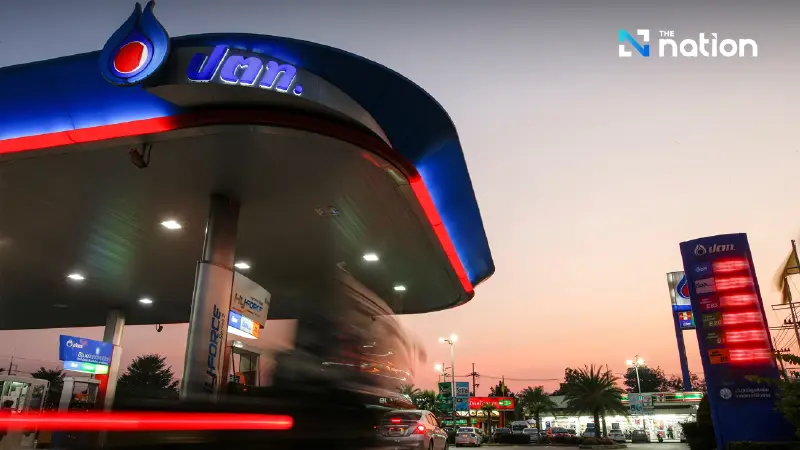


Thailand reports 108 days of oil reserves as Middle East tensions, Hormuz disruption and global price swings pressure fuel markets
Thailand has enough oil reserves to meet domestic demand for about 108 days, the Energy Ministry said on May 1, 2026, as global energy markets remained volatile amid escalating tensions in the Middle East.
The ministry reported the latest domestic and international energy situation, diesel stock and sales volumes, and the status of the Oil Fuel Fund, saying several global factors were continuing to affect prices.
It said tensions in the Middle East had intensified after US President Donald Trump signalled that the United States might need to resume military action against Iran.
Iran’s president, meanwhile, condemned the US maritime blockade and said Iran would no longer tolerate the situation. The United Nations secretary-general also warned that the crisis in the Strait of Hormuz was dragging down the global economy by the hour.
The White House has begun considering regulatory changes to accelerate domestic oil production. The United Arab Emirates, which has officially withdrawn from OPEC, may be able to expand production in the long term, but the move has not yet affected immediate market supply because the Strait of Hormuz remains closed.
Oil prices remained volatile amid concerns over economic impact and the possibility of slower energy demand. At the close on April 30, WTI crude fell US$1.81 to US$105.07 per barrel, while Brent dropped US$4.02 to US$114.01 per barrel. Dubai crude rose to US$112.20 per barrel.
Refined oil prices in the Singapore market increased. Diesel closed at around US$179 per barrel, while petrol closed at around US$138 per barrel. On April 22, diesel had closed at about US$167 per barrel and petrol at about US$129 per barrel.

Based on data as of May 1, 2026, Thailand’s domestic oil reserves were sufficient for about 108 days of demand, comprising:
• Legal oil reserves: 25 days
• Commercial reserves: 24 days
• Oil in transit: 39 days
• Confirmed supply: 20 days
For diesel production and sales, average data from April 1-29, 2026 showed Thailand produced 74.32 million litres of diesel and sold 54.91 million litres.
On domestic retail fuel prices, the Oil Fuel Fund Committee approved an increase in compensation for high-speed diesel, resulting in a retail price rise of 0.60 baht per litre.
The price of regular high-speed diesel (B7) was raised to 40.80 baht per litre, while high-speed diesel B20 rose to 33.80 baht per litre.
Petrol-group retail prices were also adjusted, with gasohol E20 at 36.30 baht per litre, gasohol 95 at 43.30 baht per litre and gasohol 91 at 42.93 baht per litre.
Compared with retail fuel prices in Asean, Thailand’s average petrol price stood at 43.30 baht per litre, while prices in the Philippines, Cambodia, Laos, Myanmar and Singapore ranged from 47.93 to 88.54 baht per litre.
Thailand’s diesel price stood at 40.80 baht per litre, while diesel prices in Malaysia, Indonesia, Cambodia, the Philippines, Laos, Myanmar and Singapore ranged from 43.96 to 119.76 baht per litre.
The Oil Fuel Fund was estimated to be 63.02 billion baht in deficit as of May 1, 2026. Diesel subsidies were running at about 168.65 million baht per day.
