
NACC faults Supa over Shin Corp share tax appeal case
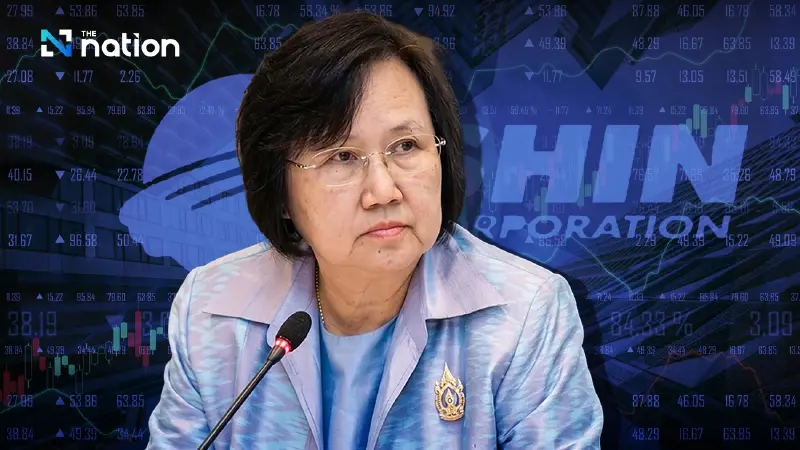


NACC finds grounds against Supa Piyajitti and others over the Shin Corp share tax case, citing alleged state losses of 17.9 billion baht
The National Anti-Corruption Commission (NACC) has found grounds against Supa Piyajitti and others in connection with the Shin Corp share tax case, in which the state was allegedly left unable to collect 17.9 billion baht in tax revenue.
A source said the NACC board, at a meeting on April 28, considered an inquiry file accusing Supa, while serving as deputy permanent secretary of the Finance Ministry, and others of failing to appeal a ruling by the Central Tax Court in the Shin Corp share tax case, case number 03-3-1058/2021, allegedly in breach of Finance Ministry regulations.
The eight-member NACC board voted by a majority of 4 to 3 to find grounds against Supa and the others. Prapas Kong-Ied recused himself from the vote. The three minority votes were cast by Piensak Sombattong, Eakawit Wajjwalku and Manrat Ratanasukon.
The NACC has already forwarded the case file to public prosecutors for further legal proceedings.
The commission also resolved to separate another allegation into a new case against officials of the Revenue Department and the Finance Ministry accused of failing to issue a summons to Thaksin Shinawatra for tax assessment within the five-year legal period, causing the state to lose the opportunity to collect tax.
Background to the Shin Corp share tax case and alleged state losses
The case stemmed from a 2017 letter sent by an extraordinary committee on national reform to the NACC president, asking the commission to investigate why Revenue Department officials had not issued a summons for tax assessment within the required period.
The request also covered the failure to appeal the Central Tax Court’s ruling, which allowed the case to become final and left the state unable to collect more than 11 billion baht in tax.
An NACC source said a Finance Ministry letter clearly stated that in civil cases involving claims worth more than 10 million baht, if a court rules against a state agency or grants it only partial success, and if the Revenue Department and public prosecutors agree that an appeal should not be filed, the appeal must still be submitted first because of the high value of the case. The matter must then be sent promptly to the Finance Ministry for consideration.
Under the regulations, Supa, as deputy permanent secretary of the Finance Ministry, had the authority to order the termination of civil cases worth more than 10 million baht. If she considered that an appeal should not proceed, she could then order the relevant agency to withdraw the appeal.
The source said the regulation had legal force. Any official who breached it and caused damage could face liability in tort, disciplinary action and criminal proceedings.
Legal dispute at the centre of the case
In 2009, Panthongtae and Pinthongta Shinawatra sued the Revenue Department, seeking to revoke a tax assessment.
The Central Tax Court later revoked the assessment, citing a 2010 ruling by the Supreme Court’s Criminal Division for Holders of Political Positions, which found that Thaksin and Khunying Potjaman Shinawatra were the true owners of the shares, not Panthongtae and Pinthongta.
However, Revenue Department officials and prosecutors at the time took the view that the two cases did not involve the same parties and prepared to appeal the ruling.
Revenue Department executives later sought an extension of the appeal deadline and sent letters consulting relevant agencies, instead of filing the appeal first as required by the regulation.
On May 2, 2011, Supa signed a “top secret, most urgent” letter instructing the Revenue Department to assess tax against the person deemed to be the true beneficial owner of the shares, rather than ordering an appeal in line with Finance Ministry regulations.
NACC says there were grounds to appeal
The NACC found that the Revenue Department and the Finance Ministry had sufficient grounds to appeal the Central Tax Court ruling.
The commission said the agencies could have relied on Section 61 of the Revenue Code, which empowers tax collection from the “person whose name appears on the title document”.
The NACC therefore considered Supa’s failure to order an appeal to protect the state’s interests, despite the tax amount being as high as 17.9 billion baht, to constitute misconduct in office.
Although the Revenue Department later assessed Thaksin Shinawatra for 17.6 billion baht in tax, the Supreme Court dismissed the case against him in August 2025. As a result, the Revenue Department was able to enforce payment of only slightly more than 50 million baht.
The accused side argued that the failure to appeal did not cause damage to the state.
However, the NACC majority maintained that failure to comply with the Finance Ministry’s letter had already caused damage, because had an appeal been filed from the beginning, the state might have won the case and collected tax from Panthongtae and Pinthongta without having to reassess Thaksin.
Criminal and disciplinary allegations
Based on the circumstances, the NACC resolved that Supa and the relevant Revenue Department officials had committed several offences linked to the Shin Corp share tax case, namely:
- An offence under Section 154 of the Criminal Code, for a public official allegedly failing to perform official duties dishonestly so that a taxpayer would not have to pay tax, or would pay less tax.
- An offence under Section 157 of the Criminal Code, for allegedly performing or omitting official duties unlawfully.
- An offence under the Organic Act on Anti-Corruption.
- A serious disciplinary offence and gross misconduct under the Civil Service Act.
The alleged acts took place between March 16 and May 2, 2011, at the Revenue Department and the Finance Ministry.
