
Middle East conflict cuts 1,000 flights to Thailand, slows 2026 aviation growth
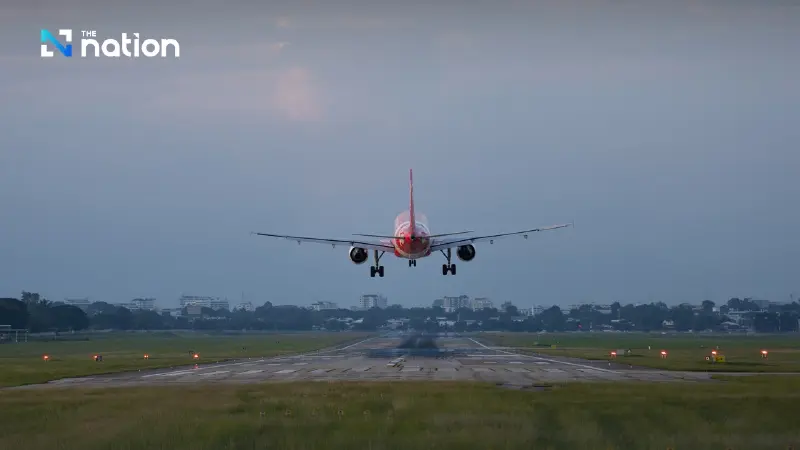


AEROTHAI says more than 1,000 flights from Middle Eastern airlines to Thailand have been cancelled, while 2026 flight growth is now expected at no more than 3%.
Thailand’s aviation sector has taken a significant hit from the conflict in the Middle East, with more than 1,000 flights from Middle Eastern airlines to Thailand cancelled since February 28, 2026, and overall flight growth this year now expected to be limited to no more than 3%.
Surachai Nuprom, executive vice president and acting president of Aeronautical Radio of Thailand Ltd (AEROTHAI), said on Wednesday (March 18, 2026) that the conflict could affect flight routes between Europe, the Middle East and Asia, as well as overall flight volumes in Thailand.
Based on current monitoring of air traffic service operations, he said, the situation has already had a significant impact on traffic volumes in Thai airspace.


More than 1,000 flights already cancelled
More than 1,000 flights operated by Middle Eastern airlines to Thailand have been cancelled since the conflict began on February 28, accounting for around 3% of total flight volumes.
Of these, more than 600 flights were cancelled at Suvarnabhumi Airport and more than 400 at Phuket Airport. Other airports affected by cancellations include Krabi, Chiang Mai and Don Mueang.
Higher oil prices cloud outlook
AEROTHAI said it had analysed the situation by taking into account both the uncertainty surrounding the conflict and the energy crisis, which has driven oil prices higher.

Airlines have gradually raised fares in line with higher fuel costs. Even so, the overall aviation industry is still expected to grow from last year, although at a slower pace than projected before the conflict erupted.
Flight volumes in 2026 are now expected to rise from 2025 only to a limited extent, by no more than 3%, depending on the severity of the conflict and how the situation develops.
AEROTHAI monitors route changes and closures
Surachai said AEROTHAI was continuing to monitor the situation closely, particularly factors that could affect air traffic management, including airline route changes, airspace closures in some areas and global economic pressures that could weigh on the aviation industry.
The company is also preparing its air traffic management operations to accommodate possible route adjustments and any increase in flight volumes that may result.
At the same time, volatility in global oil prices caused by the conflict could increase airlines’ operating costs and may affect long-term passenger demand for air travel.
AEROTHAI reaffirmed its readiness to manage air traffic efficiently in all respects, in line with the direction of Thailand’s aviation development, to support future growth and changes in regional aviation.
