
Transport federation presses govt on energy crisis, warns of nationwide stoppage
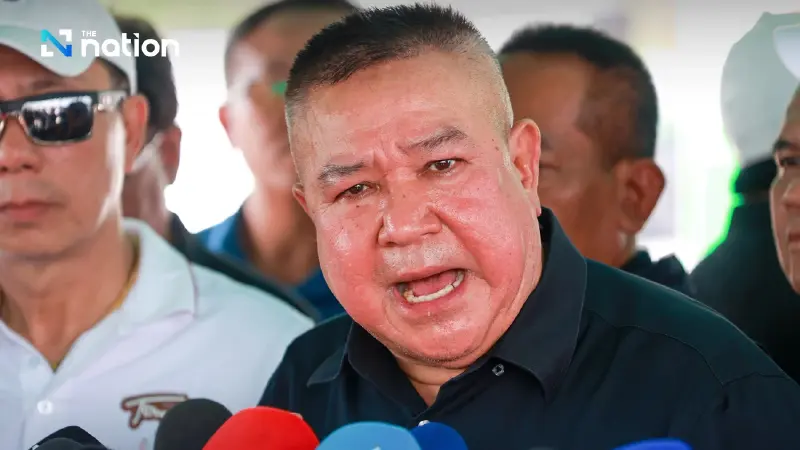


The Land Transport Federation of Thailand has issued five demands for the government to address the energy crisis, warning it may escalate to a nationwide transport shutdown if no action is taken.
Thongyu Khongkhan, president of the Land Transport Federation of Thailand (LTFT), spoke after holding a Truck Power activity at Laem Chabang Port on Wednesday (March 18) to reflect the problems arising from the energy crisis.
He said that, amid the energy crisis, the federation was calling on the government to urgently address the problem. The federation has submitted five proposals:
- The retail price of diesel at service stations should be capped at 30 baht per litre for 30 days, so that the public and all groups of oil users have time to prepare.
- The government must solve the problem of fuel shortages at petrol stations. All stations operated by Section 7 oil traders and new traders must not run short of fuel, close stations, impose quotas, limit refuelling, or take similar measures.
- The government must manage and maintain stability in diesel prices, or all types of fuel, so that prices offered by new traders under Section 7, as well as retail and wholesale jobber traders, are close to refinery-gate or depot-front prices, or differ by no more than 2-5 baht per litre. This would allow more than 20,000 private, industrial and commercial stations to purchase fuel and continue operating.

- The government and relevant agencies, including the Ministry of Transport and the Port Authority of Thailand (PAT), must resolve the traffic congestion crisis and long waits for cargo or container collection, ensuring that trucks entering and leaving Laem Chabang Port can complete each trip within no more than 3-4 hours per vehicle, per round, per trip, so as not to impose additional fuel costs on operators.
- The government must use the current energy crisis to restructure the entire energy system, from exploration and drilling concessions to refining, strategic oil reserves, legally required government oil storage, and fair refinery-gate pricing.
Regarding reports implicating the transport sector as the cause of fuel shortages because of delayed deliveries, Thongyu said this needed to be clarified in order to protect the image of transport operators.
He insisted that shortages at service stations were not caused by trucks refusing to deliver fuel, as alleged. He said the government should instead investigate whether refinery groups were hoarding oil while waiting for prices to rise, and whether some refinery operators had opportunistically increased refining margins from 2 baht to 6 baht, even though the fuel involved was merely old stock already in storage.
“We understand that this is now a caretaker government, so we are not expecting much from it, because everything is simply being passed on — passed on to permanent officials, passed on to the director-general of the Department of Energy Business,” Thongyu said.
“Today, I want to make it clear that the oil crisis has not been caused by delays in the transport sector. We are not asking for much. We just want the government to tell the truth — how much prices will be raised — and to ensure that refinery prices allow large traders and small traders alike to buy oil at similar prices.”

Thongyu also appealed to industrial groups and consumer goods manufacturers, saying that the transport sector was still holding its prices and had not raised freight charges in any way.
He urged them not to use transport costs as an excuse to raise product prices, and called on factories and all sectors not to take advantage of the situation by increasing prices, because the transport sector did not want to become the scapegoat in the eyes of society for impacts that it said were not caused by transport operators.

If this appeal to the government proves unsuccessful, with no response or discussion of any solution, the federation said it is prepared to adopt other measures to confront the government.
These could include a nationwide suspension of transport services, in cooperation with a network of nine allied organisations, including the Thai National Shippers’ Council, the Thai Chamber of Commerce, and the Federation of Thai Industries, in order to increase pressure and find a way out of the crisis.

It said the crisis was having a chain effect across the entire economic system, and that, ultimately, it would mobilise supporters representing operators and truck drivers to stage a protest in Bangkok to press their demands on the government.
