
THAI enters cash-saving mode as fuel costs soar
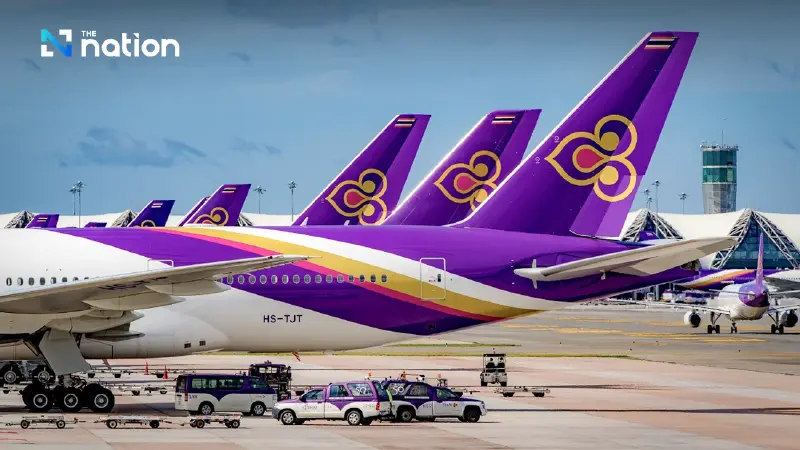


Thai Airways is delaying non-essential spending, reviewing contingency measures and raising fares as the Middle East conflict drives up fuel costs and weakens bookings.
Thai Airways International is moving into cash-saving mode as the Middle East conflict drives up fuel costs, weakens advance bookings and raises the risk of further pressure on its 2026 revenue target if the crisis drags on.
Chai Eamsiri, president of Thai Airways International Plc, said the airline had already begun delaying non-essential investment plans and tightening spending in order to preserve as much as possible of its existing 120 billion baht in cash flow.
He said Thai Airways management had met over the past week to assess the impact and prepare response measures, with the airline expected to adopt short-term survival measures and cut unnecessary costs until the situation becomes clearer. For example, onboard equipment that remains usable will continue to be used rather than replaced.
Chai said the unrest in the Middle East had clearly affected airline operations, with Jet A-1 fuel prices rising sharply from around US$80 per barrel to about US$220 per barrel. In response, Thai Airways has gradually raised fares by 10-15% to reflect higher fuel costs.
THAI delays non-essential spending
The airline’s passenger load factor is still averaging 90%, but the Middle East situation has already begun to affect travel decisions. Advance bookings have fallen by around 10% compared with the same period last year.
“Right now, I believe the situation will not be as bad as during Covid-19, when we were unable to operate flights at all and had no revenue coming in. In this Middle East situation, we can still operate on other routes. But if the situation drags on for another two months, or until May, and oil prices rise to US$240 per barrel, then we will need to revise our plans and adjust ticket prices to cover the costs,” Chai said.

Chai said Thai Airways would discuss its response plans with the airline’s board later this week. He added that he still believed the current situation would not be as severe as the company’s rehabilitation period and would not drag on like the Covid-19 crisis, partly because the United States is due to hold midterm elections in November 2026.
If the crisis extends beyond May, he said it would inevitably begin to affect Thai Airways’ 2026 revenue target, which had originally been set at 200 billion baht, representing growth of around 5% from the previous year.
The airline would then consider additional contingency measures, including reducing flight frequencies, suspending services to some destinations and further delaying non-essential investment plans in order to preserve as much cash on hand as possible. Chai said that in the airline business, the most important factor during periods of uncertainty is maintaining sufficient liquidity.
For long-term investment, however, Thai Airways said major projects would continue. These include the U-Tapao aircraft maintenance, repair and overhaul centre, which remains on schedule and will proceed at the same location without delay despite the Middle East crisis, as it is regarded as a key investment.
Likewise, the airline’s plan to take delivery of 28 additional aircraft in 2026, bringing its fleet to 102 this year, also remains unchanged. Chai said reviewing the plan at this stage could mean losing opportunities, as aircraft procurement takes time.
Bookings soften as crisis deepens
The conflict is also placing fresh strain on the wider aviation industry, which had only just recovered from the Covid-19 crisis. Kasikorn Research Center said that more than 40,000 flights worldwide were cancelled or delayed between February 28 and March 14, 2026, while the number of scheduled flights fell from 564,779 to 524,779. Routes passing through the Middle East account for 8% of all international flights.
Airlines are also facing higher oil prices following the closure of the Strait of Hormuz, which has disrupted oil shipments from the Middle East.
Fuel surcharge review on the table
On fuel cost risk management, Chai said Thai Airways had already hedged around 50% of its fuel price risk for a six-month period, with that hedge due to expire in June 2026. Whether the airline would add more hedging after that would depend on the situation, as doing so now might not be appropriate given the sharp rise in oil prices and the high level of risk.
He noted that fuel costs were affecting all airlines and said the key to surviving a crisis was tight control over costs and cash flow.
Thai Airways is also seeking government support for efforts to position Thailand as a regional aviation hub, with Thai carriers serving as the main mechanism to drive that strategy.
The airline will also hold talks with the Civil Aviation Authority of Thailand over a possible adjustment to the fuel surcharge, which, if approved, would help offset the rise in fuel costs.
“Adjusting fares and other measures is about the survival of the organisation, not taking business advantage at a time when market supply is limited. Prices are being adjusted to reflect real costs. It is simply being done to cover fuel costs and ensure the company can survive. If we do not raise fares, the organisation will not survive,” Chai said.
Under normal conditions, aviation fuel accounts for around 30% of the cost per flight. Thai Airways is now facing much higher fuel costs, pushing that share up to around 40-50% per flight. As a result, the airline has raised ticket prices by 10-15% across all routes, with the increase coming through the fuel surcharge already included in ticket prices.
