
Thailand tightens crude palm oil export controls
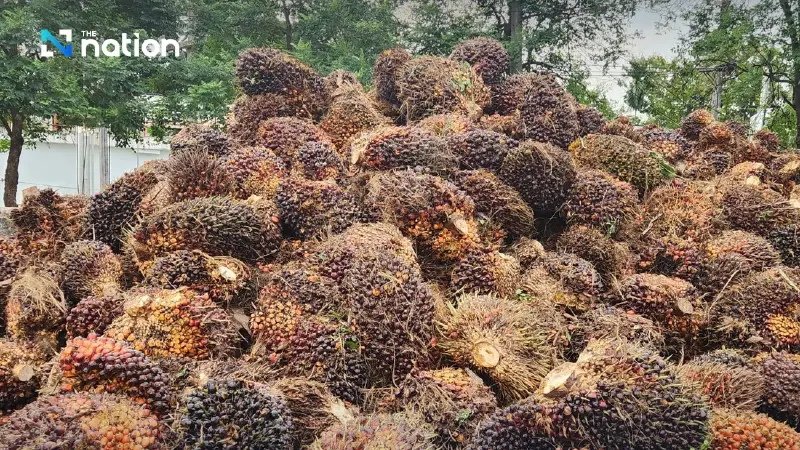


A Royal Gazette notice will require permits for crude palm oil exports from April 7, as Thailand moves to protect domestic supply amid energy and export pressure.
Thailand will tighten controls on crude palm oil exports from April 7, requiring exporters to obtain prior written approval in a move aimed at protecting domestic supply amid rising energy and export demand. The measure was published in the Royal Gazette as Announcement No. 1 of 2026 by the Central Committee on the Price of Goods and Services.
Under the notice, no one may export crude palm oil, or CPO, from April 7 onwards unless they first obtain written permission from the secretary-general of the Central Committee on the Price of Goods and Services. Applications must be filed with the Office of the Central Committee on the Price of Goods and Services at the Department of Internal Trade under the Commerce Ministry.
Permit requirement starts on April 7
The announcement says the control measure will apply nationwide for one year from the day after publication, unless a new notice is issued earlier. It defines crude palm oil as CPO under customs tariff subheading 1511.10.00.
Exporters granted approval must ship only the type, quantity, timeframe and destination stated in the permit, and the permit must accompany every export shipment. Each permit may be used for one export only. Any shipment that fails to comply with those conditions will be treated as an unauthorised export.


Move linked to energy and export pressures
The committee said the step followed its March 25 resolution that the conflict in the Middle East had continued to drive global petroleum prices higher. At the same time, the energy sector is expected to increase biodiesel blending in diesel, while demand for Thai crude palm oil exports has also risen, pushing up the likelihood of stronger domestic demand for CPO.
The stated aim is to manage crude palm oil volumes in line with market conditions and maintain balance across consumption, industry and energy, while ensuring there is enough supply for domestic use throughout the year.
One permit valid for one shipment only
The announcement was signed on March 26 by Suphajee Suthumpun, who is currently deputy prime minister and commerce minister, in her capacity as chair of the Central Committee on the Price of Goods and Services.
The legal framework for the control was issued under the Price of Goods and Services Act, B.E. 2542 (1999).
