
World Bank Warns of 110 Million Job Gap in East Asia, Calls for Procurement to Lead the Response
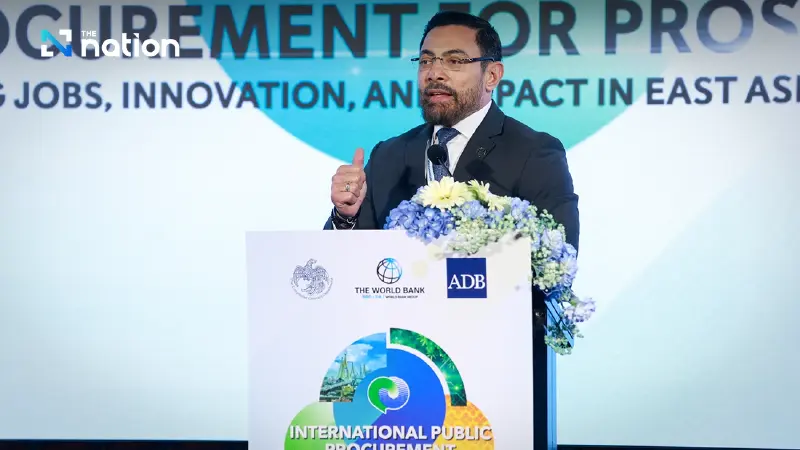


Regional Procurement Manager Diomedes Berroa tells IPPC 2026 that closing a looming employment deficit will require procurement to become a strategic tool for job creation, SME support and digital transformation
- The World Bank warns that the East Asia and Pacific region faces a potential 110 million job shortfall by the end of the next decade.
- It calls for governments to use public procurement as a strategic tool to address the looming employment crisis, rather than treating it as a simple administrative process.
- Key strategies include mandating local labor sourcing on projects and simplifying procedures to support Small and Medium-sized Enterprises (SMEs), which are credited with creating 90% of all jobs.
- The initiative also emphasizes adopting digital tools to make procurement more data-driven, efficient, and capable of anticipating risks like corruption.
Regional Procurement Manager Diomedes Berroa tells IPPC 2026 that closing a looming employment deficit will require procurement to become a strategic tool for job creation, SME support and digital transformation.
The East Asia and Pacific region faces a shortfall of 110 million jobs by the end of the next decade unless governments fundamentally rethink how they deploy public procurement, Diomedes Berroa, regional procurement manager for the World Bank's East Asia and Pacific division, warned on Monday at the opening session of the International Public Procurement Conference 2026.
Drawing on the World Bank Group's recently adopted internal reform — which places job creation at the centre of its lending, policy and private-sector mobilisation strategy — Berroa argued that procurement is one of the most powerful delivery mechanisms available to governments seeking to address the looming employment crisis.
Within the next decade, approximately 320 million people across the region are projected to enter the labour market; at current rates of job generation, the gap between supply and demand could reach 110 million positions.
"Every single contract generates a job. The question is where and how – and what kind of benefits accrue to those who need them most," Berroa stated.

Local Labour Requirements and Human Capital Building
To direct the economic impact of publicly financed contracts towards communities most in need, the World Bank has introduced mandatory requirements in its bidding documents stipulating that at least 20 per cent of the total labour value on a project must be locally sourced.
Berroa acknowledged this as an initial threshold rather than an end point, framing it as the beginning of a broader effort to embed local participation into the logic of procurement rather than treating it as an optional add-on.
Complementing the labour requirements is an expanded use of rating criteria — updated in 2022 and 2023 — that gives higher marks to proposals demonstrating a commitment to sustainability, local workforce development and the transfer of knowledge and technical skills from experienced contractors to emerging local firms.
SMEs: the Engine of 90 Per Cent of Job Creation
Berroa reinforced the case for small and medium-sized enterprises with a stark statistic: 90 per cent of all jobs created across the world economy are generated by SMEs.
Governments and multilateral lenders therefore cannot afford to design procurement systems that structurally exclude smaller businesses through complex requirements, slow payment practices or access barriers to financing.
The World Bank's response, he said, is to work with partner governments to simplify procurement procedures, reduce administrative burdens and replicate payment-facilitation mechanisms similar to the PromptBiz model praised earlier in the session by Thailand's Comptroller General.

Innovation in Practice: Three Case Studies
Berroa drew on three concrete examples to illustrate how innovative procurement design can unlock outcomes that traditional approaches cannot achieve.
In the Pacific, the World Bank collaborated with the Pacific Islands Forum to tackle the critical problem of correspondent banking services — financial infrastructure that island nations have long been denied — by bringing banking institutions to the table for the first time. The exercise required patient cross-sector dialogue and an openness to working with industries the Bank had never previously engaged.
In Indonesia, a health-sector project targeted equipment gaps across some 300,000 community health posts, 95,000 primary healthcare facilities and 3,000 hospitals spread across one of the world's most geographically complex archipelagos. Rather than procuring equipment alone, the contract placed full responsibility for transport, installation, staff training and commissioning with suppliers.
The result was a 52 per cent reduction in health delivery costs and, crucially, coverage of all 3,000 hospitals — an achievement unlocked by engaging private sector manufacturers directly through the International Finance Corporation.
A third example cited bridges being constructed in Thailand over a lake harbouring endangered dolphin species. Procurement documents were specifically designed to embed environmental and social risk-mitigation measures, ensuring that contract delivery was aligned with biodiversity and community protection obligations.
Digital Tools and Risk Anticipation
On technology, Berroa was emphatic: professionals who fail to embrace digital tools risk obsolescence within a few years.
He highlighted a dashboard initiative developed with several member governments that goes beyond compliance monitoring to provide strategic data for forward-looking policy decisions.
A second tool — a project management platform — is intended to simplify the administrative burden on implementing units.
A third application, to be presented later in the conference, uses data analytics to identify and address procurement risks before they crystallise into actual corruption or project failure.

Vision for 2030
Looking to 2030, Berroa set out a personal vision in which procurement is embedded in national strategic planning rather than driven by administrative compliance; digital systems are the default rather than the exception; value for money replaces box-ticking as the governing criterion; markets become more competitive and inclusive; and procurement institutions become resilient, empowered and capable of anticipating risk.
He also called for a greater emphasis on gender-responsive procurement, noting that inclusion — not merely access — must be the standard against which systems are judged.
"Procurement needs to be a strategic tool," he concluded, "and I hope that in the future procurement will follow national strategic plans rather than merely reacting to compliance and administrative processes."
