
Commerce Ministry defends US maize imports as supply safeguard
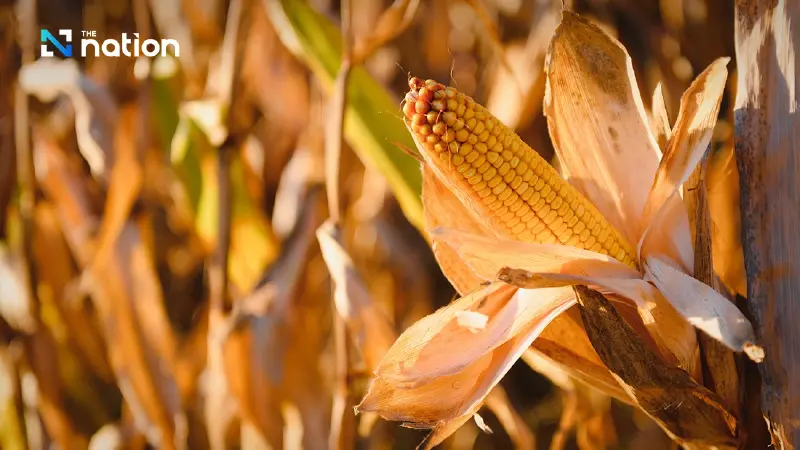


The Commerce Ministry says 1 million tonnes of US feed maize will help secure animal-feed supplies, with quotas, high tariffs and domestic buying rules in place to protect farmers.
Thailand’s Commerce Ministry has defended the planned import of 1 million tonnes of feed maize from the United States, saying the deal is intended to strengthen food supply-chain security while maintaining strict protections for Thai farmers.
Goranij Nonejuie, spokesman for the Commerce Ministry, said the agreement followed a signing ceremony in early May involving Thai and US private-sector representatives.
The Thai Chamber of Commerce and the Board of Trade of Thailand, together with the Royal Thai Embassy in Washington, DC, and the Commerce Ministry, witnessed the signing of the feed maize purchase agreement.
He said the arrangement was aimed at reinforcing food supply-chain security and giving Thai businesses more options in sourcing high-quality animal-feed raw materials that meet environmental standards and can be traced.

Domestic output falls short of demand
Thailand currently requires about 9 million tonnes of feed maize a year, but domestic production stands at only around 5 million tonnes. The shortfall means the country must source about 4 million tonnes of additional raw materials through imports from neighbouring countries such as Myanmar and Laos, as well as substitute materials including wheat from Ukraine and Australia.
Goranij stressed that imports of animal-feed raw materials remain subject to strict supervision. Operators are required to buy all domestic maize output first at prices set by the government in order to stabilise farm-gate prices. Imports of maize and substitute raw materials must also be managed carefully to prevent any impact on domestic prices.

Zero-burning rule may reduce regional imports
Since January 1, Thailand has imposed tougher rules on feed maize imported from neighbouring countries, requiring the products to be “burn-free” and traceable in line with the government’s policy to address PM2.5 air pollution. As a result, maize imports from neighbouring countries are expected to decline.
At the same time, conflict in the Middle East has pushed up the cost of imported animal-feed materials such as wheat and soybean meal. The private sector therefore needs to diversify its import sources, including from the United States, to guard against raw-material shortages and preserve the competitiveness of Thailand’s animal-feed and livestock industries.
Trade ties and farmer concerns
Goranij said opening the way for feed maize imports from the United States formed part of a long-term strategy to strengthen Thai-US trade relations. It would also help build confidence in trade negotiations between the two countries, which could benefit Thai exports of agricultural and processed agricultural products to the US market, Thailand’s most important export destination.
On concerns over possible effects on related agricultural raw materials used in the animal-feed industry, such as rice bran, husks and broken rice, the Commerce Ministry has discussed the matter with Banjong Tangjitwattanakul, president of the Thai Rice Mills Association.
The ministry confirmed that both sides would work together to keep the animal-feed supply chain balanced and prevent any impact on rice farmers, particularly the prices of broken rice and rice bran, which are linked to paddy prices.

High tariffs remain in place
The ministry said any feed maize imports exceeding the 1-million-tonne quota would face a high tariff of 72%, plus an import fee of 180 baht per tonne. This means imported feed maize would struggle to compete with domestic raw materials, which are not subject to import duties or international transport costs.
Addressing broader concerns that agricultural imports could affect Thailand’s ecosystem and local farmers, the ministry said the Department of Agriculture under the Ministry of Agriculture and Cooperatives is the main agency responsible for oversight.
The department requires pest-risk analysis and the preparation of protocols with trading partners to set controls from the registration of production sites and packing facilities at origin. It also enforces specific pest-control measures in line with international standards, such as fumigation or heat treatment.
Imports are further regulated through permits and phytosanitary certificates, while every shipment is subject to detailed random checks at plant quarantine checkpoints to prevent non-compliant goods, plant diseases and pests from harming Thailand’s ecosystem and domestic farmers.
The government had considered the policy carefully and cautiously, with attention to the need for a balanced outcome across the supply chain — from farmers, traders, manufacturers and exporters to consumers, who should not have to bear unnecessary price increases caused by higher production costs, Goranij concluded.
