
Three factors drive Thai industrial estate land demand to five-quarter high
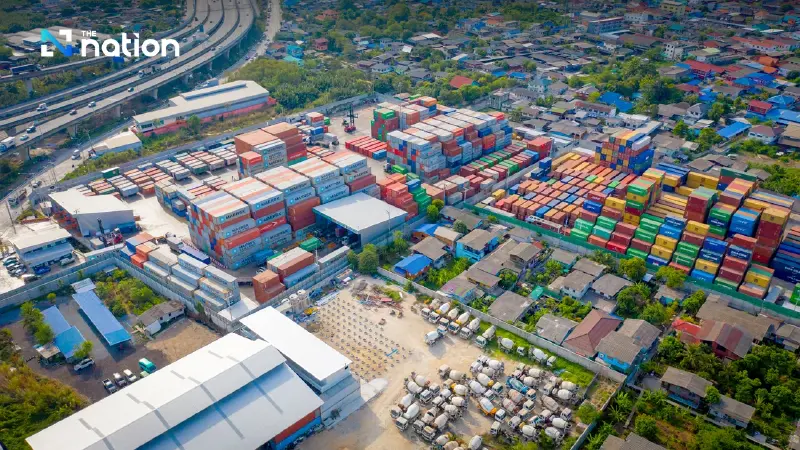


Colliers Thailand says BOI incentives, US tariff pressure and rising logistics costs pushed Thai industrial estate land take-up to a five-quarter high.
- Thailand's Board of Investment (BOI) extended investment promotion measures, prompting investors who had delayed decisions to finalize land purchases.
- New US tariff policies and a looming negotiation deadline spurred export-related businesses to accelerate decisions on securing production bases.
- The closure of the Strait of Hormuz increased global logistics and energy costs, causing manufacturers to speed up land reservations to lock in expenses before they rose further.
Thailand’s industrial estate market showed strong signs of recovery in the first quarter of 2026 despite global economic volatility and geopolitical uncertainty, according to the latest report from Colliers Thailand.
The market absorbed a total of 1,914 rai of industrial land, up 16.70% from the same period last year, marking the highest level in five quarters. The occupancy rate also rose to 82.55%.
More striking than the growth figures, however, was the unusually concentrated pattern of transactions. More than 70% of all ownership transfers, or 35 out of 50 deals, took place in March alone, reflecting an unprecedented acceleration in investment decisions across Thailand’s industrial estate market.
Colliers Thailand attributed the surge to the convergence of three key factors over just six weeks, all of which directly influenced decisions by investors and manufacturers worldwide.
- BOI incentives unlock investment decisions
The first factor was the Board of Investment’s (BOI) announcement in January 2026 of new investment promotion measures, which extended the incentive framework until the end of 2027.
The move encouraged investors who had delayed decisions while waiting for policy clarity to proceed with projects and move quickly to close deals.
- US tariffs create new deadline for exporters
The second factor was US tariff policy developments on February 20-21, 2026, following a ruling related to tariff powers under the International Emergency Economic Powers Act (IEEPA) and the introduction of a 15% global import tariff.
At the same time, Thailand’s Commerce Ministry set a target to conclude tariff negotiations with the United States by July 2026. This prompted businesses linked to export supply chains to speed up decisions on production bases and investment locations.
- Hormuz closure pushes logistics costs higher
The third factor was the closure of the Strait of Hormuz on February 28, 2026, which added pressure to global logistics and energy costs. Cargo insurance premiums rose immediately by four to six times, while shipping route diversions extended delivery times by another 10 to 15 days.
As a result, many manufacturers accelerated land reservations to lock in investment costs before operating expenses climbed further.
Colliers viewed these three developments as more than short-term catalysts. They also showed that Thailand’s industrial estate market can respond quickly to policy signals and shifts in the global economy, particularly in the Eastern Economic Corridor (EEC), which has been designed to support investment and changes in global supply chains.
New supply continues to rise, mainly in the EEC
On the supply side, Thailand had 213,941 rai of allocated industrial estate land at the end of the first quarter of 2026. Net leasable and saleable area stood at 143,251 rai, up 6.29% from a year earlier.
New supply entering the market totalled 4,369 rai, all of it located in the EEC and all from phased expansions of existing estates. No new greenfield industrial estate projects were launched during the period.
Although around 24,900 rai of vacant land remained, Colliers noted that some plots were already under negotiation or awaiting ownership transfer, suggesting that real demand was stronger than the vacancy figures appeared to show.
Second half could accelerate on huge BOI pipeline
Looking ahead, Colliers expects the next wave of demand to be driven by projects approved for BOI investment promotion in 2025. These totalled 3,370 projects worth 1.88 trillion baht, up 67% from the previous year.
Industrial land demand is projected at around 7,000 rai for the whole of 2026, with activity expected to accelerate significantly in the fourth quarter as approved projects begin to translate into actual transactions.
In the logistics sector, demand for warehouses and distribution centres continues to grow, supported by e-commerce, EEC expansion and the China-plus-one strategy. However, rental rates have yet to rise sharply because competition remains high and Chinese tenants continue to prioritise costs.
Energy and ESG become Thailand’s new advantages
Energy security has become another issue attracting greater attention and is now a key factor in industrial location decisions.
Thailand has an advantage through its reserve power generation capacity, clear renewable energy policy and EEC utilities system, which can efficiently support advanced industries.
The approval of carbon credit trading on the Thailand Futures Exchange (TFEX) in February 2026 has also increased the appeal of industrial estates with strong sustainability standards, matching the needs of foreign investors placing greater emphasis on environmental, social and governance (ESG) goals.
Tenapatt Kantaputra, senior analyst in the real estate advisory department at Colliers Thailand, said Thailand was no longer competing on the lowest land costs in the region.
Instead, it was competing on the quality of its industrial ecosystem, infrastructure, energy readiness and clear policy framework — all important factors in attracting investment amid global economic volatility.
“Thailand is shifting from being an alternative production base to becoming one of the region’s industrial hubs with an ecosystem highly ready to support investment,” Tenapatt said.
“The gap between the real value and current prices of industrial estates with strong energy readiness and infrastructure remains a key opportunity for investors in the next phase.”
