
BOT Monitors Middle East Tension as Baht Drops 6% Year to Date


Bank of Thailand Governor Vitai Ratanakorn remains unconcerned by the new Hormuz shipping fees, noting a 5–6% weaker baht boosts trade and tourism
- The Bank of Thailand (BOT) is closely monitoring tensions in the Middle East but believes it is too early to assess the full economic impact and has not yet deployed intervention measures.
- The Thai Baht has weakened by 5-6% year-to-date, a depreciation that is in line with other regional currencies.
- The BOT Governor views the weaker baht as a positive factor, stating it acts as a cushion that supports Thailand's crucial export and tourism sectors amid global uncertainty.
Bank of Thailand Governor Vitai Ratanakorn remains unconcerned by the new Hormuz shipping fees, noting a 5–6% weaker baht boosts trade and tourism.
The Bank of Thailand (BOT) is closely monitoring the volatile situation in the Middle East but believes it is currently "too early" to assess the exact economic toll on the kingdom's GDP and exports.
Speaking on Tuesday, BOT Governor Vitai Ratanakorn urged patience regarding the unfolding geopolitical crisis, noting that the central bank has not yet deployed specific intervention measures.
The governor's cautious remarks follow a sudden and dramatic escalation in the Middle East over the past 48 hours. The fragile June ceasefire has collapsed, giving way to a direct military and economic confrontation.

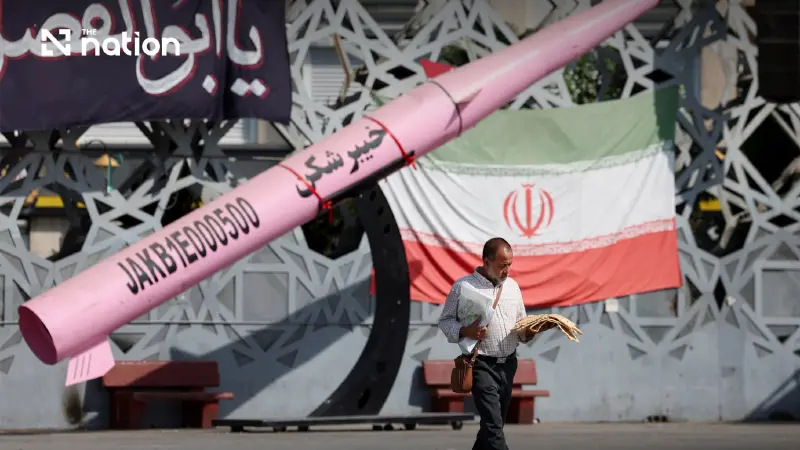
US President Donald Trump announced a strict naval blockade on Iranian ports alongside a highly controversial "Guardian of the Strait" ultimatum, demanding a 20% tariff on commercial cargo transiting the Strait of Hormuz.
Tehran has reacted with outright defiance. Iranian Foreign Minister Abbas Araghchi mocked the tariff on social media, while Iranian forces have reportedly targeted commercial vessels with cruise missiles and disrupted navigation systems in the vital corridor, through which 20% of global oil flows.

Short-Term Friction, Long-Term Inflation Risks
Despite the gravity of the maritime stand-off, Governor Vitai emphasised that the central bank is not overly alarmed at this stage.
"Geopolitical conflicts are currently short-term and constantly changing," Vitai observed. "We are monitoring the situation closely because if these conflicts remain at a high intensity for a prolonged period, they could eventually impact inflation. However, at this stage, we are simply observing."
Addressing the newly announced 20% passage fees for the Strait of Hormuz, Vitai noted that because the escalation and the fee declarations occurred only two or three days ago, it will take more time for the real economic parameters to clarify before any definitive conclusions can be drawn.

Baht Weakness Provides Export Cushion
While geopolitical tensions rattle global markets, the Governor pointed to a silver lining within Thailand’s domestic financial indicators: the performance of the local currency.
The Thai Baht has weakened by approximately 5% to 6% year to date (YTD). Rather than viewing this depreciation as a symptom of economic distress, Vitai framed it as a highly functional stabiliser amid global turbulence.
"This depreciation is entirely consistent with other regional currencies, placing Thailand firmly in the middle compared to its neighbours," the governor explained. "Significantly, we view this 5–6% YTD weakening as a positive factor that actively supports Thailand's crucial export and tourism sectors."
By lowering the relative cost of Thai goods abroad and making the country a more affordable destination for international travellers, the softening currency is expected to provide a vital buffer against any near-term trade disruptions arising from the Middle East.
