
Thailand Pushes for Andaman Gas Exploration to Bolster Energy Security and Economy
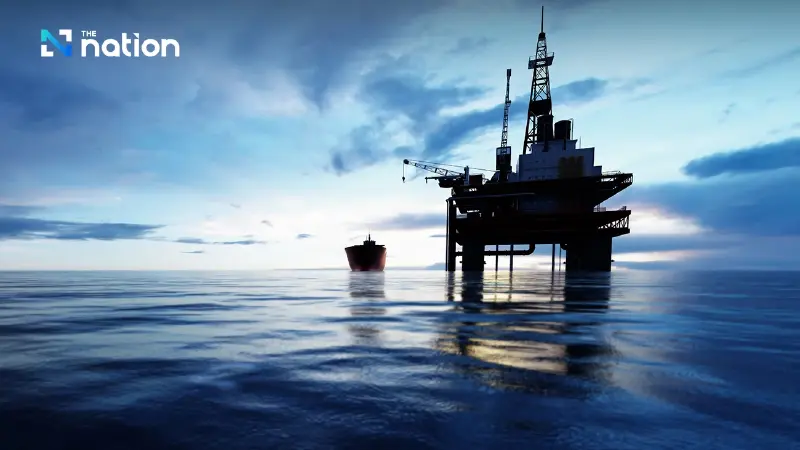


Ministry of Energy seeks to attract global investors for a new bidding round in the Andaman Sea with potential for a major gas discovery
- Thailand is advancing plans for a new bidding round for gas exploration in the Andaman Sea to bolster its energy security and reduce dependence on expensive liquefied natural gas (LNG) imports.
- The project is projected to generate hundreds of billions of baht for the Thai economy through investment, revenue, and job creation, with major global oil companies already expressing interest.
- The exploration area is estimated to hold a potential gas discovery of up to 10 trillion cubic feet, which could secure the nation's gas supply for approximately 20 years.
The Thai Ministry of Energy is advancing plans to open up petroleum exploration in the Andaman Sea, a move it projects will generate hundreds of billions of baht and significantly enhance the nation's energy security.
The Director-General of Thailand's Department of Mineral Fuels Warakorn Brahmopala announced preparations for the 26th bidding round for exploration and production rights in the deep-water blocks of the Southern Andaman.
The bidding is expected to commence in late 2025, with a winner to be announced the following year.
Data suggests the area holds promising potential for a substantial gas discovery of up to 10 trillion cubic feet.
Such a find could provide Thailand with natural gas security for an estimated 20 years, lessening the country’s dependency on volatile and expensive liquefied natural gas (LNG) imports.
Global oil giants, including Chevron, ENI, PTTEP, Total, and Exxon, have already expressed interest in the investment, which could be worth hundreds of billions of baht.
Warakorn noted that the challenging nature of the exploration site necessitates a modernised legal framework to attract investors.
The department is considering a hybrid concession system, which may incorporate a Production Sharing Contract (PSC) model to offer more flexibility and make investment in the Andaman blocks more economically viable.
The initial cost for a single deep-water exploration well is estimated to be as high as approximately $27 million.
A successful discovery would bring a wealth of benefits to Thailand, including revenue, job creation, and the development of crucial infrastructure like ports and LNG processing facilities. The total economic value is projected to be in the hundreds of billions of baht.
Separately, Warakorn confirmed that the winner of the 25th onshore petroleum exploration and production bidding round is expected to be announced in December 2025. Five companies submitted eight bids in total.
This onshore bidding process is seen as a way to stimulate the economy, generate state revenue through royalties and taxes, and boost related businesses, with a total investment of over 2.4 billion baht in the petroleum industry.

Warakorn highlighted the current economic burden of relying on imports.
“Currently, Thailand imports LNG for power generation,” he stated. “In my personal opinion, importing fuel from anywhere is always more expensive than sourcing it domestically due to unstable prices and energy security risks. During the Middle East conflicts, LNG prices soared by two to three times, which led to a rise in Thailand's energy costs, especially for electricity, forcing the government to spend vast sums to subsidise prices.”
