
Nestlé cements Thailand’s status as regional strategic hub for advanced food tech
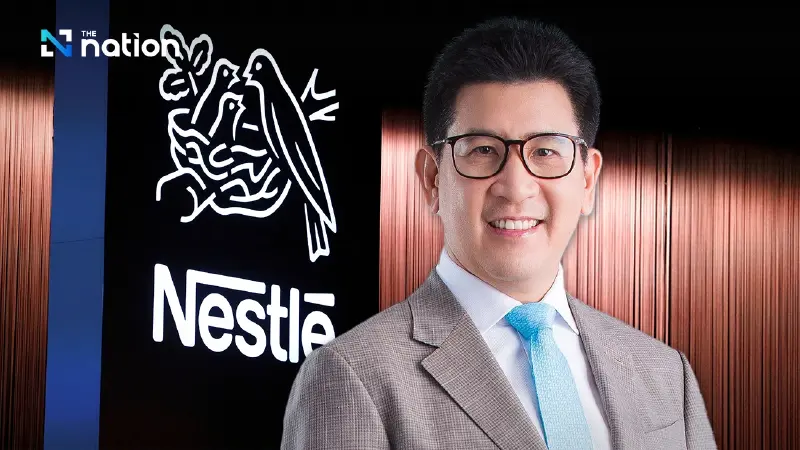


Deputy PM Ekniti Nitithanprapas meets Nestlé executives at Davos, confirming a $830m investment portfolio and a massive 90% export rate for pet food
- Nestlé has officially reaffirmed Thailand's role as its primary "Strategic Hub" for the Indochina region following high-level talks at the World Economic Forum.
- The commitment is backed by a substantial investment of over $830 million in the last six years, which has established Thailand as an export powerhouse, shipping 90% of its pet food production to global markets.
- The partnership will focus on future expansion in advanced food technologies and high-value-added products, integrating Thai agricultural goods into sophisticated manufacturing processes.
- Nestlé will also support the development of a skilled workforce by collaborating with the Thai government and universities on "Upskill & Reskill" programs to meet the demands of advanced industry.
Deputy PM Ekniti Nitithanprapas meets Nestlé executives at Davos, confirming a $830m investment portfolio and a massive 90% export rate for pet food.
Thailand has solidified its position as a critical industrial anchor in Southeast Asia following high-level talks between the Thai government and global food and beverage giant Nestlé.
Speaking after the World Economic Forum (WEF) Annual Meeting 2026 in Davos, Ekniti Nitithanprapas, Deputy Prime Minister and Minister of Finance, confirmed that Nestlé will continue to utilise Thailand as its primary "Strategic Hub" for the Indochina region.
The commitment follows a productive dialogue with Remy Ejel, a senior executive at Nestlé, who reaffirmed the multinational’s confidence in the Kingdom’s macroeconomic stability.
Nestlé’s presence in Thailand is substantial. Over the past six years, the group has invested over 28 billion baht (approximately $830 million), operating eight factories and employing more than 3,000 Thai staff.
A standout performer in this portfolio is the pet care segment.
Under the Purina brand, Nestlé has successfully transformed Thailand into an export powerhouse, with 90% of domestically produced pet food now shipped to premium global markets, including Japan, Australia, the United States, and Europe.
"Nestlé’s decision to reinforce Thailand's role as a strategic hub is a testament to our robust infrastructure and reliable supply chain," stated Ekniti. "This partnership transcends capital investment; it integrates Thai agricultural produce—such as poultry and plant-based proteins—into sophisticated manufacturing processes, ensuring sustainable growth for our farmers."
The Thai government is wasting no time in capitalising on this momentum.
Ekniti has instructed the Board of Investment (BOI) to work in close coordination with Nestlé to monitor expansion plans, particularly those involving advanced food technologies and high-value-added products.
Crucially, the collaboration extends to human capital. Nestlé has pledged support for the government’s "Upskill & Reskill" agenda.
Through the "Nestlé Needs Youth" programme and partnerships with local universities, the company will help tailor engineering and manufacturing curricula to meet the evolving demands of the Fourth Industrial Revolution.
This initiative will align with the state’s "Skill Bridge" project, bridging the gap between academia and industrial requirements.
As Thailand moves through 2026, the renewed commitment from one of the world’s largest consumer goods companies provides a significant boost to the nation’s ambition to become a premier destination for high-value international investment.
