
Thailand's 4 Strengths to Attract ASML: Grand Strategy Needed
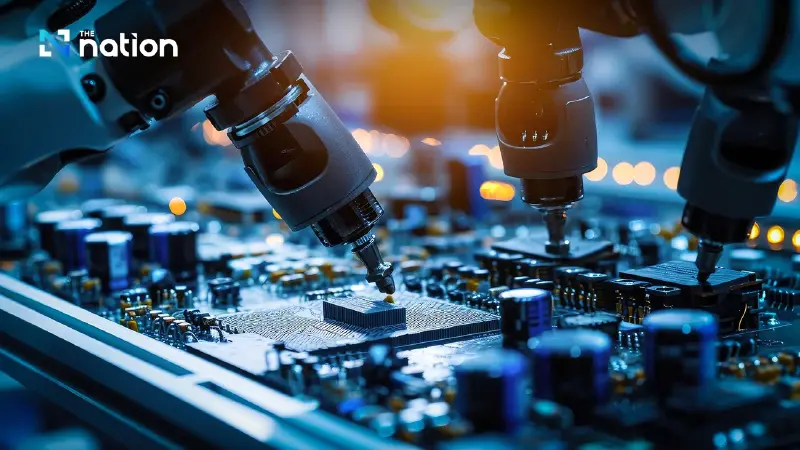


Strengths, including its electronics industry and stable infrastructure, make the country an attractive destination for ASML. Experts urge a Grand Strategy for long-term growth.
Thailand possesses four key strengths that make it an attractive location for ASML, the world’s leading chip machinery manufacturer: a strong electronics industry, reliable electrical infrastructure, low risk of conflict, and a trusted production base that respects intellectual property.
Academics suggest that the government should develop a clear "Grand Strategy" to link the semiconductor industry with other sectors, ensuring quick returns on investment and attracting long-term foreign investments.

Dr Archanun Kohpaiboon, a professor at Thammasat University’s Faculty of Economics, explained that ASML, the Dutch giant in advanced semiconductor manufacturing equipment, has shown interest in building a supply chain in Thailand. This interest is driven by two main factors:
- Thailand’s strengths, which have garnered interest.
- ASML’s strategy to diversify risk and reduce dependence on China.
Despite challenges in both politics and the economy, with some international observers like Financial Times calling Thailand the "sick man of Asia," Thailand still possesses overlooked strengths that have attracted ASML’s attention.
Thailand’s Key Strengths:
- Electronics Industry: Thailand has a well-established electronics industry, covering upstream, midstream, and downstream sectors, including the assembly and testing of chips, as well as parts like power sensors, printed circuit boards (PCBs), hard drives, electrical appliances, and printers.
- Infrastructure: Thailand has reliable infrastructure, particularly in electricity, which is more stable than neighbouring countries like Vietnam.
- Low Risk of Conflict: Thailand is not located in a region at risk of large-scale conflict.
- Trusted Production Base: Thailand is considered a trusted production base, where business secrets are safe because the country respects intellectual property.
Dr Archanun emphasized that the new government, or the Board of Investment (BOI), should establish a clear Grand Strategy that connects the semiconductor industry with sectors like electronics, future mobility, and technology, to ensure mutual benefits.
This strategy will help foreign investors see that Thailand can both produce for export and create a strong domestic market, making investments more profitable quickly and attracting more foreign giants.
“The most attractive point is making investors see that investing in Thailand offers the quickest return on investment,” said Dr Archanun. “This quick return is not just about offering tax breaks for 10 to 20 years. If Thailand has a Grand Strategy and everything aligns, it will help create a strong policy direction.”
He also noted that it is crucial not to change policies drastically, as this could discourage long-term investment. "If production bases move elsewhere, they will not return to Thailand," he added.
ASML’s Investment and Technology Transfer
Dr Archanun pointed out that if ASML invests in Thailand to build a supply chain, it will likely involve producing certain parts rather than high-tech machinery. He also mentioned that expecting multinational companies to transfer technology may not be realistic, as technology is the key to business survival.
The focus should be on creating knowledge among those involved in the supply chain and leveraging that knowledge to foster innovation and new businesses. The new government and relevant agencies should create an environment that supports this, enabling people to use their skills and knowledge beyond just working for multinational corporations.
For example, Dr Archanun suggested that regulatory adjustments should be made to allow for the creation of true Venture Capital (VC).
Currently, Thailand's VC scene is mostly tied to large companies or commercial banks and does not fully take on the risk that real VC investments require, such as supporting business ideas that may not immediately succeed. "In the past, Thailand relied too much on personal connections, making it hard for those without these connections to succeed," he said.
