
Thailand’s EEC, skilled workforce draw global location portfolios
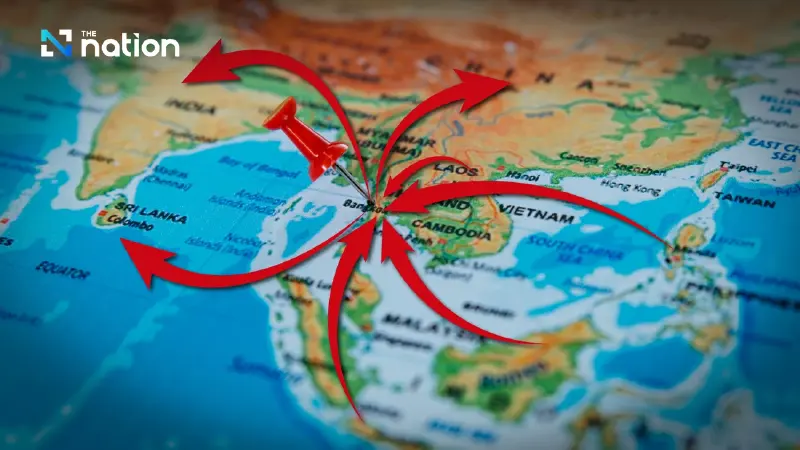


Global businesses are spreading operations across multiple cities to reduce risk, with Thailand among ASEAN’s top choices for production shifts
Global businesses are moving away from the old model of anchoring headquarters, factories or innovation centres in a single major city, as rising geopolitical, economic and climate risks force companies to rethink how they manage location strategy.
A new approach known as a “portfolio of locations” is gaining ground among global executives, allowing companies to spread risk by operating across multiple cities rather than relying too heavily on traditional economic capitals.
The shift comes as global uncertainty has risen beyond levels seen during the pandemic, making the old single-city model increasingly difficult for businesses to justify.
A recent Oliver Wyman Forum report, which ranked more than 1,500 commercial, connectivity and investment hubs worldwide, found that the range of possible business locations has expanded sharply.
Together, these cities account for around 75% of global GDP, worth about US$88 trillion, and are home to 92% of listed companies worldwide.
Midsized cities gain new weight
While global powerhouses such as New York, London and Tokyo remain important command centres, midsized cities are emerging as serious competitors.
Cities including Hamburg in Germany and Manchester in the United Kingdom are attracting start-up capital and high-skilled technology workers because they offer strong transport systems, more affordable living and housing costs, and infrastructure better suited to new risks such as climate change.
The report also points to the growing importance of “urban clusters”, where several cities function as a connected economic network rather than as isolated hubs.
Examples include the Hong Kong-Shenzhen-Guangzhou cluster, which is linked by high-speed rail within around one hour.
The group has a combined GDP of more than US$1.4 trillion and a population of about 48 million, giving it an economic scale larger than Tokyo.
Other examples include the Munich-Stuttgart-Zurich corridor and the Singapore-Johor Bahru-Batam cluster, both of which show how connected city groups can create wider business ecosystems.
Talent and climate readiness now shape location choices
Business location strategy is also becoming inseparable from talent strategy.
Cities that can attract millennials and Gen Z workers increasingly need strong universities, career opportunities and a high quality of life.
Helsinki, Manchester and Wuhan are among the cities highlighted as examples of places competing for talent in this new environment.
The role of technology is making this competition sharper. By 2030, the World Economic Forum expects artificial intelligence to replace around 92 million existing jobs while creating about 170 million new ones.
That means cities able to train, attract and retain workers in AI, engineering and digital services will have a stronger competitive edge.
Policy incentives are also becoming more important. Cities such as Dubai, Riyadh and Hong Kong are using measures including low-tax regimes and fast-track visa schemes to attract high-skilled professionals and global firms.
Climate resilience has become another key business cost factor. Cities in Switzerland, Paris and Singapore are already investing in green infrastructure to reduce the risks of flooding and drought.
Cities that fail to prepare for climate risks could face repeated disruption, business downtime and talent flight as workers and companies move to safer, more resilient locations.
Thailand positioned as a regional supply-chain hub
For Thailand, the global move towards location portfolios creates an opportunity to strengthen its role as a key Southeast Asian base for supply-chain resilience.
Thailand is already viewed as one of the region’s attractive destinations for companies seeking to diversify risk and build more flexible production networks.
The country’s strength lies partly in future industries and electric vehicles. According to the Board of Investment, Thailand has continued to draw strong interest from multinational investors, particularly in EVs, smart electronics and digital industries.
Investment promotion applications in targeted industries rose steadily during 2024 and 2025, reinforcing Thailand’s position as a strategic manufacturing node in the region.
Thailand’s Eastern Economic Corridor also fits the urban-cluster model now gaining attention worldwide.
The EEC connects Chachoengsao, Chonburi and Rayong through industrial, aviation, high-speed rail and deep-sea port infrastructure.
This gives Thailand a connected production and logistics base similar in concept to international city-cluster models.
Thailand is also using talent-attraction policies to support the shift.
The government’s Long-Term Resident Visa offers tax and long-stay benefits to foreign experts, remote workers and high-net-worth individuals, helping meet the needs of global businesses that want to move skilled personnel into the region.
The broader lesson for companies is that future growth will no longer depend on finding one perfect city. Instead, businesses will need to combine the strengths of different locations around the world.
For global firms, that means spreading operations across promising midsized cities, factoring in talent, climate resilience and logistics links, and building location strategies that can withstand shocks in an increasingly uncertain world.
