
US capital moves from China as Thai industrial estates expand 34,000 rai in three years
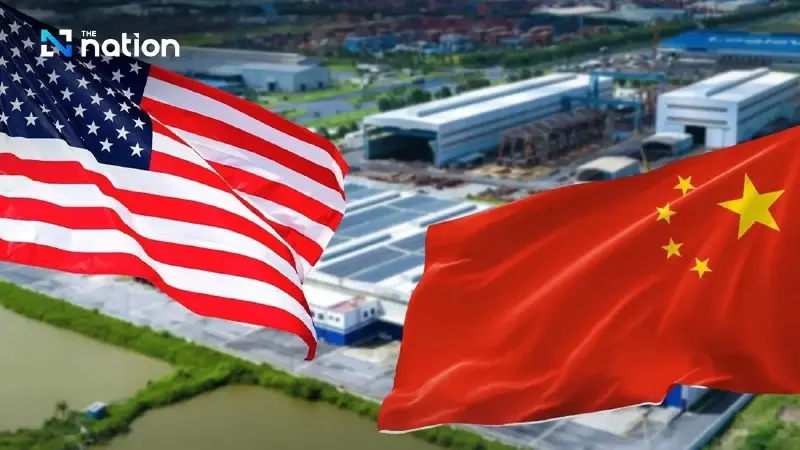


US firms shift investments from China, boosting Thai industrial estates; ASEAN becomes top alternative for redirected capital amid trade tensions.
Amid rising US-China trade tensions, Thai industrial investment has surged, with new industrial estates expanding by 34,000 rai over the past three years. The trade friction between the United States and China intensified earlier this year, although some temporary tariff relief measures were introduced in mid‑May 2025. Last month, both countries agreed to extend the trade truce for another 90 days, until mid‑November 2025.
CNBC reported on 10 September 2025, citing a survey by the American Chamber of Commerce (AmCham) in Shanghai, that nearly half of US businesses—47%—had shifted planned investments away from China to other regions over the past year, primarily to ASEAN countries. This represents the highest proportion recorded since AmCham Shanghai first conducted the survey.
The AmCham Shanghai 2025 China Business Survey collected responses from 254 US companies shortly after US-China tensions escalated. Eric Zheng, president of AmCham Shanghai, told reporters: “For companies, 90 days is far too short. Supply‑chain planning takes much longer. At least for now, we do not face higher tariffs, but the underlying problems remain.”
The survey, conducted between May 19 and June 20, 2025, found that most US firms redirecting investment from China favoured ASEAN countries, followed by nations in the Indian subcontinent, including Bangladesh. Investments redirected to the US and Mexico were considerably lower.
Meanwhile, US President Donald Trump encouraged companies to relocate overseas production back to the United States. Only a small fraction, mostly high‑tech firms, announced plans to invest domestically. Trump also criticised Apple Inc.’s plan to expand production in India.
According to Nikkei Asia, almost half of US companies want Trump to “remove all tariffs” imposed on Chinese goods, with 48% requesting both tariff and non‑tariff trade barriers against China to be lifted.
Despite the temporary truce, US import tariffs on Chinese products remain around 30% higher than at the start of the year, slowing bilateral trade. Exports from China to the US fell 33.1% year‑on‑year in August, while US imports into China decreased by 16%.
34,000 rai of new industrial estates developed in three years
Sources from the Industrial Estate Authority of Thailand (IEAT) reported that over the past three years, a continuous wave of production relocation from China to ASEAN countries and Thailand has driven the development of land to accommodate investment, both in IEAT‑managed industrial estates and joint‑venture estates. Between 2023 and 2025, 18 new industrial estates were developed, covering a total area of 34,645 rai, including:
- WHA Group developed two estates: WHA Industrial Estate Rayong 36 (1,281 rai) and WHA Industrial Estate Rayong (2,101 rai).
- Rojana Industrial Park Public Company Limited developed three estates: Rojana Laem Chabang Industrial Estate (943 rai), Rojana Chonburi Industrial Estate 2 (902 rai), and Rojana Chonburi Industrial Estate 2 (Khao Kan Song) (1,987 rai).
- Amata Corporation Public Company Limited developed one estate: Amata City Chonburi Phase 2 (8,226 rai).
In 2025 alone, the IEAT board approved proposals to establish new industrial estates covering 15,000 rai. Additionally, two estates are scheduled for submission to the IEAT board:
- Apex Green Industrial Estate (expansion) – 459 rai, by Apex Park Co., Ltd.
- Amata City Rayong (expansion) – 2,807 rai, by Amata Corporation PCL
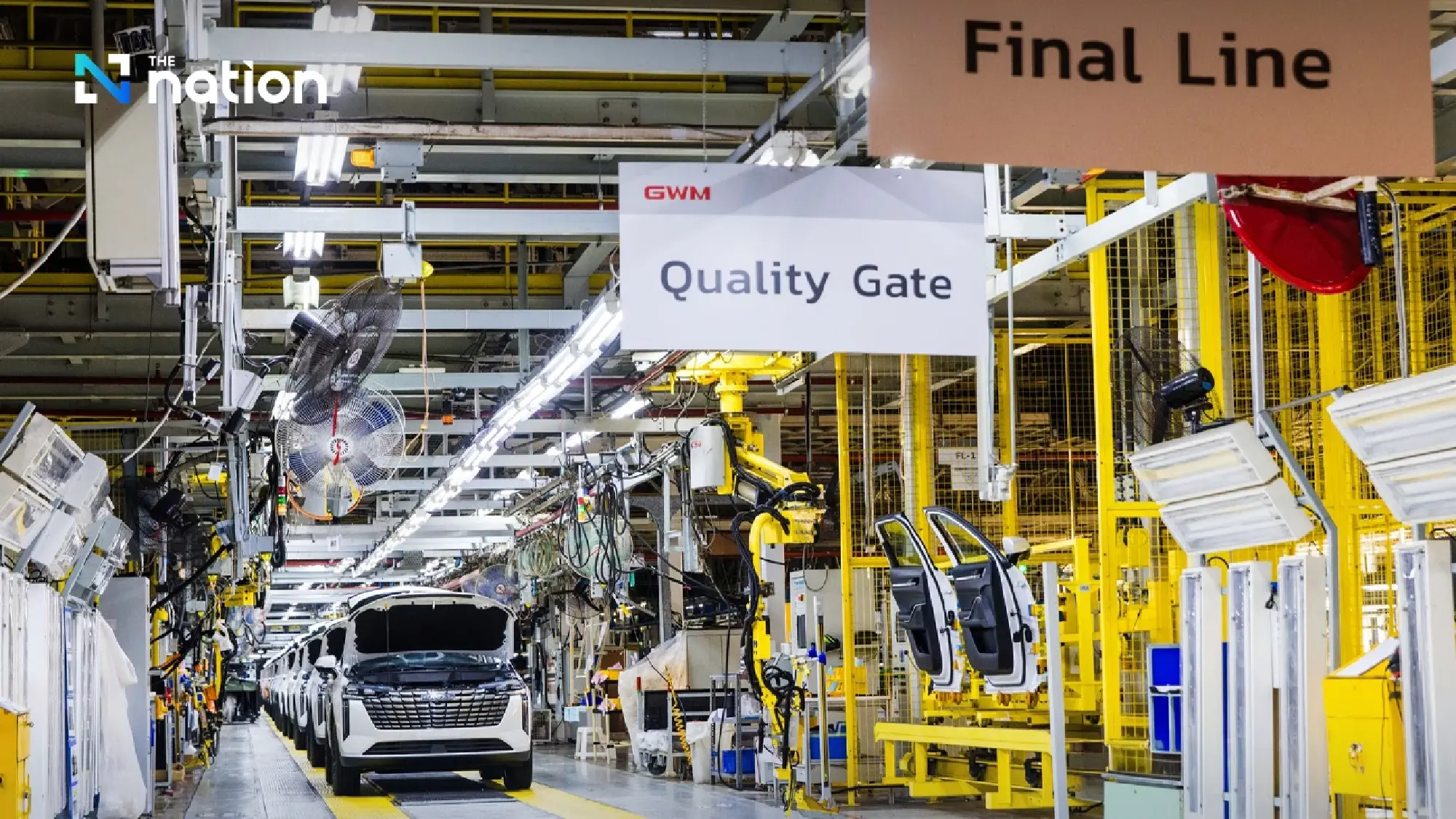

Thailand’s investment trend continues to expand
Sumet Thangprasert, IEAT Governor, noted that investment in Thailand is likely to continue growing. BOI data shows over THB 1 trillion in investment incentives requested in the first half of 2025.
By comparison, land sales/leases in industrial estates reached over 6,000 rai in 2023 and more than 7,000 rai in 2024. For fiscal year 2025 (October-September), the original target of 10,000 rai is unlikely to be met, with July sales at 5,630 rai. Total annual sales are expected to reach around 6,000 rai due to a global economic slowdown.
Nonetheless, opportunities to expand investment in Thailand remain, as the ratio of requests to land sales continues to grow, including land outside existing estates. IEAT is confident that in 2026 it will meet the 10,000‑rai target, driven by investors attracted to competitive costs, ready infrastructure, clear regulations, and investor‑friendly policies.
“After September, the outlook is promising. Some industries in Thailand will continue to grow, especially as higher value‑added sectors require more labour. IEAT will help design investment zones to function as mobile ‘economic zones’ in partnership with the BOI, with an emphasis on cluster design in collaboration with the Federation of Thai Industries,” Sumet added.
Accelerating preparation of land for investment
Currently, industrial estate developers seeking to establish new estates or expand existing ones in the Eastern Economic Corridor (EEC) face over 40 zoning issues, involving plots of 700-1,000 rai each, representing tens of thousands of rai and investment valued at hundreds of billions of baht. Most are in “yellow” zoning, which cannot yet be converted to “purple” industrial zoning.
Thus, efforts are needed to accelerate foreign direct investment (FDI) and meet expected demand, projected to increase to 200,000-300,000 rai in the coming years. Delays in developing industrial estate land would hinder Thailand’s competitiveness and the target to raise FDI from 24% to 27% of GDP, equivalent to 350 billion baht per year.

FTI confident Thailand remains attractive to investors
Kriengkrai Thiennukul, Chairman of the Federation of Thai Industries (FTI), said that Thailand continues to attract foreign investors, particularly amid the ongoing relocation of production bases out of China, creating opportunities for the country to draw investment.
However, businesses must navigate new global rules, such as trade‑distorting measures and requirements for local content or regional value content (RVC), which have increased from 40% to 60%, necessitating adjustments in cost accounting and production processes.
Thailand currently faces challenges from the global economy and geopolitical competition, but significant opportunities remain from the inflow of foreign investment, especially in S‑Curve and New S‑Curve industries.
When deciding to establish Thailand as a production base, investors consider a range of critical factors, including strategic location, advanced infrastructure, proximity to raw materials, market access, and ports for export readiness. This underscores the importance of industrial estates as a key driver of investment attraction.
Furthermore, industrial estates play a crucial role in luring investment, offering ready locations, infrastructure, and an ecosystem conducive to modern industries such as electric vehicles (EVs), batteries, data centres, advanced agriculture and bioindustries, and climate technology.
