
Thai steel industry seeks state backing as costs force price rises
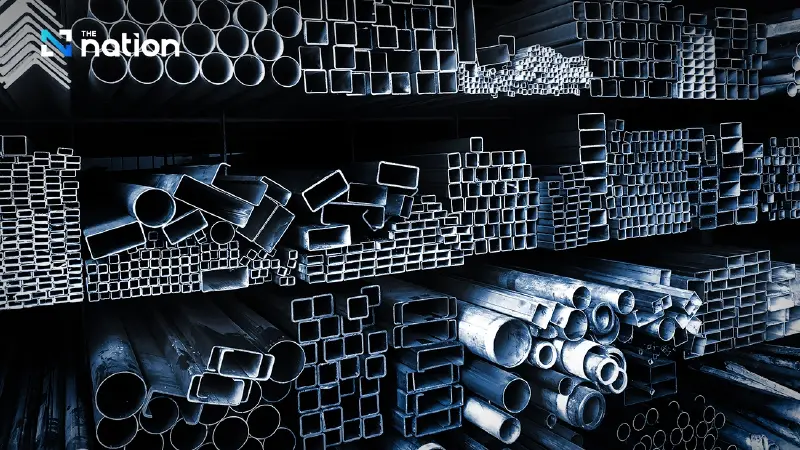


Thai steel makers seek anti-dumping action and stronger state support after war-driven energy and freight costs trigger price rises of 10-15%
Thailand’s steel industry is stepping up calls for government support as war-related cost pressures force manufacturers to raise prices and rethink how long they can remain competitive under mounting external strain.
Steel producers have announced that prices for all categories of steel products will rise by 10-15% in the first round of increases this April, with another adjustment possible in May if energy and freight costs continue to climb.
Nava Chantanasurakon, vice chairman of the Federation of Thai Industries and honorary chairman of the steel industry group, said the sector had tried to absorb higher costs for as long as possible. But with the impact of the prolonged Middle East conflict now feeding through multiple parts of the supply chain, holding prices steady is no longer realistic.
He said the current adjustment would apply across the board, covering all steel products, and warned that a second increase may be needed if the cost situation worsens further.
According to Nava, the problem is rooted in the structure of Thailand’s steel industry itself. Because the country has no domestic iron ore resources, the sector is not upstream and must rely heavily on imported scrap steel, which is then melted and processed into downstream products such as rebar, wire rod, steel sheet, structural steel and special-grade steel used in construction and automotive manufacturing.
That import dependence leaves Thai producers highly exposed to external volatility. Once global energy prices rise, transport costs move immediately, and the effect quickly spreads through the industry’s cost base.
Nava said steel operators are now being hit by four cost pressures at the same time.
- The first is higher transport costs as energy prices surge.
- The second is rising fuel costs in production, even though most factories use fuel oil rather than diesel.
- The third is the sharp increase in freight rates caused by volatility in global shipping markets.
- The fourth is the expected rise in electricity costs in the next phase.
Together, these pressures have pushed the industry to a point where price increases can no longer be avoided.
“We have to adjust prices in two rounds. The first round of 10-15% will definitely take place in April,” Nava said. “As for May, we will have to assess again how much costs have risen further, or whether the increase should be held back and applied more heavily in the second round. That will depend on the future situation.”
Even with these pressures building, steel producers are not yet planning to cut jobs. Nava said demand from ongoing state construction projects is still helping to support domestic orders and keep production moving.
That continued demand has given the industry some breathing room, but manufacturers say it is not enough on its own. They argue that unless the government moves more quickly to protect local producers, higher costs will increasingly erode Thailand’s competitiveness.
Among the industry’s key demands is stronger action against dumping by foreign suppliers, which they say is making the market even harder for Thai producers at a time when domestic costs are surging.
They are also calling for greater use of locally produced steel in government projects through the Federation of Thai Industries’ Made in Thailand scheme. The aim is to increase the share of Thai-made steel in public procurement and give domestic manufacturers a better chance of surviving a period of intense cost pressure.
For the industry, this is no longer simply a matter of passing on higher prices. It has become a broader question of industrial resilience.
Nava said the prolonged war, combined with volatility in the global economy, is driving prices higher across the board and placing enormous strain on businesses.
“The war is not going to stop easily. President Donald Trump is declaring war every day. Prices are rising across everything. Everything is becoming more expensive, and we are under a lot of pressure,” he said.
As the sector enters another difficult period, the next phase will depend not only on energy prices and freight costs, but also on whether the government is prepared to intervene more decisively.
