
Thailand cuts 2026 car output target as exports weaken
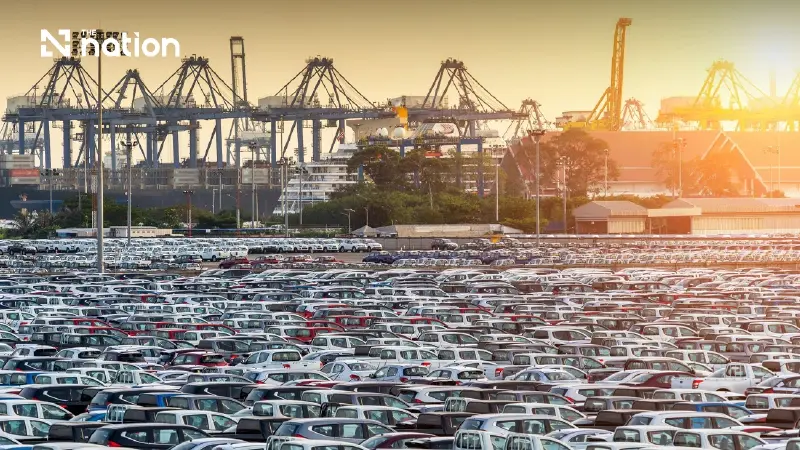


Thailand lowers its 2026 vehicle production target to 1.45 million units as Middle East disruption, trade barriers and EV competition hit exports
- Thailand has reduced its 2026 vehicle production target by 50,000 units, from 1.5 million to 1.45 million, due to weakening exports.
- The entire reduction comes from the export production forecast, which was cut from 950,000 to 900,000 vehicles; the domestic sales target remains unchanged.
- Reasons for the export slowdown include the Middle East conflict, global economic uncertainty, US trade barriers, and increased competition from Chinese electric vehicles.
Thailand has lowered its 2026 vehicle production target from 1.5 million to 1.45 million units after weaker exports offset stronger domestic sales during the first half of the year.
The Federation of Thai Industries’ Automotive Industry Club reported that 717,212 vehicles were produced from January to June, down 1.04% from the same period in 2025. The decline resulted from lower production for export, affecting both passenger cars and pickup trucks.
Domestic sales moved in the opposite direction, rising 14.63% year on year to 346,966 vehicles during the six-month period.
Surapong Paisitpatanapong, adviser to the club chairman and its spokesman, said the annual production forecast had been cut by 50,000 units, or 3.33%, because of uncertainty in the global economy, the Middle East war, trade barriers and intensifying competition in the electric-vehicle market.

The target for vehicles produced for domestic sale remains unchanged at 550,000 units.
Export production cut by 50,000 vehicles
The club reduced its export production forecast from 950,000 to 900,000 vehicles, a decrease of 5.26%.
Surapong identified four main pressures on Thailand’s automotive exports.
The Middle East conflict remained uncertain and could continue for an extended period. Thai vehicle exports to the region fell 38.35% in the first half compared with the same period last year, as the closure of shipping routes through the Strait of Hormuz continued to affect deliveries.
US trade barriers and import tariffs were also contributing to volatility in the global economy.
Chinese electric-vehicle manufacturers were increasing competition with vehicles made in Thailand across Southeast Asia, Australia, Oceania and other export markets.
At the same time, importing countries were imposing stricter vehicle-emissions requirements.
Thailand’s revised 2026 production targets are:
- Total production: 1.45 million vehicles, down from 1.5 million
- Production for export: 900,000 vehicles, down from 950,000
- Production for domestic sale: 550,000 vehicles, unchanged
- EV demand lifts domestic sales
Domestic vehicle sales increased to 346,966 units in the first six months, supported by growing demand for electric vehicles.
Surapong attributed the increase partly to higher fuel prices resulting from the Middle East conflict, government support for solar-panel installation and the availability of more affordable electric models.
However, he said most electric-vehicle sales came from imported models rather than vehicles manufactured in Thailand.
Production of passenger cars powered by internal-combustion engines fell by 34,679 units, or 29.21%, from the first half of last year.
Pickup-truck sales also remained weak because financial institutions continued to apply strict lending criteria.
Only 10,805 pickups were sold in June, down 3.17% from the same month last year. Before the Covid-19 pandemic, monthly pickup sales were about 30,000 units, compared with approximately 10,000 at present.
Surapong said pickup sales had declined each month for the past three years.
Weak pickup market weighs on supply chain
Pickup trucks contain more than 90% locally produced parts, meaning the prolonged sales decline has also reduced output among parts manufacturers and other businesses in the automotive supply chain.
Surapong said lower production had weakened company revenue and profits, reduced government receipts from excise and corporate income taxes and affected the earnings of workers across the supply chain.
Lower household income had also encouraged more cautious spending, contributing to slower investment, employment and domestic economic growth.
He called on the government to stimulate the economy through large-scale investment and job creation to strengthen purchasing power and household debt repayment capacity.
Higher employment and income would increase tax revenue, allowing the government to invest further and support additional jobs, he added.
Toyota maintains leadership across key segments
Supakorn Rattanawaraha, executive vice-president of Toyota Motor Thailand, said the overall vehicle market had performed well in the first half, while Toyota maintained its leading position across its principal product segments.
The company plans to introduce new models during the second half to broaden its product range.
Toyota Hilux sales rose 6% from the previous year despite a broader slowdown in the pure pickup segment.
The model secured a 52.26% market share following the launch and delivery of the new Hilux Travo at the beginning of the year, with average monthly sales exceeding 6,200 units.
Passenger-car sales showed a clearer recovery, rising 4.52% year on year.
Toyota attributed much of the improvement to the eco-car segment, where sales grew 22.95% following the launch of the Yaris ATIV HEV last year. The model recorded average sales of 6,000 units a month from January to June.
The sport utility vehicle segment also recovered, growing 3.68%.
Corolla Cross sales increased 16.31% from the previous year, averaging 1,400 units a month during the first half.
Tourism and stimulus may support second-half recovery
Supakorn expected the market to slow slightly in July in line with seasonal patterns.
Some consumers were also remaining cautious as they monitored tensions in the Middle East.
The outlook for the second half would continue to depend on economic conditions and the conflict, he said.
However, Toyota expected the overall market to improve as tourism recovered and government economic stimulus measures supported demand.
