
Phuket's second-hand property market soars, outpacing new builds
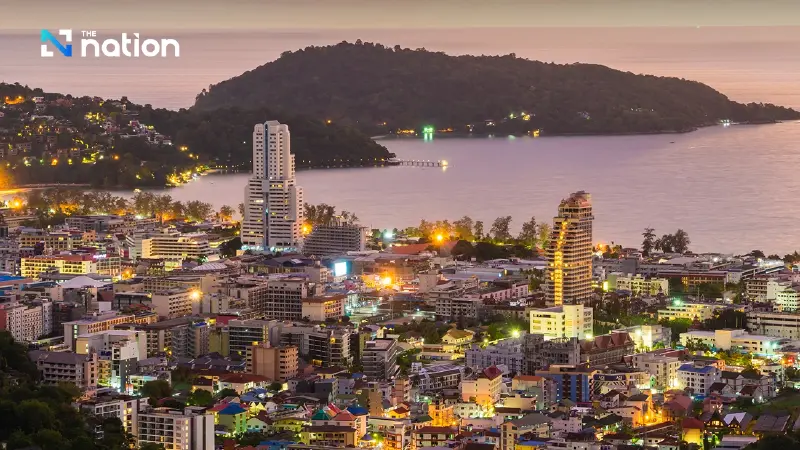


In recent years, Phuket has not only been a prime tourist destination but also a battleground for high-end property developers, particularly those focusing on luxury villa projects scattered across the island’s prime locations.
This surge in development was propelled by the massive purchasing power of foreign investors, especially from Russia and China, which led to a booming market. Villas in Phuket were once sold even before construction began, with prices continually rising. However, in 2025, the landscape took a noticeable shift.
According to the latest data from the Real Estate Information Centre (REIC), the Phuket villa market has seen a stark decline. In the first half of 2025, only 298 new units were launched, marking a dramatic 74.3% decrease compared to the previous year. Additionally, new sales have plummeted by over 70%, with only 231 units sold during this period.
The concerning trend is the rise in remaining supply, which has reached 1,908 unsold units worth a staggering 73.73 billion baht. This means that the absorption rate has fallen sharply, from 5.5% per month to just 1.8%. If sales continue at this rate, it could take over four years to sell off the remaining stock.
Methapong Upatising, President of the Phuket Real Estate Association, explained that the current slowdown is not just due to global political issues or China’s economic weakness but reflects a "imbalance" that started forming during the COVID-19 period.
At that time, many projects were rushed into launch, believing that the trend of wealthy individuals relocating would never falter. As a result, a large number of new developments, particularly villas priced between 10 to 40 million baht, flooded the market, creating a severe oversupply.
"The bookings were strong early in the year, thanks to the influx of tourists, but when Chinese visitors stopped coming mid-year, everything came to a halt," he said.
4 key locations: hotspots or risk zones?
REIC provides a detailed look at the market dynamics in various Phuket locations, revealing some surprising insights.
The Thepkrasattri-Sri Sunthorn area recorded the highest sales in the first half of 2025. However, it also has a staggering 924 unsold units.
Villas priced between 10 to 40 million baht in Thepkrasattri will take up to 61 months—or over five years—to clear remaining stock. On the other hand, Kamala, once a high-end zone, still shows promising absorption rates of 6.8%, meaning it will only take 9 months to sell off the available units.
Not every area is so fortunate. Bang Tao-Surin, once a magnet for foreign millionaires, is now experiencing a luxury villa oversupply, particularly for properties priced above 40 million baht, with 249 unsold units and only 20 sold so far. At this rate, it could take as long as 77 months—almost 6.5 years—to clear the stock.
However, the most extreme example of a slow market is Rawai Beach, where unsold villas priced between 20 to 40 million baht would take a staggering 244 months, or over 20 years, to clear at the current absorption rate.
Second-hand market shifts the game
While the new property market reaches saturation and faces a severe slowdown, the second-hand market has quietly surged ahead, capturing 63% of the market share. The key advantage is lower prices, often nearly half the cost of new units.
This phenomenon is not coincidental but the result of a strategic shift from investors who previously bought to rent, now opting to sell for profit or to recover capital.
A clear example can be seen in condos in the same location: a new unit is priced at an average of 121,000 baht per square metre, while a second-hand unit goes for just 68,000 baht per square metre.
Not only is the second-hand unit almost half the price per square metre, but it also offers twice the size of the new one. This value for money factor has become a crucial strength the new market cannot compete with.
Luxury villas may not be unsellable, but the timing and pricing strategies need urgent adjustment. The key lesson from Phuket in 2025 is that the slowdown isn’t solely due to the economy but also due to the misconception that luxury real estate will never become oversaturated.
Developers continuing to launch new projects today must look beyond current trends and adjust to changing consumer behaviours. Targeting a new demographic is essential—not just wealthy foreign buyers, but also Thai investors seeking long-term investments, who are keenly aware of square metre prices and unit sizes that make sense for their investment.
Phuket still has a future, but the game has changed
The Phuket property market hasn't collapsed, but the game has changed. What was once dominated by new developments has now shifted to the second-hand market, which has seized the opportunity with lower prices.
While luxury villas still retain value, choosing the right location, adjusting prices to compete with second-hand properties, and, most importantly, not underestimating the power of market saturation are crucial.
