
Thailand's EEC Property Market Stalls as THB 270 Billion in Housing Stock Piles Up
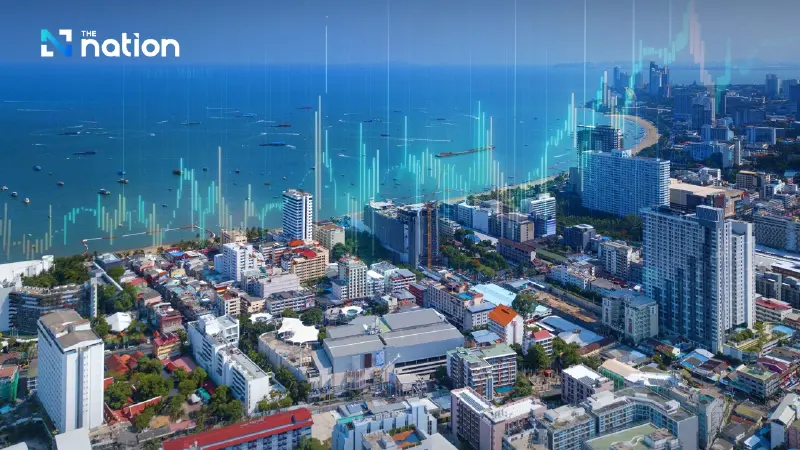


New property supply in the Eastern Economic Corridor contracted by 67.8% in H1 2025, with slumping demand and poor absorption rates signalling a challenging year for developers
- The Eastern Economic Corridor (EEC) property market is facing a significant downturn, with unsold housing inventory reaching over THB 270 billion across 64,644 units.
- The stall is caused by a sharp 67.8% contraction in new property supply combined with slumping demand, as the sales absorption rate fell to a low of 1.7%.
- Weak purchasing power, driven by high interest rates and tight credit, is a primary reason for the slowdown in consumer demand.
- Townhouses priced in the 1-3 million baht range are the most affected segment, reflecting the financial strain on middle and lower-income buyers.
New property supply in the Eastern Economic Corridor contracted by 67.8% in H1 2025, with slumping demand and poor absorption rates signalling a challenging year for developers.
The housing market across Thailand’s Eastern Economic Corridor (EEC) is facing significant headwinds, with the Real Estate Information Centre (REIC) reporting a dramatic drop in new activity and a surge in unsold inventory during the first half of 2025.
The data reflects a distinct pattern of "supply expansion contrasting with a demand slowdown."
While the total value of existing properties rose by over 21%, new supply plummeted by a steep 67.8%, indicating extreme caution among developers due to increased building costs and stagnating consumer appetite.
The crucial absorption rate—the speed at which properties are sold—fell sharply from 2.8% to just 1.7%.
This poor sales performance led to a massive accumulated stock of 64,644 unsold units, valued at over 270 billion baht.
The most vulnerable segment remains townhouses priced between 1.01 and 2 million baht, reflecting weak purchasing power among middle and lower-income earners.
Regional Breakdown
Chonburi, the EEC’s largest market, saw total supply increase to 46,965 units, but new supply fell by nearly 70%. The province now holds a remaining stock of 41,876 units, with the 2.01–3 million baht price range, particularly townhouses, posing the biggest concern.
Rayong showed the clearest signs of fragility, recording the lowest absorption rate in the EEC at just 1.4%. New supply was halved, and there were zero new condominium launches. The province has 15,777 units of remaining stock, largely concentrated in the 1.01–2 million baht townhouse segment.
Chachoengsao saw new supply contract by over 80%. Despite relative stability in unit numbers, the market structure shifted away from condos towards housing estates. Its remaining supply now stands at 6,991 units, with slow sales noted for high-end detached houses over 3 million baht.

Strategy Adjustments Needed
The REIC issued a strong warning, citing three key indicators: persistent slowdown in demand driven by high interest rates and tight credit; drastic contraction in new supply; and growing stock across all three provinces, especially in the 1–3 million baht price bracket.
Property developers are now urged to adjust their strategies by reducing unit sizes, refining specifications, and setting prices that match current purchasing power.
Industry analysts suggest that 2025 will be a year of "re-basing" for the EEC market, necessary before any sustained growth can return.
