
Thailand's House Construction Market: How Leading Builders Navigate Rising Costs and Shifting Demand
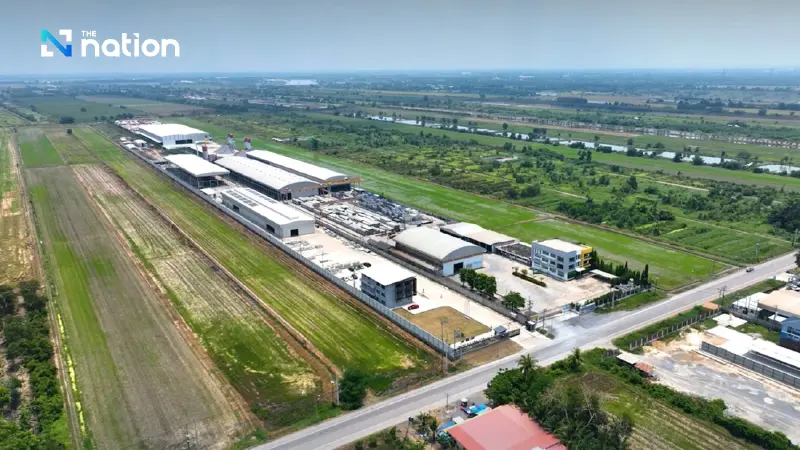


Public investment drives sector growth whilst private residential demand stalls, creating strategic opportunities for adaptive industry players
- Thailand's house construction market is experiencing a split, with growth driven entirely by public sector investment while private residential demand is contracting due to high household debt and rising costs.
- Builders face significant headwinds, including a government-mandated wage increase, a structural labor shortage of up to 700,000 workers, and intense competition from Chinese contractors.
- Consumer demand is shifting geographically to provincial areas like the Eastern Economic Corridor and polarizing towards upper-middle (5-10M baht) and premium (>20M baht) homes with green and smart features.
- Leading firms like SEACON are adapting by using factory-based precast construction to control costs, expanding into high-growth regions, and diversifying product lines to target resilient market segments.
Public investment drives sector growth whilst private residential demand stalls, creating strategic opportunities for adaptive industry players.
Thailand's house construction industry stands at a critical juncture as it enters 2025-2026, with market dynamics revealing a stark bifurcation between robust public sector investment and persistent private residential weakness.
Yet within this challenging environment, strategic opportunities are emerging for builders who can adapt to evolving consumer preferences and geographical shifts.
The sector's overall performance tells a story of contrasts. Total construction investment reached 340 billion baht in the first quarter of 2025, marking a substantial 16.7% year-on-year increase.
However, this growth masks an underlying fragility: the expansion was driven entirely by public sector projects, which surged 34.5%, whilst private construction contracted 3.2% and private residential fell even more sharply by 5.2%.
This challenging backdrop is reflected in the Home Builder Association's performance, with members' total contract values expected to reach 11 billion baht by year-end 2024—falling short of the initial 12 billion baht target due to economic headwinds.
The Public Sector Lifeline
The government's 85 billion baht economic stimulus package has emerged as the primary engine driving the construction sector forward.
With 45.9 billion baht allocated to transportation and 39.1 billion baht to water management, the majority of designated projects are ready for immediate implementation, accelerating capital flow through late 2025 and into 2026.
This public investment is creating positive spillover effects for contractors and materials suppliers nationwide, partially offsetting the weakness in private residential demand.
Emerging Pockets of Growth
Despite broader market pressures, specific segments demonstrate remarkable resilience.
Provincial markets including Chonburi, Lopburi, Kanchanaburi, Saraburi, Khao Yai, and Suphan Buri are emerging as high-potential areas, driven by decentralisation and quality-of-life considerations.
Data from the Home Builder and Materials EXPO 2025 reveals strong interest in properties valued between 5-10 million baht and premium residences exceeding 20 million baht, indicating market polarisation where growth concentrates in upper-middle and high-end segments whilst lower-end demand remains suppressed by credit constraints.
Consumer preferences are also shifting towards homes incorporating energy efficiency, green concepts, and smart home systems—trends that savvy builders are leveraging for competitive advantage.
Formidable Headwinds
The industry faces substantial challenges that threaten to constrain growth. High household debt and increasingly stringent lending criteria have prompted many potential buyers to adopt a "wait and see" approach, delaying major investment decisions.
Cost pressures are intensifying from multiple directions. The government-mandated minimum wage increase to 400 baht, effective mid-2025, will directly impact labour costs.
More critically, the Thai Contractors Association estimates a structural labour deficit of 600,000 to 700,000 workers—a shortage stemming from generational shifts away from manual labour and persistent challenges with foreign workforce availability.
Competition is escalating as high-rise building contractors diversify into residential construction to compensate for slow condominium markets.
Chinese contractors, possessing significant cost advantages on key materials such as steel and aluminium, are exerting intense downward pressure on pricing.

SEACON's Strategic Response
Against this complex backdrop, SEACON, one of Thailand's leading house construction firms, has crafted a multi-faceted strategy that offers a blueprint for navigating current market dynamics.
Speaking at a recent media briefing, Manu Trakulwattanakit, managing director of SEACON Company Limited, acknowledged the pressures whilst emphasising the firm's competitive positioning.
"Although costs across various items continue to pressure the market—whether construction materials like steel, cement, and finishing products, or rising labour costs combined with scarce skilled workers—SEACON can still maintain its competitive capability," he stated.
The company's primary advantage lies in its factory-based construction approach, utilising standardised precast structures that reduce on-site errors whilst providing more detailed and stable construction control than conventional systems.
This technological foundation insulates the company from volatile material and labour costs whilst ensuring consistent quality.
SEACON's geographic strategy directly aligns with the market's growth engine.
Since August 2025, the company has pursued full-scale expansion into the Eastern Economic Corridor, encompassing Chonburi, Rayong, and Chachoengsao—areas experiencing Thailand's fastest economic growth driven by new industrial estates, foreign investment, and government infrastructure development.
"The EEC is emerging as Thailand's 'New Economic Zone,' and demand for custom-built homes in this area is increasing dramatically," Manu explained, positioning the company to capture growth in one of the nation's most dynamic regions.
Diversified Product Portfolio
The firm has developed a three-tiered product strategy targeting the market's most resilient segments. The Your Home Series 1 & 2 secured bookings for 122 houses valued at 408 million baht in 2025, maintaining its position as a core revenue driver.
The newly launched ‘Pluke Reun’ (Building Home) Series, despite only months on the market, has already gained traction across multiple provinces.
"The key selling point is contemporary design that can be adapted functionally to real usage patterns and suits the lifestyle of modern Thai families," Manu noted, explaining the series' appeal.
For the premium segment, SEACON ID targets custom-built homes in the 20-40 million baht range, with construction standards averaging 30,000 baht per square metre.
This directly addresses the high-value segment identified in EXPO 2025 results as demonstrating strong demand despite economic uncertainty.
Market Outlook
The Thai house construction market is projected to grow in 2026, though this expansion remains precariously balanced and heavily dependent on public sector projects to offset ongoing private residential weakness.
Industry analysts suggest that success will not be universal.
The market will increasingly favour providers demonstrating strategic agility through technological solutions, geographic and product diversification, and fundamental alignment with evolving consumer values—particularly sustainability and quality demands.
For SEACON, the confluence of cost pressures, labour shortages, and intensifying competition represents not merely challenges to be weathered but opportunities to establish new industry standards.
As Manu concluded: "2026 is the year of SEACON's offensive momentum. Although the market faces cost pressures, demand for high-quality homes remains clear."
The company's positioning reflects a broader industry reality: in a market defined by divergent forces, competitive advantage will increasingly accrue to builders who can industrialise construction processes, target strategic growth corridors, and deliver homes that embody contemporary Thai aspirations for quality, functionality, and environmental responsibility.
Whether SEACON's blueprint proves successful will offer crucial insights for an industry navigating one of its most challenging periods in recent memory—and potentially its most transformative.
