
Thailand Crowns Asian Branded Residences Market as Value Tops THB205bn
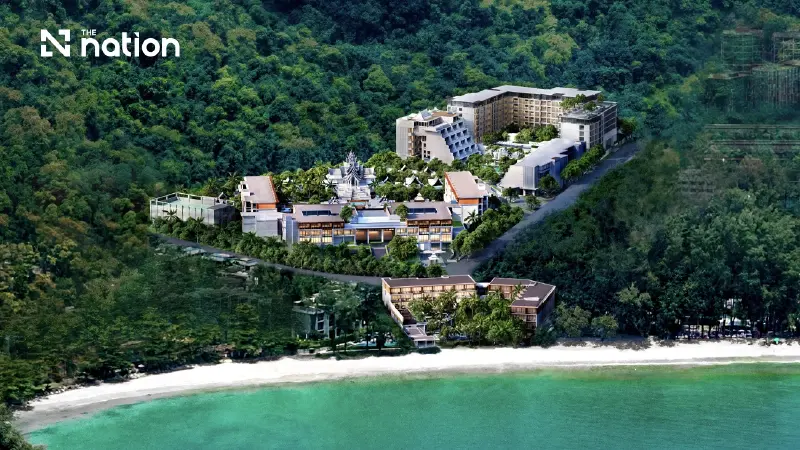


Thailand claims a 26% share of Asia’s launched supply as non-hotel players join global luxury hotel chains to drive the market past the USD6.4 billion milestone
- Thailand leads Asia's branded residences market, holding a 26% share of the continent's launched supply, with a total value exceeding THB 205 billion (USD 6.4 billion).
- The sector's growth is driven by both global luxury hotel chains and an increasing number of non-hospitality brands, such as fashion houses and automotive companies.
- Key locations for these properties include Bangkok, the country's largest urban market, and Phuket, which is Asia's largest resort and villa branded market.
- A notable trend is the rise of standalone residences (not attached to hotels), which now account for 22% of Thailand's total supply, surpassing the regional average.
Thailand claims a 26% share of Asia’s launched supply as non-hotel players join global luxury hotel chains to drive the market past the USD 6.4 billion milestone.
Thailand has firmly established itself as Asia’s premier destination for branded residences, capturing the region's largest share of launched supply. Valued at 205.3 billion baht (USD6.4 billion), the kingdom’s branded property sector has grown by 13.3 per cent year-on-year, boasting 13,124 launched units across 63 luxury properties.
According to the definitive Asia Branded Residences Market Review 2026 published by C9 Hotelworks, Thailand now accounts for 26 per cent of the continent's total launched supply.
This surge comes as global hospitality giants, fashion houses, and automotive brands rapidly expand their real estate footprints to capture a booming pool of international and domestic affluent buyers.
The report, which evaluates 14 countries, highlights a broader regional trend where the branded sector is moving at a phenomenal scale. Across Asia, the market value has soared to 1.3 trillion baht across more than 50,000 units—a 30.3 per cent year-on-year jump.
While Vietnam leads the region in sheer aggregate market value, Thailand has edged ahead in the ultra-competitive luxury tier, boasting 30 active luxury-tier projects, compared to Vietnam's 18 and South Korea's 13.

A Shifting Battlefield
Industry experts note that the market is entering a highly competitive phase. With an influx of fresh inventory—including a pipeline of at least 18,545 new units projected to launch over the next three years (2026–2028)—a reputable brand name alone is no longer a guarantee of sales success.
"Thailand has become a benchmark market for branded residences in Asia," stated Bill Barnett, Managing Director of C9 Hotelworks. "What stands out is the depth of the luxury pipeline and the range of development formats now entering the market. Bangkok, Phuket, and Thailand’s resort destinations are giving brands and developers multiple routes to growth."
The geographic breakdown reveals unique dynamics across five core Thai zones. Bangkok remains the country’s largest urban market with 5,031 units, where over 53 per cent of the supply sits strictly in the luxury condominium tier, driven heavily by Thai, Singaporean, and Burmese buyers.
Phuket follows as the second-largest market with 3,465 units, positioning it as Asia’s largest resort and villa-branded market, heavily favoured by European buyers seeking holiday homes.
Traditional coastal destinations continue to show strong momentum, with Hua Hin holding 3,017 units as a resilient holiday favourite, and Pattaya accounting for 1,775 units.
Meanwhile, Koh Samui is rapidly emerging as the next luxury hot spot with 480 units; the island is following Phuket's trajectory but benefits from significantly cheaper land and lower initial supply.

The Standalone Phenomenon
The next phase of growth is moving beyond traditional co-located hotel residences. Standalone projects—developments completely independent of an adjacent hotel property—now account for 3,008 units in Thailand. This represents 22 per cent of the country's total supply, comfortably eclipsing the Asian regional average of 17 per cent.
Concurrently, the sector is diversifying into non-hospitality brands. High-profile entries like the ultra-exclusive Porsche Design Tower Bangkok and the fashion-forward Etro Residences in Phuket illustrate this shift. Across Asia, non-hospitality brands now comprise 19 per cent of the standalone segment.
"Lifestyle hospitality brands bring a different brief to residential development," explained Stephane Michel, president of Valanti Group, pointing to projects like SLS Residences Bangkok. "The brand has to show up in design, programming, service culture, and daily operations. That gives developers a clearer position in a crowded luxury market."

Re-engineering Post-Handover Value
This rapid evolution is fundamentally altering how residential real estate is conceived. Titiwat Kuvijitsuwan, chief executive officer of Capstone Asset, emphasised that post-handover property management has become the primary differentiator for modern investors.
"The branded model is changing how developers underwrite and design residential projects," Titiwat remarked. "Brand standards, operating structures, service delivery, and asset management now have to be built into the project from day one. Buyers are paying closer attention to what happens after handover."
To incentivise buyers looking for lifestyle utility, secondary homes, or retirement properties, developers are leaning heavily on post-purchase perks. Beyond concierge services, properties are increasingly offering elite global access benefits.
Wade Shealy, CEO and Chairman of luxury home exchange network ThirdHome, added, "The buyer benefit is becoming more global. A branded residence can now connect owners to a wider network of homes, destinations, and private travel opportunities. That adds utility after purchase and gives developers another way to differentiate."
