
Rama IX condos and Bang Na houses top Bangkok housing interest
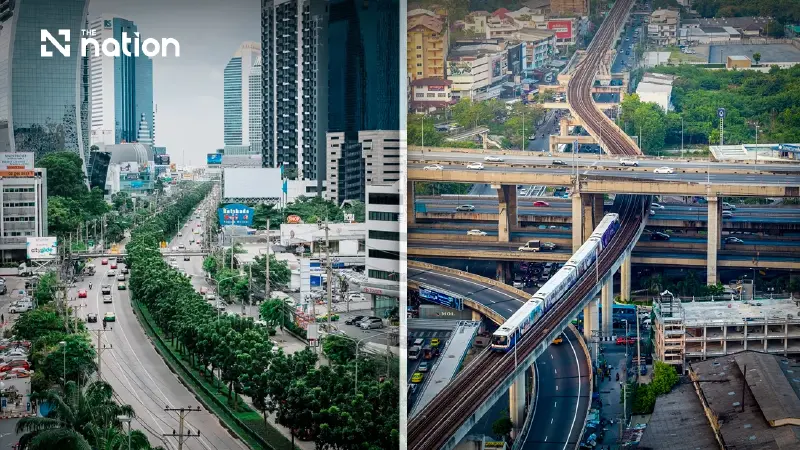


Rama IX leads Bangkok condominium interest, while Bang Na dominates searches for detached houses and townhouses, according to RealWatch Lab.
- According to a social-listening survey, Rama IX is Bangkok's most popular location for condominiums, accounting for 42% of online discussions about buying or renting.
- Bang Na is the top location for detached houses and townhouses, dominating social media interest with a 75% share of mentions.
- Key factors driving interest in these areas include convenient transport connections, proximity to urban rail and workplaces, and access to a wide range of amenities.
- The findings are based on an analysis of online platforms from January 1 to June 30, 2026, by research firm RealWatch Lab.
Rama IX has emerged as Bangkok’s most popular condominium location in social-media discussions, accounting for 42% of mentions relating to buying or renting units. Bang Na led interest in detached houses and townhouses with a 75% share, according to a social-listening survey.
Convenient transport connections, proximity to urban rail services and workplaces, relatively affordable prices and a wide range of nearby amenities were among the main factors influencing location preferences.
RealWatch Lab, the research and data analytics unit of Real Smart, conducted social listening and monitoring across online platforms from January 1 to June 30, 2026.
The company, which specialises in AI transformation and solutions, as well as AI- and data-driven technology, examined online discussions about buying and renting homes in different locations.
Despite signs of a slowdown in Thailand’s property market, social-media users continued to post frequently about homes available to buy or rent. After screening the data, researchers identified 10 locations attracting the greatest interest, comprising five condominium locations and five areas for detached houses and townhouses.
All 10 areas share similar characteristics, including road and rail connections and access to shopping centres, hospitals, schools, universities and major employment districts.

Rama IX leads Bangkok condominium interest
A survey of social-media discussions about preferred locations for buying or renting condominiums produced the following results:
1. Rama IX — 42%
Rama IX received the highest share of mentions at 42%. Most posts highlighted its proximity to urban rail services, convenient transport links and access to major employment areas.
Property prices were also considered more affordable than those in central Bangkok, while rental rates were viewed as reasonable. Interest focused mainly on one-bedroom condominiums, particularly developments with communal facilities and gardens.
2. Sukhumvit — 24%
Sukhumvit accounted for 24% of mentions. Most users regarded it as a conveniently located area with direct access to urban rail services, proximity to workplaces and a comprehensive range of amenities.
One-bedroom units attracted the greatest interest, especially in developments offering meeting rooms, communal lounges and green spaces.
3. Don Mueang — 14%
Don Mueang accounted for 14% of mentions. Most posts described the area as relatively affordable, conveniently connected and well served by hospitals, shopping centres, schools and universities.
One-bedroom units priced at no more than 2 million baht attracted particularly strong interest and were among the most frequently discussed options in the area.
4. Ekkamai — 11%
Ekkamai accounted for 11% of mentions. Most users highlighted its convenient transport connections, proximity to business districts and access to amenities.
Interest covered both purchases and rentals, with one-bedroom units attracting the greatest attention. Users also placed importance on developments offering comprehensive communal facilities, including green spaces and relaxation areas.
5. Vibhavadi Rangsit — 9%
Vibhavadi Rangsit accounted for 9% of mentions. The area benefits from access to the Red Line commuter railway, convenient transport links and a range of nearby amenities.
Interest centred mainly on one-bedroom units priced at no more than 2 million baht.
Other locations mentioned in social-media discussions included Talat Phlu, Sathon and Lat Phrao.

Bang Na leads interest in detached houses and townhouses
The five locations attracting the greatest interest in detached houses and townhouses were ranked as follows:
1. Bang Na — 75%
Bang Na received the highest share of mentions at 75%. Most posts highlighted its convenient transport links and comprehensive range of amenities supporting everyday life.
Interest focused primarily on detached houses, while prospective buyers also placed considerable importance on the environment within residential developments, particularly green spaces.
2. Rama II — 9%
Rama II accounted for 9% of mentions. Users highlighted its proximity to employment centres, with detached houses attracting the strongest interest.
Prospective buyers also considered the design of communal areas within developments, especially the provision of green spaces.
3. Rama IX and Thong Lo — 6% each
Rama IX and Thong Lo were jointly ranked third, each accounting for 6% of mentions. Most users regarded both areas as conveniently located and well served by amenities.
Interest covered both detached houses and townhouses.
5. Pattanakarn — 4%
Pattanakarn accounted for 4% of mentions. Most posts highlighted its convenient transport connections and comprehensive amenities, while interest centred mainly on detached houses.
Other locations mentioned in social-media discussions included Chaeng Watthana, Ram Inthra and Rama III.
High household debt weighs on housing demand
The findings come as Thailand’s property market continues to face weakening purchasing power, with home prices rising faster than household incomes and household debt remaining high.
A report by the National Economic and Social Development Council showed that household debt stood at 86.7% of gross domestic product in the first quarter of 2026, up 0.05 percentage points from the fourth quarter of 2025.
Credit bureau data also showed that loans overdue by more than 90 days and classified as non-performing accounted for 9.59% of total lending. This was up from 9.45% at the end of the fourth quarter of 2025, with overdue housing and personal loans contributing to the increase.
These conditions have prompted financial institutions to tighten their mortgage approval criteria.
According to the Housing Business Association, the mortgage rejection rate reached 44.9% in the first half of 2026, rising from 39.8% during the same period in 2025. Weaker purchasing power has also contributed to a decline in new property launches.
The Real Estate Information Centre at the Government Housing Bank reported that applications for land allocation permits fell by 45.7% in the first quarter of 2026 compared with the same period a year earlier.
The number of residential units covered by construction permits nationwide also dropped by 50.2% year on year, reflecting a broader slowdown in new housing development.
These market conditions are forcing property developers to adjust their strategies, particularly by selecting locations that more closely match buyers’ transport, lifestyle and affordability requirements.
