
Thailand rolls out biometric system to identify undocumented migrants
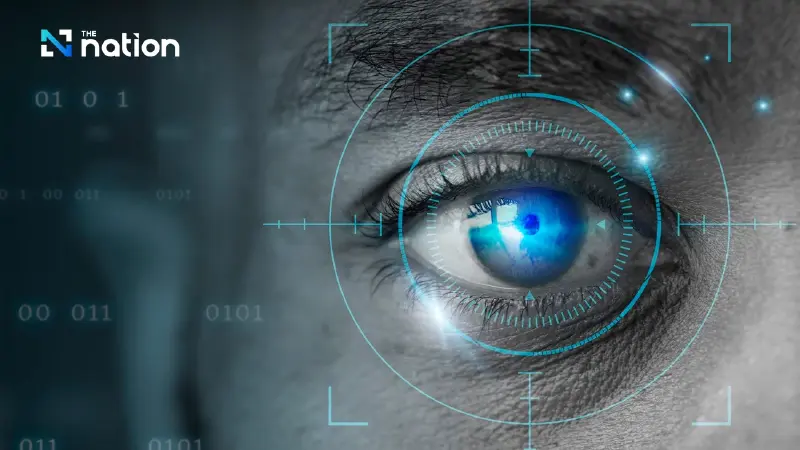


The Ministry of Public Health has launched a biometric system to identify more than one million migrant workers and displaced persons in Thailand.
Public Health Minister Somsak Thepsutin presided over the signing ceremony of a memorandum of understanding on Thursday (September 4), formalising cooperation in applying biometric identification technology to individuals without official documentation for public health and humanitarian purposes.
The ministry’s policy promotes the use of biometric data to verify the identities of migrant workers, ethnic minorities, and people fleeing conflict along the border who lack official documents. This initiative aims to strengthen disease surveillance, prevention, and control.
Somsak noted that undocumented individuals often fall outside official health databases, leaving them unable to access vaccines, medical treatment, or disaster relief.

To address this, the Thai Red Cross Biometric Authentication System (TRCBAS) was developed in collaboration with the Thai Red Cross Society and the National Science and Technology Development Agency (NSTDA).
The system uses iris recognition and facial recognition technology to collect biometric data, supporting medical services and humanitarian assistance.
According to the Foreign Workers Administration Office, as of July 2025, there were 2.22 million migrant workers in Thailand, of whom over one million were undocumented.
Authorities believe that implementing biometric identification will significantly benefit both individual health and national public health, while adhering to principles of good governance in data management.

NSTDA President Sukit Limpijumnong explained that TRCBAS was jointly developed by researchers at the National Electronics and Computer Technology Centre (NECTEC) and the Thai Red Cross.
He emphasised that iris data, in particular, offers a highly unique, durable, and hard-to-forge identifier, making it well-suited for health and humanitarian verification.
The system is set to be expanded to urban disease control offices, public hospitals in key provinces such as Samut Sakhon, Tak, and Mae Hong Son, as well as private hospitals registered to provide health check-ups for migrant workers.
More than 200,000 migrant workers have already been registered in the system, with a processing accuracy rate of 99.75 per cent, Sukit added.
