
AWS Chief Garman Projects Job Market Transformation as Amazon Plans $125 Billion Infrastructure Investment


CEO acknowledges workforce transformation ahead as company plans infrastructure five years out in race to dominate agentic AI market
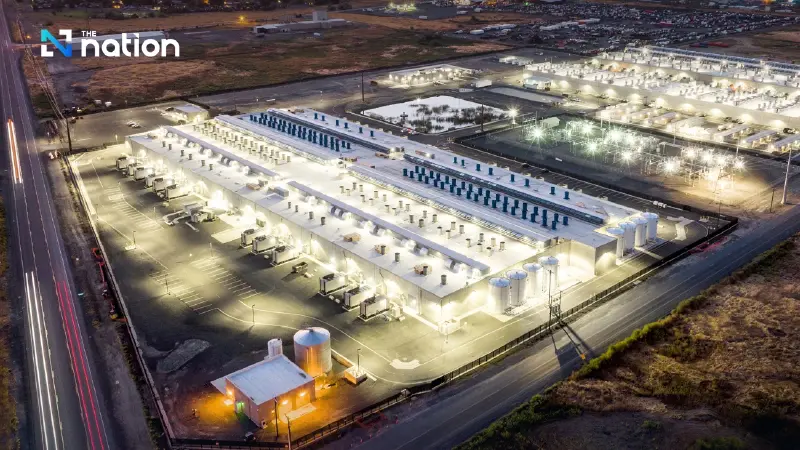
- Amazon plans a $125 billion capital expenditure for 2025, primarily to build out AWS infrastructure in anticipation of a future dominated by agentic AI.
- AWS CEO Matt Garman predicts this AI-driven shift will fundamentally transform every job and industry, stating that the shape and roles of the future workforce will be "pretty different."
- Garman envisions flatter organizations with fewer management layers, where employees focus on high-value decision-making while AI agents handle routine tasks, a model that has already produced 4-5x efficiency gains in internal coding teams.
CEO acknowledges workforce transformation ahead as company plans infrastructure five years out in race to dominate agentic AI market.
Amazon is planning $125 billion in capital expenditure for 2025, primarily for AWS infrastructure, as CEO Matt Garman bets heavily on an AI-driven future he admits remains impossible to predict with certainty -- whilst candidly acknowledging that "all our jobs are going to change" in the process.
In a fireside chat this week with journalists at AWS headquarters, Garman outlined an ambitious vision of transformation underpinned by extraordinary capital deployment, even as he conceded uncertainty about fundamental questions, including optimal workforce size and the pace of technological change.
"I do think that generative AI is going to completely change every single company and industry and job that we have out there," Garman said during a fireside chat. "Whenever that happens, which doesn't happen very often, but that kind of transformative technology, it is an enormous opportunity to change, and it's a disruptive force."
The comments offer a rare glimpse into the strategic calculations driving one of the world's largest infrastructure investments, as cloud computing giants race to capture the emerging market for autonomous AI agents whilst grappling with profound implications for their own operations and customers.

The Infrastructure Imperative
Amazon's $125 billion annual capital expenditure for 2025 -- primarily funding AWS data centres, networking equipment, custom silicon, and crucially, power infrastructure, as well as fulfillment and transportation networks -- reflects planning horizons that extend three to five years ahead of actual demand.
The company is currently mapping power requirements for 2027 and 2028, securing land for future facilities, and this week announced a new transatlantic undersea cable that won't be needed until 2030.
"If somebody comes to market and says I would like some compute or some storage, we had to plan years in advance to make sure that we had that capacity available for them," Garman explained. "Today we announced a brand new undersea cable that we're putting in. That capacity is capacity we're going to need five years from now."

The scale underscores both AWS's market dominance -- the division generated $135 billion in revenue last year whilst growing 20% annually -- and the high stakes of the AI infrastructure race.
Yet Garman acknowledged the company hasn't always kept pace with demand: "We want that illusion of infinite capacity. It's harder with some of the growth in AI today. And we haven't always been perfect on that because it's hard to keep up."
The admission is significant given AWS's recent service outage, which affected numerous businesses globally. When pressed on reliability concerns, Garman said the company is "not going to be happy until we're perfect," whilst noting AWS's uptime "is much higher than any of the other clouds or on-prem environments."

The Custom Silicon Strategy
Central to Garman's infrastructure bet is a decade-long investment in proprietary chip development, culminating in Trainium 2 accelerators that now power more than 50% of inference operations through AWS's Bedrock AI platform.
The company's "Project Rainier" collaboration with Anthropic has deployed over 500,000 Trainium 2 chips in Indiana to train Claude AI models -- a partnership Garman described as "hugely successful."

The custom silicon strategy aims to deliver what Garman called "differentiated cost performance" compared to market-leading Nvidia GPUs, which AWS also offers customers.
When questioned about supply chain risks given both rely on Taiwanese semiconductor fabrication, Garman insisted the market would support multiple winners.
"I don't think the processor world is a winner-take-all world," he said, drawing parallels to AWS's Graviton CPUs, which coexist with Intel and AMD offerings. "If you were to ask me five years from now, I think both of those are going to be very successful platforms for companies."
The dual-track approach -- offering both proprietary and third-party processors -- reflects AWS's longstanding philosophy of providing building blocks rather than prescriptive solutions.
Yet it also represents a hedge against technological uncertainty in a market evolving faster than historical precedent.

The Organisational Reckoning
Perhaps most striking was Garman's candour about workforce implications -- particularly relevant given Amazon's recent announcement of 14,000 role reductions across the company.
Asked directly about optimal workforce size in a decade, Garman replied: "I'm not going to pretend I have any idea what the right size of the workforce is 10 years from now. There's a lot of variables between now and then. Fortunately, I don't really have to pick right now."
However, he was unequivocal about structural changes ahead: "The thing that I feel confident about is the construction and the shape of the workforce will look different. I think the way that we organise, the roles that we have, the types of jobs that people do, are going to be pretty different."
Garman envisions flatter organisational structures with fewer management layers, enabled by AI agents handling routine work whilst human employees focus on high-value decision-making.
"You may have more team leads than individual line managers that are very focused on driving things," he suggested. "I think our goal is we would love to have flatter organisations with fewer levels where all employees are closer to the end customer."
The vision draws directly from internal AWS experiments with AI-assisted software development. Garman revealed that coding teams using agentic workflows -- where developers act as technical leads directing AI agents rather than writing code themselves -- have achieved "4x, 5x gains in efficiency," far exceeding the "10 to 20% gains" from basic AI code completion tools.
"You had to think differently about how you code. You actually had to think almost more like you're a tech lead telling these tools what to go do, as opposed to you're a superstar coder," Garman said. "When you had that mentality shift inside of those teams, then we started to learn what we needed."
That mindset shift eventually produced Amazon Q Developer, AWS's recently launched agentic coding platform that Garman said is proving "hugely popular" with enterprise customers who need multi-developer coordination rather than individual productivity tools.

The Agentic Opportunity
The move from generative AI -- which produces content and answers questions -- to agentic AI represents what Garman described as a step-change in value creation.
Whilst acknowledging that content generation delivers benefits, he argued the real transformation comes from systems that can reason through multi-step processes and take actions autonomously.
"There's a set number of things that I can ask any one of you and you can answer right away. And there's a much, much, much bigger set of things where if I said you have a week to go do something, you can get a lot more value out of doing something like that. Agents are more like that," Garman explained.
However, agentic systems require substantial infrastructure beyond powerful models: permission frameworks, security guardrails, audit logging, monitoring capabilities, and what Garman called "long-term memory" so agents can learn over time.
AWS launched Agent Core six months ago to address these needs, with Garman promising "more capabilities to come out from us over time in this space."
The complexity highlights a broader challenge: whilst AWS positions itself as providing flexible building blocks, customers must still assemble sophisticated architectures to deploy AI agents at scale.
The approach contrasts with more integrated offerings from competitors, raising questions about whether modularity remains advantageous as AI systems grow more complex.

Market Dynamics and Regional Implications
Garman's strategy unfolds against intense competition from Microsoft Azure and Google Cloud, both making comparable infrastructure investments.
AWS maintains market leadership with approximately 31% share of global cloud infrastructure spending, but growth rates have moderated from the explosive expansion of earlier years.
The 20% annual growth Garman cited -- whilst substantial for a $135 billion business -- represents a slowdown from historical levels.
When asked if AWS could maintain that pace, Garman replied: "I hope so. I just had a meeting with Andy [Jassy]. He told me yes, I have to." He quickly added he was joking but acknowledged, "I think it's a massive opportunity."
Garman pointed to the fact that less than 20% of traditional workloads have migrated to cloud infrastructure, suggesting substantial runway remains even before accounting for new AI-driven applications.
"Most SAP systems still run on prem, most back office analytics systems still run on prem, a bunch of backup storage still runs on prem," he noted.
For Thailand and ASEAN markets, Garman's vision presents both opportunities and challenges. AWS operates a Bangkok region to address data sovereignty requirements, and the company is investing in local upskilling programmes.
Yet the capital intensity and technical sophistication required to compete in the AI era may widen gaps between resource-rich multinationals and regional businesses.
The workforce transformation Garman predicts could prove particularly disruptive in markets where organisational hierarchies remain deeply embedded and middle management layers are often larger than in Western companies.
His vision of "flatter organisations with fewer levels" may not translate easily across different business cultures.
The Speed Problem
Underlying Garman's entire strategy is an assumption that may prove most critical: that AWS can plan infrastructure years in advance for an AI market evolving at unprecedented speed.
"The technology is moving faster than almost every technology we've ever seen before," Garman acknowledged.
He noted that approaches considered cutting-edge months ago -- such as "vibe coding" -- are already being superseded by more sophisticated agentic frameworks.
When pressed on whether planning three to five years ahead makes sense in such a volatile environment, Garman emphasised AWS's building-block philosophy: providing flexible infrastructure that allows customers to adapt quickly rather than betting on specific application patterns.
"The world turns out to be quite creative. The world has a lot of interesting use cases that I can't project two years from now," he said. "But if we can provide building blocks that allow them to go fast, leverage their creativity to build whatever they want, then we're a great place for them to build on top of us."
Whether that approach proves sufficient as AI capabilities double every seven months -- as AWS's own data suggests -- remains an open question.
Amazon's $125 billion wager assumes the infrastructure layer remains valuable regardless of which specific AI applications emerge victorious.
Yet history suggests that periods of rapid technological change often produce unexpected winners and losers, sometimes disrupting the very infrastructure providers who enabled the revolution.

The Honest Uncertainty
What distinguished Garman's comments was his willingness to acknowledge uncertainty even whilst making massive capital commitments.
Asked repeatedly about workforce size, market evolution, and competitive dynamics, he consistently noted the difficulty of prediction whilst expressing confidence in AWS's strategic approach.
"I don't actually know what it is going to look like," he said of future organisational structures. "By the way, I don't actually know what it is going to look like, but it seems likely that that may change."
That honest uncertainty -- from a CEO overseeing one of the world's largest technology investments -- may be the most revealing insight of all.
As businesses worldwide grapple with AI adoption, Garman's message appears to be that even those at the forefront are navigating largely uncharted territory.
The difference is that AWS is betting on infrastructure for whatever comes next -- with Amazon's $125 billion capital expenditure supporting this vision -- whilst simultaneously transforming its own workforce in ways Garman admits he cannot fully foresee.
Whether that proves prescient or precarious may not be clear for years.
For now, Garman remains bullish despite the uncertainties: "It's an incredible opportunity and a time to be out there inventing and building capabilities for our customers. It's an exciting place to be."
Whether businesses buying that infrastructure -- particularly in emerging markets like Thailand and ASEAN -- share his optimism as they confront their own workforce reckonings and investment decisions may determine who ultimately benefits from the transformation Garman both predicts and is actively shaping.
