
Musk launches Terafab to build chips for cars, robots and space AI
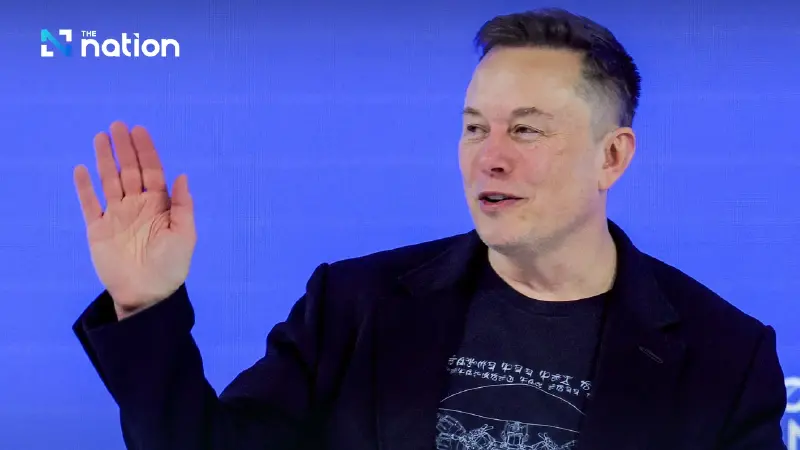


Musk has announced the launch of Terafab, a project to build two advanced chip factories: one to power cars and humanoid robots, and the other to support artificial intelligence data centres in space.
SpaceX and Tesla will build two advanced chip factories at a vast site in Austin, Texas — one to power cars and humanoid robots, and another designed for artificial intelligence data centres in space — chief executive Elon Musk said on Sunday (March 22).
The remarks came a day after Musk announced plans to build “Terafab”, an advanced AI chip complex in Austin, according to Reuters.
“Terafab will technically be two fabs, each making only one chip design,” he wrote in a post on X.
Musk had previously said Tesla would need to build its own AI chip plant, but SpaceX’s involvement had not been disclosed before. SpaceX, which is preparing for a public listing that could value the company at about US$1.75 trillion (57.8 trillion baht), recently merged with Musk’s social media and artificial intelligence company, xAI.
“We either build the Terafab or we don’t have the chips,” Musk said during a presentation in an Austin facility on Saturday (March 21), adding that current global chip production would meet only a small fraction of his companies’ future needs.
He did not provide a timeline for the project. Musk has a track record of unveiling highly ambitious ventures, although several have faced delays or failed to materialise.
Musk said he was grateful to existing chip suppliers, naming Samsung, Taiwan Semiconductor Manufacturing Company (TSMC) and Micron, but said demand from his companies would eventually exceed total global chip output.
Terafab will eventually produce one terawatt of computing capacity a year, compared with about half a terawatt currently generated across the United States, Musk said.
He said one chip would be used in Tesla vehicles and Optimus humanoid robots, while the second would be designed for AI satellites in space.
“We need a high‑powered chip designed for space that takes into account the harsher environment,” Musk said, adding it would need to operate at higher temperatures.
